


Contents: Checking the condition and servicing…⬇ Checking the condition of spark plug…⬇ Typical spark plug damage ⬇
The electronic ignition system generates very high voltage! Be careful and take all necessary precautions when servicing any components of the system, including not only the main (ignition module, coil and high voltage wires), but also related items such as spark plug connectors, tachometer and other equipment. Persons with an implanted pacemaker should not be allowed to service ignition system components!
Tools needed when replacing spark plugs
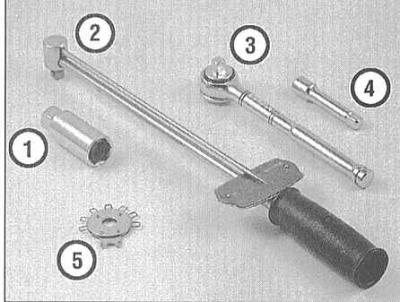
1 - Spark plug head - Equipped with a special elastic insert, eliminating the possibility of accidental damage to the porcelain insulator when unscrewing the spark plug.
2 - Torque wrench - Although not a mandatory tool, it provides a reliable guarantee of the correct tightening force of the spark plugs.
3 - Ratchet drive - Used in combination with a spark plug head and torque wrench.
4 - Extension - Depending on the model and its auxiliary units, access to the spark plugs may be limited to varying degrees, so using extensions of the appropriate shape and design will significantly facilitate the procedure.
5 - Tool for measuring and adjusting spark plug gaps - There are several types of this type of tool available - make sure that the tool comes with a feeler gauge that matches the size of the spark plug gaps in your vehicle.
Checking the condition and servicing spark plugs
On Z20LET engines, spark plugs are replaced every 30,000 km.
The correct functioning of the spark plugs largely determines the efficiency of the engine. It is important that the engine is equipped with the correct type of spark plugs (see Specifications). The need for unscheduled maintenance of spark plugs occurs extremely rarely, provided that the engine itself is in good condition. To avoid accidental damage to the electrodes, do not clean the spark plugs without using special equipment.
In most cases, replacing spark plugs requires a special spark plug head (with elastic liner inside) complete with ratchet drive, as well as a set (see illustration Tools needed when replacing spark plugs). A special tool is also available for safely disconnecting the high-voltage wire tips from the spark plug tails, although its use is not strictly required. Using a torque wrench will help achieve the correct tightening force for the spark plugs.
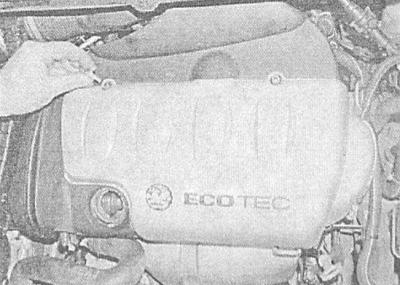
1. On 1.4, 1.6 and 1.8 L DOHC models remove the oil filler cap, unscrew the mounting screws and remove the engine protective cover. Reinstall the oil filler cap.
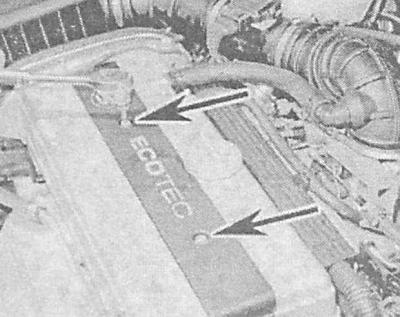
2. On 2.0L models unscrew the mounting screws and remove the spark plug protective cover from the timing cover.
3. On 1.6L SOHC and 2.0L models, if the markings on the high-voltage wires are not visible, apply them. Disconnect the high-voltage wires from the spark plugs - pull on the tip, not on the wire itself.
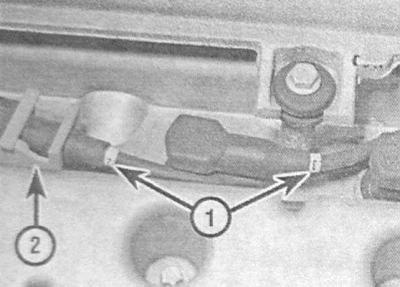
4. On 1.6L SOHC, 1.4L and 1.8L DOHC models the ignition module is installed between the camshaft housings, directly above the spark plugs - disconnect the electrical wiring from it. Unscrew the mounting screws and remove the ignition module from the cylinder head. If the module cannot be separated, screw a pair of long M8 bolts into its threaded holes and try using them as handles.
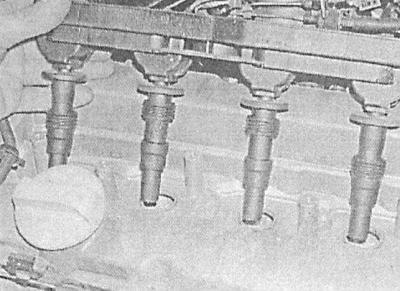
5. The spark plugs on some of the models under consideration are deeply recessed into the spark plug recesses, so you will need a key drive extension to unscrew them. After placing the head on the spark plug, connect the drive and, carefully turning the wrench counterclockwise, unscrew the spark plug.
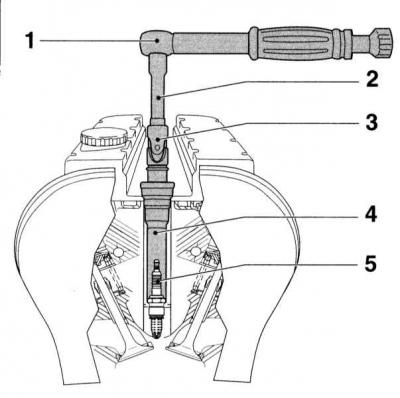
1 - Ratchet handle
2 - Extension cord
3 — Cardan joint
4 - Spark plug head with elastic insert
5 - Spark plug
6. Compare the removed spark plug with the condition chart shown in the photographic insert, which will allow you to qualitatively assess the general condition of the engine.
7. Checking the condition of the spark plugs gives a good idea of the engine condition. If there are no traces of any deposits on the insulator of the central electrode, this indicates that the air-fuel mixture is too lean, or that the spark plug is being used excessively (heat dissipation from the insulator to the body on spark plugs is much less intense than on "cold" ones).
8. The presence of black carbon deposits on the electrodes indicates that the mixture is too rich, and if the carbon deposits also have an oily consistency, you should also consider a more detailed assessment of the degree of wear of the internal components of the engine.
9. A golden or grey-brown coating on the insulator confirms the engine is in good condition and the air-fuel mixture is correctly configured.
10. All engines are equipped with multi-electrode spark plugs as standard. The interelectrode gaps on such spark plugs are set at the manufacturer and do not require any adjustments.
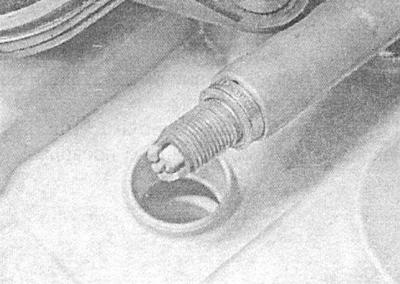
11. When using non-standard spark plugs with one side electrode (what is not recommended), the factor of correct installation of the interelectrode gap comes to the forefront, the size of which determines the intensity of spark formation and, as a consequence, the correctness of ignition of the mixture and the development of the combustion process in all engine operating modes. Installation of interelectrode gaps should be carried out in accordance with the instructions of the spark plug manufacturers.
12. The measurement of the interelectrode gap on adjustable spark plugs is performed using a special wire-type feeler gauge.
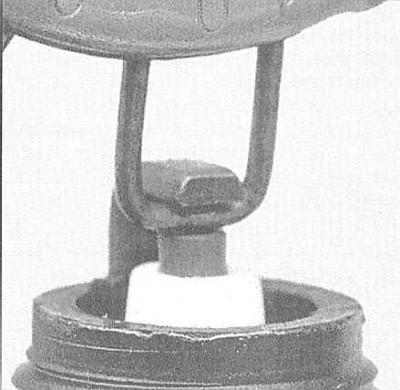
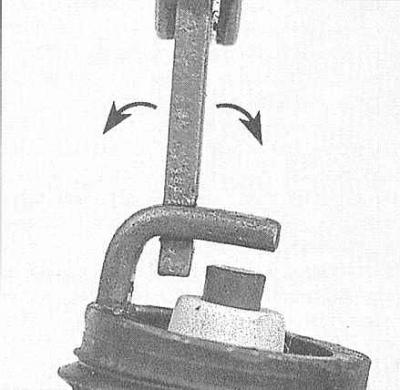
When adjusting, only the side electrode should be bent - attempts to deform the central electrode are fraught with irreversible damage to the insulator. An attachment for adjusting the electrode position is usually included in the probe kit.
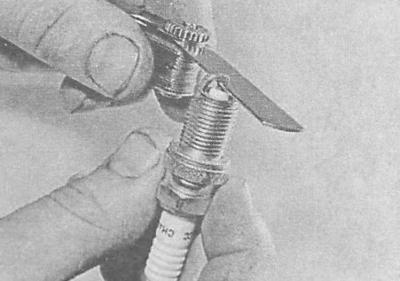
If a conventional blade type feeler gauge is used to measure the spark plug gap, the gap can be considered to be adjusted correctly when the blade of the feeler gauge enters the gap with slight resistance.
13. Before installing the spark plug, make sure that the threaded tip is screwed on tightly and that the threads on the body and the outer surface of the spark plug are well cleaned.
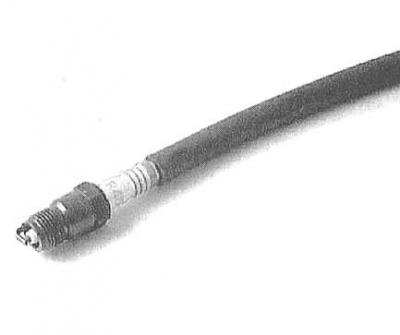
14. Thread one of the new spark plugs into the appropriate hole in the engine by hand. After making sure that the spark plug is not twisted in the threads, tighten it to the required torque (if you have a torque wrench at hand). To make the spark plug installation procedure easier, pull a piece of flexible fuel hose onto its tail. This eliminates the possibility of thread stripping, since the slightest biting will simply cause the hose to start turning. Install all remaining spark plugs in a similar manner.
15. On models with the appropriate equipment, before connecting the high-voltage wires to the spark plugs, perform the spark plug servicing procedures (see below).
16. The high-voltage wire is connected by rotating and reciprocating movements of its tip - the latter should fit tightly onto the spark plug tail (pay attention to the wire markings). On models without high voltage wiring, install the ignition module and tighten its fasteners to the required torque.
Checking the condition of spark plug wires (1.6L SOHC and 2.0L models only)
The condition of the high-voltage wiring should be checked regardless of whether the spark plugs have been replaced or not.
1. The check begins with an external inspection of the wire insulation with the engine running. Drive the car into a dark room, start the engine and make sure there is no sparking on the wires. Sparking is a sign of insulation breakdown. Try not to touch moving components in the engine compartment. Make the necessary notes on replacing defective wires, then let the engine cool down and proceed to check the condition of the cover and distributor rotor.
2. Check the spark plug wires one by one to avoid violating the order of their connection during assembly. Usually, there is a corresponding marking on the insulation of branded wires. If there is none, apply it yourself using tape and a marker.
3. Disconnect the high voltage wire from the spark plug (it is best to use a special tool). Never pull on the wire itself, only on its tip.
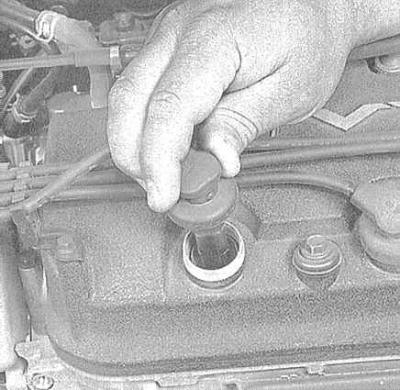
4. Carefully inspect the inside walls of the tip. Corrosion usually appears as a brittle, crusty white coating.
5. Pull the tip back onto the spark plug stem, making sure it fits tightly. If necessary, remove the tip again and bend the terminals inside the rubber boot.
6. Wipe the entire length of the wire with a clean cloth, completely removing traces of dirt and grease from the surface of the insulation. Inspect the wire insulation for cracks, burn marks, and other damage. Try not to bend the wire at sharp angles to avoid damaging the conductor cores inside the insulation.
7. Check the condition of the wire contacts on the ignition module side - again, pull only by the tip.
8. Replacement of high-voltage electrical wiring should be done as a set, even if only one of the wires is broken.
9. Even if the ignition system is in excellent condition, failures may occur when starting in damp weather. If necessary, spray the system components with a moisture-absorbing spray. Ask in car accessory stores.
Typical spark plug damage
Coal deposits
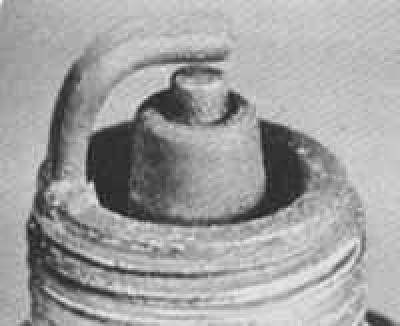
Symptoms: The presence of soot indicates an over-enriched fuel-air mixture or weak spark intensity. It causes misfires, makes starting difficult and leads to instability of engine operation.
Recommendations: Check if the air cleaner is clogged, the fuel level in the float chamber is too high, the choke is stuck and the contacts are too worn. Try using spark plugs with a longer insulator, which increases resistance to contamination.
Oiling
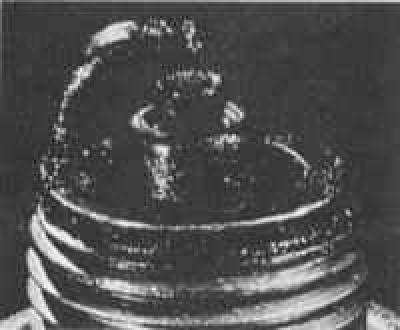
Symptoms: Oiling of the spark plug is caused by wear of the oil-deflecting caps. Oil gets into the combustion chamber through worn valve guides or piston rings. It causes misfires, makes starting difficult and leads to instability of engine operation.
Recommendations: Perform mechanical restoration
Overheat
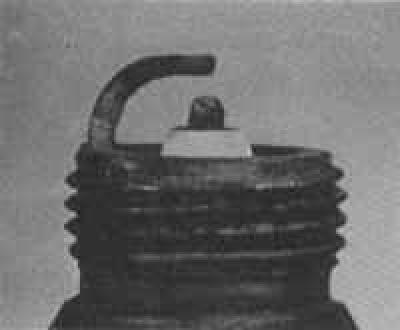
Symptoms: Porous, white insulator, erosion of electrodes and absence of any deposits. Leads to a reduction in spark plug life.
Recommendations: Check that the spark plug heat range is correct, that the ignition timing is set correctly, that the fuel/air mixture is not too lean, that there are no vacuum leaks in the intake manifold, and that the valves are not stuck. Also check the coolant level and that the radiator is not clogged.
Too early ignition
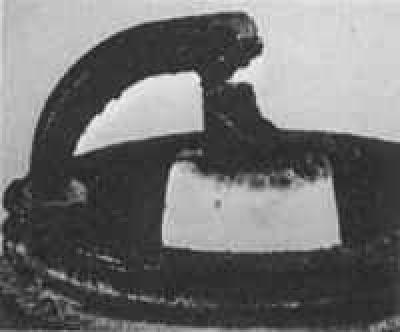
Symptoms: The electrodes are melted. The insulator is white, but may also be contaminated due to misfires or foreign particles entering the combustion chambers. May cause engine failure.
Recommendations: Check the glow number of the installed spark plugs, the ignition timing, and the quality of the mixture (isn't it too poor?), whether the cooling system is clogged and whether the lubrication system is functioning normally.
Conductive gloss
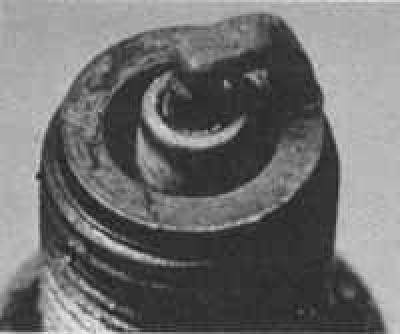
Symptoms: The insulator has a yellowish color and a polished appearance. Indicates a sudden increase in temperature in the combustion chambers during sharp acceleration. Normal deposits melt, acquiring the appearance of a varnish coating. Leads to misfires at high speeds.
Recommendations: Change the spark plugs (cooler, while maintaining the same driving style).
Short circuit of electrodes
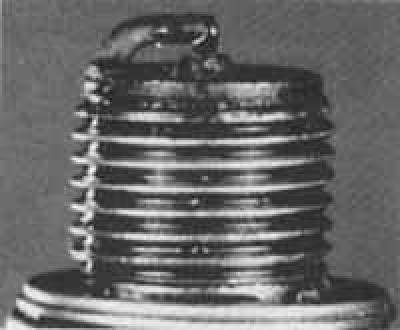
Symptoms: Combustion waste gets into the interelectrode space. Solid deposits accumulate, forming a bridge between the electrodes. Leads to ignition failure in the cylinder.
Recommendations: Remove deposits from the interelectrode space.
Normal condition of the candle
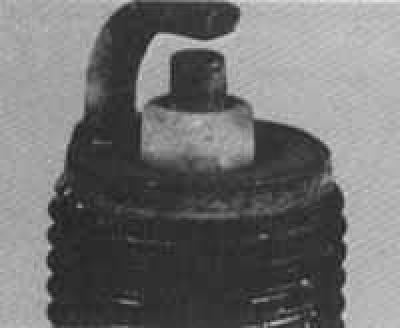
Symptoms: Gray-brown color and slight wear of the electrodes. The glow number of the spark plugs corresponds to the type of engine and its general condition.
Recommendations: When replacing spark plugs, install spark plugs of the same type.
Ash formation
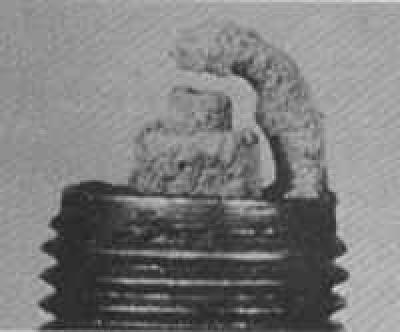
Symptoms: Soft, brownish deposits on one or both spark plug electrodes. They are caused by oil and/or fuel additives. Excessive buildup can insulate the electrodes and cause misfires and rough running under acceleration.
Recommendations: If deposits accumulate quickly, replace the oil seals to prevent oil from entering the combustion chambers. Try changing the fuel brand.
Wear
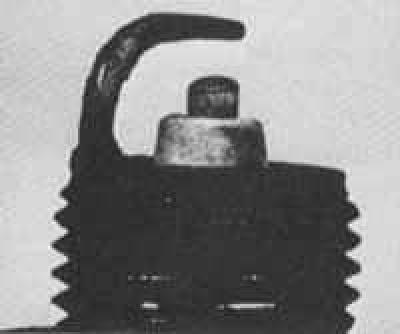
Symptoms: Rounding of the electrodes with a small accumulation of deposits at the working end. The color is normal. It leads to difficulty in starting the engine in cold, wet weather and increased fuel consumption.
Recommendations: Replace the spark plugs with new ones of the same type.
Detonation
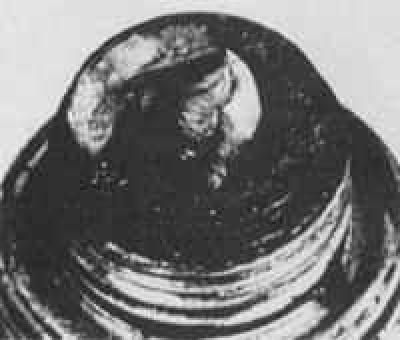
Symptoms: Insulators may be chipped or cracked. Inaccurate spark plug gap adjustment techniques may also damage the insulator. Piston damage may result.
Splashing
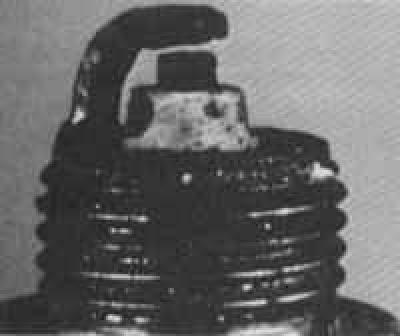
Symptoms: After a long period of misfire, deposits may become loose while the combustion chamber remains at operating temperature. At high speeds, deposits flake off the piston and stick to the hot insulator, causing misfires.
Recommendations: Replace the spark plugs or clean and reinstall the old ones.
Mechanical damage
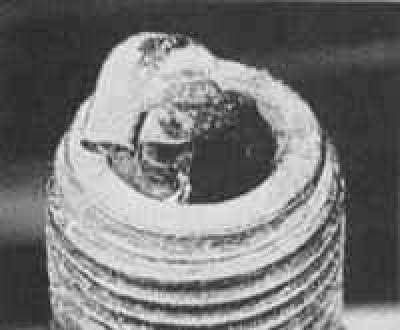
Symptoms: Can be caused by foreign materials entering the combustion chamber or occur when the piston hits a spark plug that is too long. Leads to cylinder failure and piston damage.
Recommendations: Remove foreign particles from engine and/or replace.
Visitor comments