


Contents: Checking the condition of shock…⬇ Checking the condition of the…⬇ Checking the condition of wheel…⬇ Checking the condition of the…⬇
The condition of the suspension and steering components should be checked regularly, as their wear or damage can cause a reduction in the service life of the tires, lead to a decrease in vehicle controllability and an increase in fuel consumption. Detailed illustrative material is also presented in Chapter Suspension and steering.
Checking the condition of shock absorbers
1. Park the car on a level, horizontal surface, if possible with a hard surface. Firmly apply the parking brake and check the tire inflation pressure.
2. Press down on one corner of the car. When you release the corner, the body should return to its original position, making no more than one or two oscillations.
3. Rocking of the body most likely indicates wear or weakening of the corresponding shock absorber.
4. Repeat the procedure, moving on to the remaining corners of the car one by one.
5. Jack up the car and place it on supports.
6. Carefully inspect the shock absorbers for signs of fluid leaks. The presence of a thin oil film should not cause concern. Be sure to verify that the source of the leak is the shock absorber, if necessary, replace the shock absorbers as a set (front and back).
Both front and rear shock absorbers should be carefully checked for signs of leakage in the area where the piston rod enters the cylinder tube
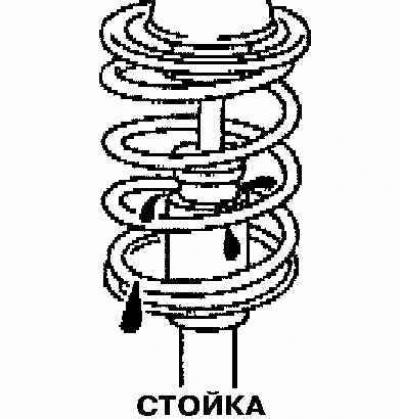
7. Check the reliability of the shock absorbers on their supports. If defects are detected, replace the shock absorbers (also included).
8. The procedure for replacing shock absorbers is described in Chapter Suspension and steering.
Checking the condition of the suspension and steering components
1. Visually inspect the suspension and steering components for deformations and mechanical damage. Assess the condition of the sealing cuffs, protective covers and rubber-metal bushings - try not to miss signs of developing leaks
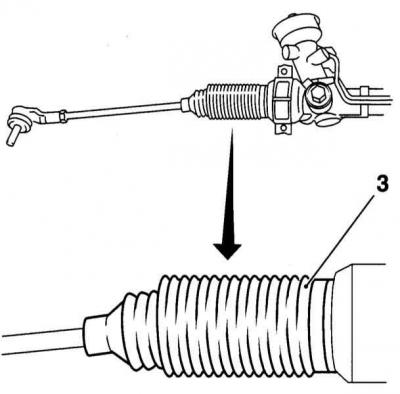
Check the condition of the steering gear housing protective boots
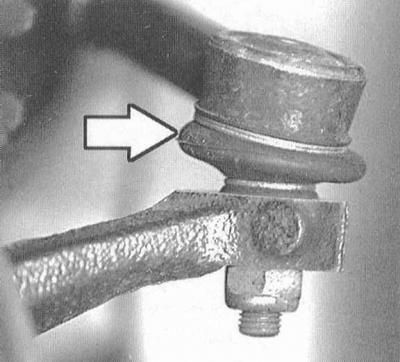
Check the condition of the tie rod end boots
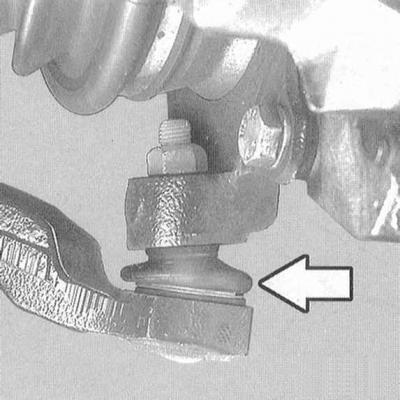
Check the condition of the ball joint boots
2. Clean the lower surface of the steering knuckle from traces of dirt, ask an assistant to grab the lower edge of the wheel and tug it in the transverse direction. Try to visually assess the play in the ball joints connecting the knuckle to the suspension control arm. If there is play, the worn joint must be replaced.
3. Grasp the front and rear edges of the wheel, then push down on the front edge and pull on the rear edge. If there is play in the joints of the steering gear components, check the condition of the tie rod ends. Wear of the outer ends can be detected visually, and wear of the inner ends can be detected by touch through the protective cover of the steering gear (when rocking the wheel). Move to the other side of the vehicle and repeat the procedure by tugging the opposite wheel. For more information on the design of suspension components, see Chapter Suspension and steering.
4. Lower the car to the ground and assess the amount of play in the steering wheel. From under the car, visually assess the inertia of the steering drive when turning the steering wheel (an assistant's help will be required).
Checking the condition of wheel bearings
1. Pull the front wheel with both hands at the top and bottom edges - the presence of any noticeable play indicates a weakened/damaged wheel bearing or suspension components. Ask an assistant to firmly press the foot brake pedal and repeat the check - if the play disappears or is reduced to a minimum level, then you should take care of the bearing, otherwise check the condition of the articulation units of the suspension components.
2. Grasp the front and rear edges of the wheel and repeat the above check - if the play disappears when the brake pedal is depressed, the wheel bearing should be tightened or replaced, otherwise check the condition of the steering gear components.
Checking the condition of the protective covers of the drive shafts
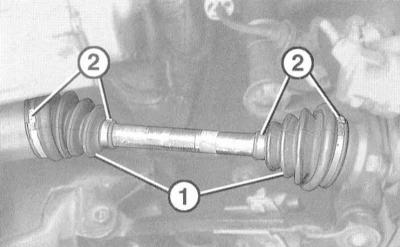
1. Corrugated rubber boots installed at both ends of each drive shaft are designed to protect the constant velocity joints (CV joints) from damage caused by dirt. Oil and grease getting on the surface of the boots can lead to their premature destruction. It is advisable to wash the boots with a solution of soapy water from time to time. Due to constant bending when turning the wheels, the boots of the outer CV joints wear out faster and should be checked more often and regularly.
2. Carefully check the covers for cuts, cracks and other damage, assess the reliability of their fixation with bandage tapes. If defects or traces of grease leaks are detected, the damaged cover must be replaced (see Chapter Clutch and drive shafts).
Check the condition of the protective boots of the CV joints of both drive shafts
Visitor comments