


Note: Steering and suspension components should be inspected regularly. Worn or damaged suspension and steering components can cause excessive and dangerous tire wear, poor ride and handling characteristics, and increased fuel consumption. For more detailed information on suspension and steering components, refer to the Suspension and Steering Chapter.
Checking shock absorbers
1. Park the vehicle on a level surface, turn off the engine and apply the parking brake. Check your tire pressure.
2. Press on one corner of the car and then release it, paying attention to the movement of the body. It should stop swinging and return to its original position after one or two swings.
3. If the vehicle continues to rock or does not return to its original position, a worn or weakened shock absorber may be the cause.
4. Repeat the above procedure for each of the three remaining corners of the car.
5. Jack up the vehicle and support it securely on supports.
6. Inspect the shock absorbers for signs of hydraulic fluid leakage. A light film of liquid is not a cause for concern. If a leak is detected, make sure that the fluid is leaking from the shock absorber and not from somewhere else. If it is still a leak from the shock absorber, replace the shock absorbers in pairs on the same axle (or all four).
7. Check the reliability of the installation and the integrity of the shock absorbers. Check the top mounts for damage and signs of wear. If any are found, replace the shock absorbers.
Text was copied from the portal www.opelbook.ru
8. If it is necessary to replace the shock absorbers, refer to Chapter 1 for instructions Suspension and steering. Always replace both components on the same axle, otherwise the vehicle safety may be compromised. If possible, try to replace all four components in a set.
Checking the condition of the steering and suspension system
9. Inspect the steering system components for damage or deformation. Look for signs of fluid leaks, damaged gaskets, boots and fittings.
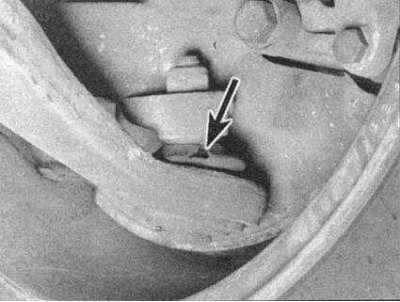
10. Clean the lower end of the steering knuckle. Have an assistant grab the bottom edge of the wheel and rock it while you watch the movement of the ball joints that connect the steering knuckle to the lever. Inspect the ball joint boots for tears. If you find any play or torn or leaking protective boots, the ball joint(s) should be replaced.
11. Grasp each front wheel at the front and rear edges and try to turn it with the front edge in and the rear edge out to check for play in the steering linkage. If play is detected, check for loose steering gear fasteners and tie rod joints. If the fasteners are loose, tighten them. If the steering rods are loose, the cause may be worn out joints (first check the tightness of the nuts). Additional information on the steering and suspension system can be found in Chapter Suspension and steering.
Visitor comments