


2. On carbureted models, remove the air filter (Section 3).
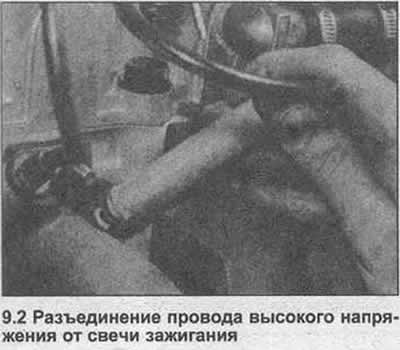
3. Mark the position of the high-tension wires, then disconnect them from the spark plugs. The ends are equipped with special bushings that completely cover the spark plugs (photo).
4. Using a spark plug wrench, remove the spark plugs from the cylinder head.
5. The condition of the spark plugs can be used to judge the condition of the engine.
6. If the nose of the spark plug insulator is clean and white, without any deposits, this indicates a weak mixture or overheating of the spark plug. Recommended spark plugs are listed in Specifications at the beginning of this Section.
7. If the top and nose of the insulator are coated with a hard black deposit, the mixture is too rich. If the plug is black and oily, the engine is probably badly worn or the mixture is too rich.
8. If the nose of the insulator is covered with a light brown coating, the mixture is correct and the engine is probably in good condition.
9. The spark plug gap is of great importance, if it is too large or too small, the size of the ignition spark and its effectiveness will be greatly weakened. The spark plug gap should be consistent with the value given in Specifications.
Material taken from an internet portal [OPELBOOK.ru]
10. To install it, measure the gap with a feeler gauge, then bend the exposed outer electrode of the spark plug until you get the correct gap. The center electrode should not be bent, as this may split the insulation and cause failure.
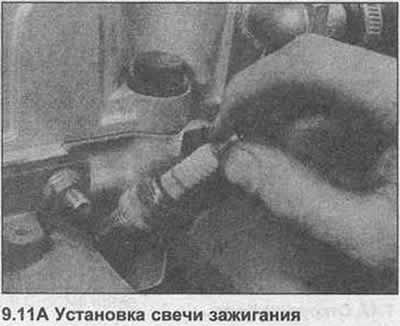
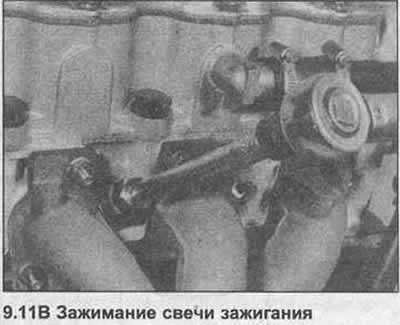
11. To install the spark plugs, screw each one in by hand (photo). Tighten the spark plugs to the specified tightening torque Specification. If you don't have a torque wrench, tighten them by hand until they stop and then tighten them about 1/8 of a turn further.
12. When connecting high voltage wires, make sure that they are installed in the correct order.
13. Install the air filter on carbureted models.
Visitor comments