


2. Release the parking brake lever. Loosen the adjusting nut to allow slack in the parking brake cables.
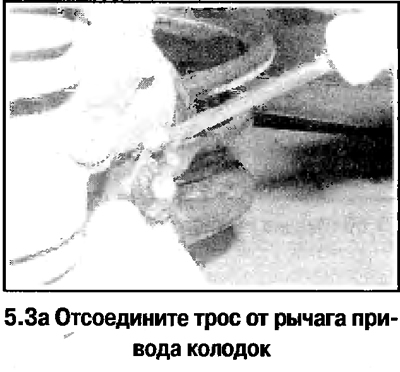
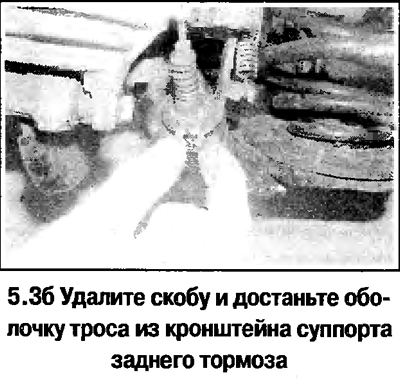
3. Use a screwdriver to move the brake pad drive lever away from the back of the caliper and disconnect the cable and cable sheath from the lever by removing the bracket (see photo).
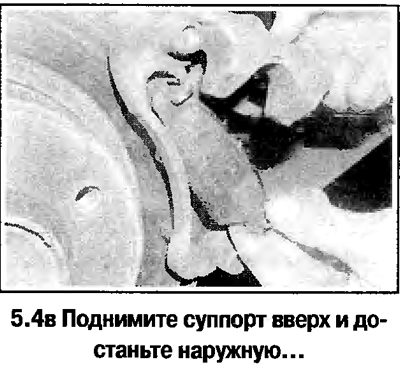
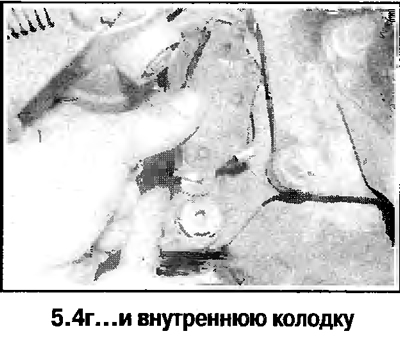
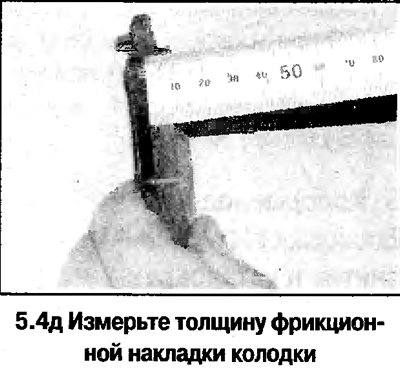
4. Remove and check the pads, following the steps illustrated in the photo. If the thickness of the pad friction lining is equal to or less than the maximum, replace the pads as a set on the axle. The pads are also changed if they are oiled or if uneven wear is detected.
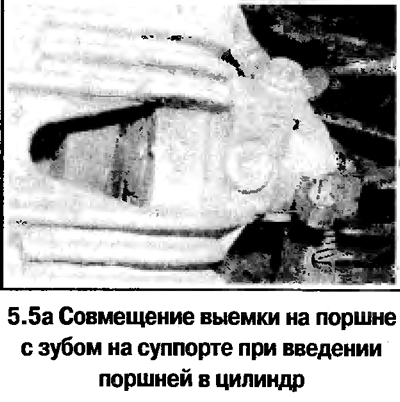
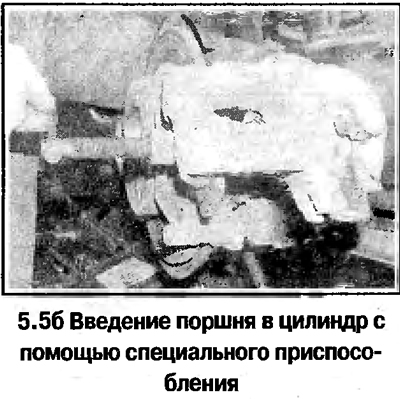
5. When assembling, apply copper-based grease to the thrust surface of the pads. If the pads are changed, the pistons should be inserted into the cylinders. To do this, align the tooth on the caliper with the recess on the piston. To do this, use either a special device or a clamp (see photo), however, if the pistons are compressed with a clamp, the piston should be turned as it enters the cylinder. As the pistons are inserted, remove excess fluid from the reservoir.
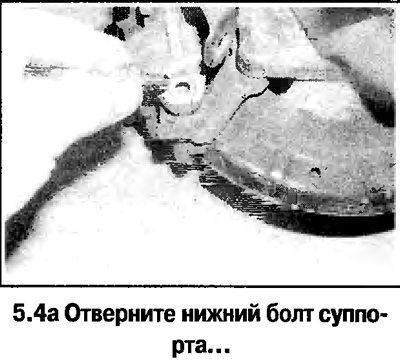
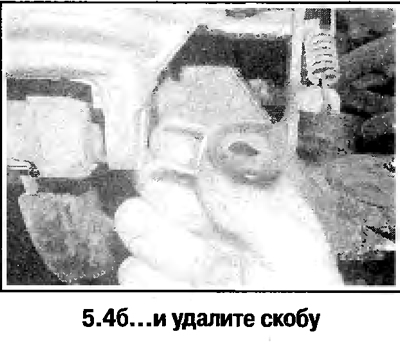
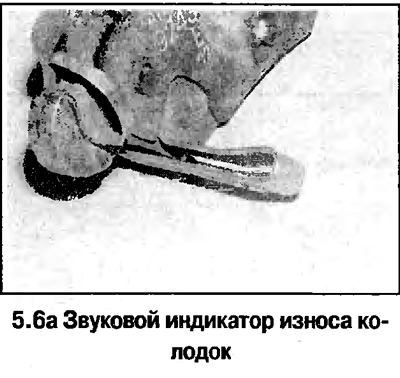
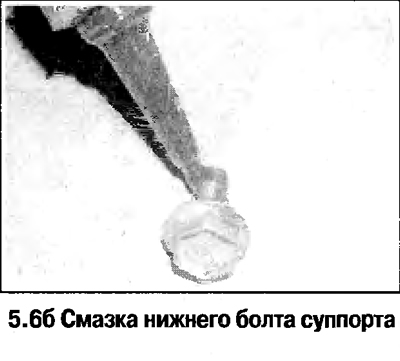
6. After installing the pads, place the audible wear indicator on the inner pad (when the pad is worn, the indicator provides increased noise when braking). Lubricate the lower caliper bolt with locking compound (see photo).
7. Install the remaining removed parts, adjust the parking brake. When finished, press the brake pedal several times until you feel increased resistance.
Visitor comments