
Attention! Pads are changed only as a set per axle.
1. Raise the car, remove the front wheels.
2. On parts of cars, pry and remove the pad wear sensor by disconnecting the wires (see photo).
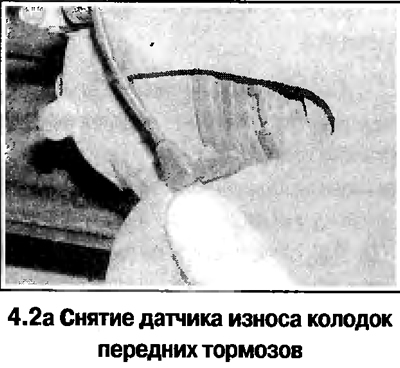
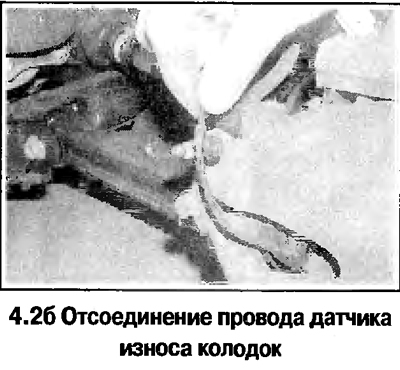
3. Follow the steps that are illustrated in the photo.
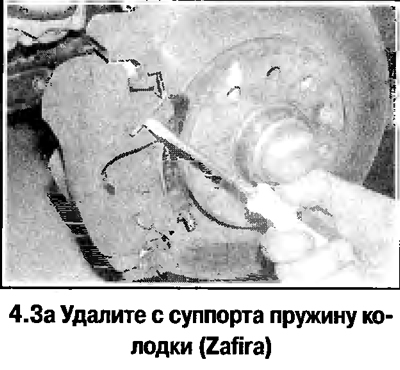
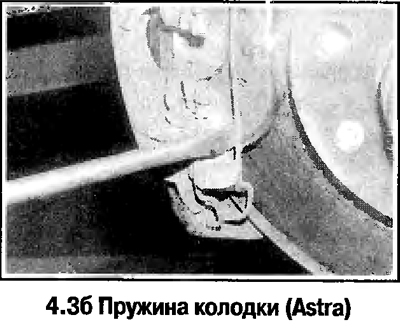
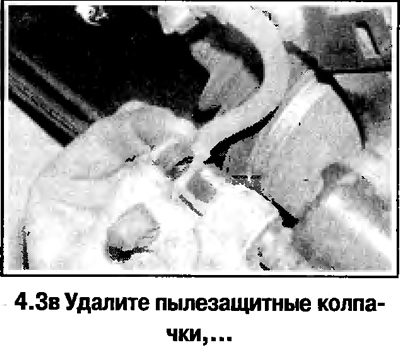
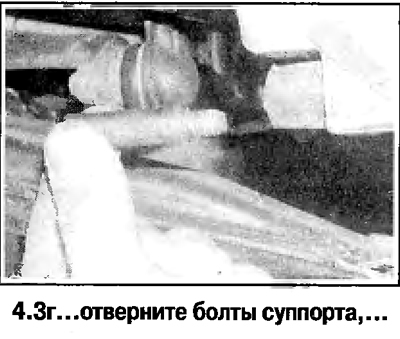
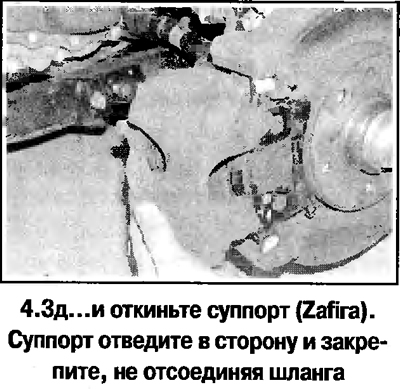
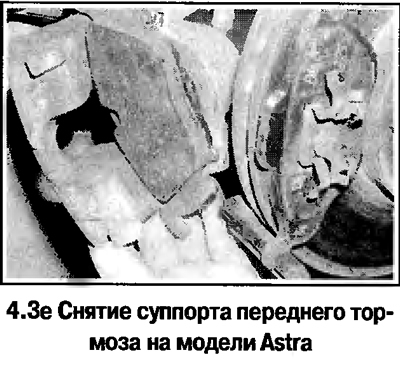
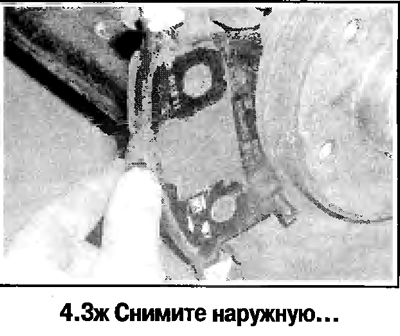
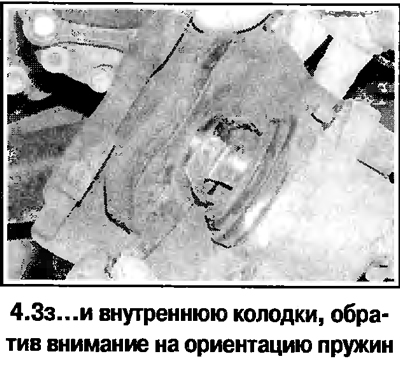
4. Check the residual thickness of the friction material of each pad. In the presence of wear damage, as well as the thickness of the friction material below the allowable, replace the pads (see photo). The pads should be replaced if they become oily.
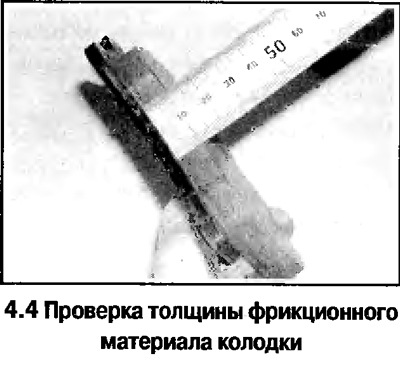
5. If the condition of the pads is satisfactory, then clean them. Wipe the contact points of the pads with the caliper body and bracket.
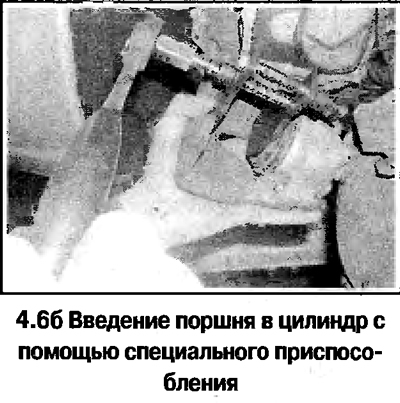
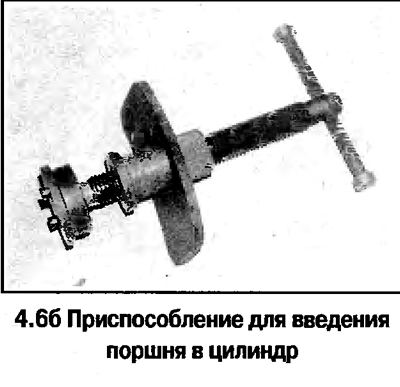
6. Check up freedom of movement of bolts in guides of a support. Check the condition of all rubber boots, the presence of leaks from the cylinder. Apply copper-based lubricant to the metal pad plate (see photo). If the pads are changed, then the pistons should be inserted into the cylinders. For this, either a special device or a clamp is used (see photo). As the pistons are inserted, remove excess fluid from the reservoir.
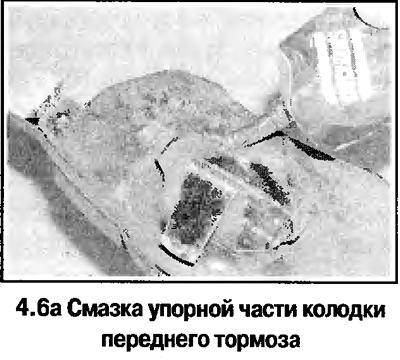
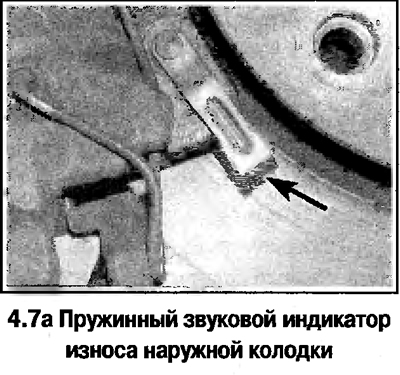
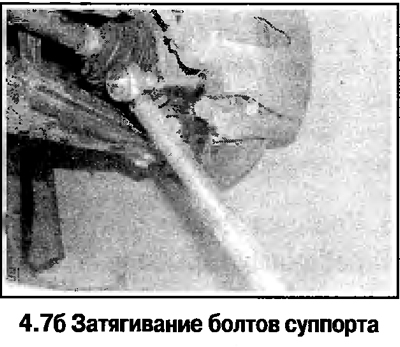
7. Assembly is carried out in the reverse order. Install the inner shoe first, then the outer shoe. Outer pad has audible wear indicator (see photo).
Visitor comments