


Warnings:
- When removing air, add only clean fluid recommended by the manufacturer. Never reuse used liquid.
- Brake fluid is poisonous. Avoid contact with skin. Otherwise, rinse any body parts that come into contact with brake fluid with plenty of cold running water and seek medical attention immediately.
- The fluid used in the hydraulic drive dissolves paint and plastic, so if the fluid gets on the car's paintwork, wash it off with plenty of water.
Some types of brake fluid are flammable and may ignite if in contact with hot components, so take appropriate fire safety precautions.
If there is any doubt about the type of fluid in the system, flush the system with clean fluid and replace all seals.
Bring the brake fluid level in the clutch master cylinder reservoir up to the "MAX" mark and maintain it at least above the "MIN" mark throughout the bleeding procedure, otherwise air will re-enter the system.
Connect a special tool with brake fluid to the expansion tank of the clutch hydraulic drive and, following the manufacturer's instructions, create pressure in the hydraulic system.
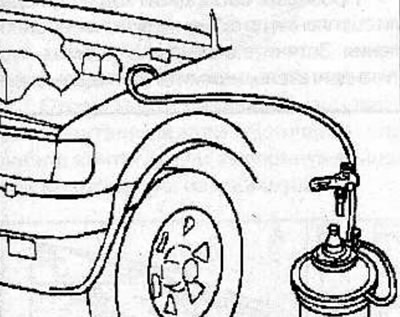
On the clutch release cylinder, loosen the bleed nipple and attach a hose to it. Place the other end of the hose in a glass container of sufficient capacity.
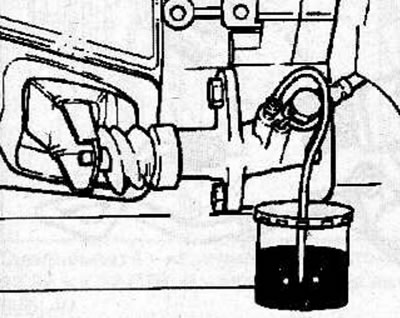
Loosen the bleed nipple and wait until there are no air bubbles in the flowing fluid. Tighten the bleed screw and release the clutch pedal.
After completing the work, remove the special tool from the tank and add fluid up to the "MAX" mark.
Check the clutch hydraulic drive for leaks.
Text copied from an internet website: OpelBook.ru
Alternatively, if a dedicated bleeding tool is not available, perform bleeding as follows:
- Unscrew the reservoir cap and check that the brake fluid level in the reservoir is at the "MAX" mark. When removing air, monitor the presence of fluid in the reservoir, not allowing its bottom to be exposed, since this will again introduce air into the system;
- On the clutch release cylinder, loosen the bleed nipple and attach a hose to it. Place the other end of the hose in a glass container of sufficient volume;
- Slowly press the clutch pedal. With the clutch pedal depressed, loosen the bleed screw and release air from the hydraulic system. Tighten the bleed screw and release the clutch pedal;
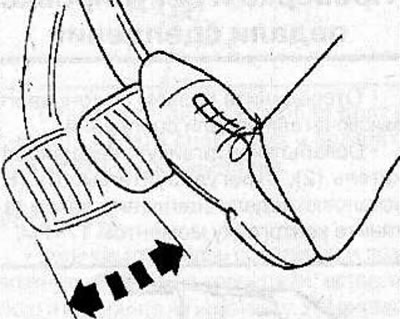
- Repeat the operations until the brake fluid comes out without air bubbles.
Check the clutch pedal travel. If you feel any dips when moving it, it means that the air has not been completely removed from the system and the bleeding must be repeated.
Visitor comments