
OpelBook.ru
Cars AvtoVAZ Cars Mitsubishi Cars BMW Cars Mercedes Cars Nissan Cars Toyota Cars Chevrolet
English Русский
Български
Беларускі
Український
Српски
Hrvatski
Română
Polski
Slovenský
Magyar
 |  Sitemap  |  Contacts  |    


Main Astra Corsa Insignia Kadett Omega Vectra Zafira Others Articles
Frontera A (1991-1998, petrol) Frontera B (1998-2004) Ascona C (1981-1988) Vivaro A (2001-2014)
  • Main
  • Opel
  • Frontera B
  • General information
  • User manual
  • Wheels and tires

Wheels and tires (Opel Frontera B)

            0

Contents: Tire pressure ⬇ Condition of tires and wheels ⬇ General recommendations ⬇ Winter tires ⬇ Anti-skid chains ⬇
For your own safety and the safety of other road users, please strictly adhere to the following rules.

Factory tires are selected for this car model. Provides optimal comfort and driving safety.

When replacing them, consult with specialists. Incorrectly selected tires or wheels that do not fit your vehicle can cause an accident.

It is better to replace them in pairs or sets, i.e. all four tires at once. Tires must be of the same size, design, made of the same materials and with the same profile pattern.

Tire pressure
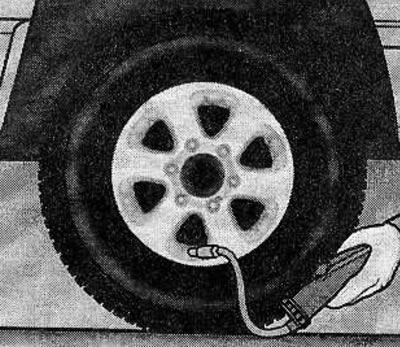


Tire pressure


Checked on cold tires, including the spare tire, every 14 days, before any more or less long trip.

Do not reduce the pressure increased by heating the tires. Otherwise, it may be lowered below the norm.

Exceeding or not complying with the permissible standards negatively affects traffic safety, the driving performance of the car, reduces the feeling of comfort, increases fuel consumption, and increases tire wear.

Reducing the pressure below the permissible level can lead to overheating of the tire, its damage from the inside, and when driving at high speed, as a consequence - to peeling off of the treads. The tire may even burst.


Condition of tires and wheels


Wheels hitting sharp objects and curbs can lead to hidden defects in tires and wheels. These defects can cause tires to burst, especially when driving at high speeds. Therefore, curbs should be crossed at right angles whenever possible. When parking a car, the tires of the wheels should not be pressed against the curbs.
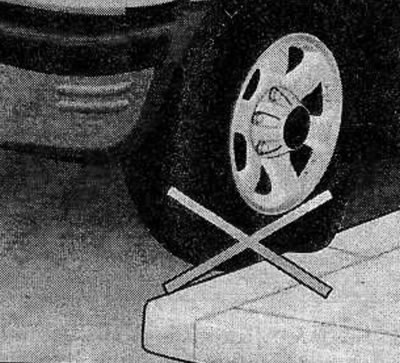
Wheels hitting sharp objects and curbs can lead to hidden defects in tires and wheels. These…


Check your tires regularly for damage (foreign bodies stuck in the treads, punctures, cuts, scratches, bulges on the sides). Damaged tires may burst. The condition of the disks is checked in the same way. If they are damaged or the rubber is slightly worn, contact a service station.

Also systematically check the thickness of the profile pattern of the treads. If the wear on the front tires is more noticeable than the rear ones, swap them. Wheels with the best treads are installed at the front.
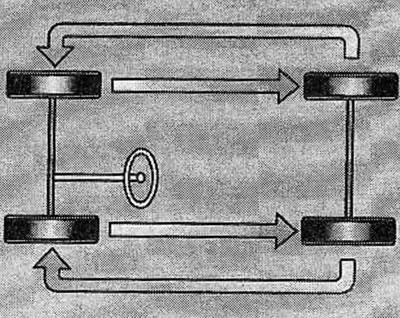
Also systematically check the thickness of the profile pattern of the treads. If the wear on the…


For safety reasons, it is recommended to change tires when the tread pattern thickness is 2-3 mm (on winter tires - up to 4 mm). The maximum permissible wear level (1.6 mm) is considered to be reached when the wear indicator on the tire profile begins to be visible. These cast indicators are evenly distributed around the entire perimeter of the tread. Their locations are indicated by marks on the sidewall of the tires.


Original source on the website OpelBook
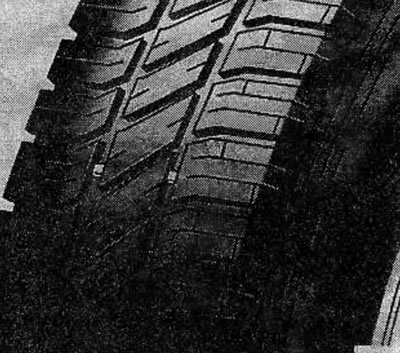
For safety reasons, it is recommended to change tires when the tread pattern thickness is 2-3 mm…


General recommendations


Remember, the more wear on your tires, the higher the risk of aquaplaning (wheels coming off the road surface while driving).

Tires are subject to aging even if they are used little or not at all. After 6 years, the spare wheel should only be used as a replacement in the event of an accident and only for driving at low speeds.

Never use tires with expired or unknown service life.

Winter tires
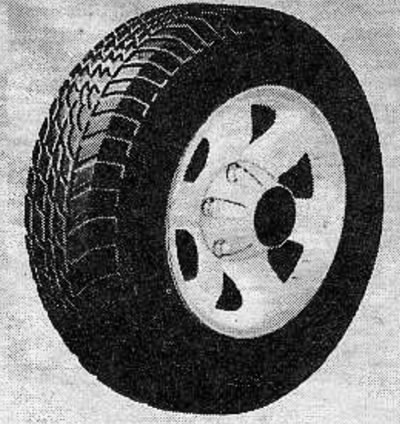


Winter tires


The car is equipped with M+S type tires, suitable for use in all weather conditions (all-weather).

Anti-skid chains
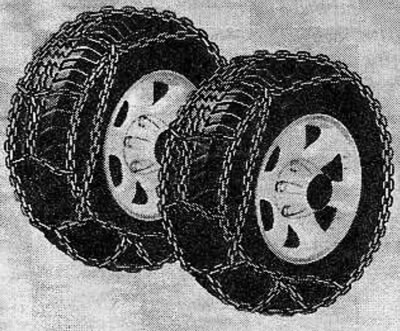


Anti-skid chains


On cars with steel and aluminum wheels, anti-skid chains can only be installed on the rear wheels and must be firmly tensioned.


Use only recommended thin chains with a thickness of no more than 15 mm.

Anti-skid chains are used at speeds up to 50 km/h and only on roads covered with deep snow. In all other cases, they wear out quickly and may tear.


This article is available at russian, bulgarian, belarusian, ukrainian, serbian, croatian, romanian, polish, slovak, hungarian
Checking the article: Chernov Alexander

Share information:

Previous articles
Opel Frontera B: User manual
Next articles

Constant speed control system (cruise control)
Catalytic converter of a car with a gasoline engine
Towing a car
Heated front seats
Rear Window Defogger — On
Air conditioning system
Driving with a trailer
Starting the engine from an external source
Spare wheel
Jack and tools
Wheel replacement
Fuses — location and purpose


See similar ones from other Opel car manuals:
▶ Wheels and tires — general information Opel Astra H (2004-2009)
▶ Checking the condition of the tires and their inflation… Opel Corsa B (1993-2000)
▶ Car wheels and tires Opel Kadett E (1984-1995)
▶ Wheels and tires Opel Omega A (1986-1993)
▶ Hubs, Wheels and Tires — Reference Data Opel Zafira A (1999-2005, petrol)
Link to this page in different formats

Visitor comments


No comments yet


How much will 24 + 24 =


Vivaro A (2001-2014) 
  • General information
  • User manual
  • Power unit
  • Petrol engine F4R
  • Diesel engine F9Q
  • Diesel engine G9U
  • Transmission
  • Clutch and drive shafts
  • Manual gearbox
  • Chassis
  • Front suspension
  • Rear suspension
  • Brake system
  • Body
  • Exterior
  • Interior
  • Electrical equipment
  • Heating and ventilation
  • Air conditioner
  • Equipment and devices
  • Electrical diagrams
Ascona C (1981-1988) 
  • General information
  • Maintenance
  • Power unit
  • Gasoline engines
  • Diesel engines
  • Cooling system
  • Fuel and exhaust system
  • Contact ignition system
  • Contactless ignition system
  • Transmission
  • Clutch
  • Mechanical gearbox
  • Automatic gearbox
  • Drive shafts
  • Chassis
  • Steering
  • Brake system
  • Car suspension
  • Body
  • Exterior
  • Interior
  • Doors and windows
  • Electrical equipment
  • Equipment and devices
  • Power devices
  • Electrical circuits
Frontera B (1998-2004) 
  • General information
  • User manual
  • Maintenance
  • Power unit
  • Petrol engines 2.2 l
  • Petrol engines 3.2 l
  • Diesel engines 2.2 l
  • Cooling system
  • Fuel system (petrol)
  • Fuel system (diesel)
  • Ignition system
  • Transmission
  • Clutch
  • Manual gearbox MUA5C
  • Automatic gearbox 4L30E
  • Chassis
  • Suspension and axles
  • Steering
  • Brake system
  • Body
  • Exterior
  • Interior
  • Doors, locks and windows
  • Heating and air conditioning
  • Electrical equipment
  • Power devices
  • Equipment and devices
  • Lighting and signaling
  • Electrical diagrams
Frontera A (1991-1998, petrol) 
  • General information
  • Introduction to guide
  • User manual
  • Maintenance
  • Power unit
  • Engine repair
  • Lubrication system
  • Cooling system
  • Power and exhaust system
  • Engine electrics
  • Transmission
  • Clutch
  • Mechanical gearbox
  • Cardan shafts
  • Chassis
  • Brake system
  • Front suspension
  • Rear suspension
  • Steering
  • Body
  • Repair and care
  • Electrical equipment
  • Equipment and devices
  • Electrical circuits
OpelBook.ru © 2017–2026 · Mobile version · · Sitemap: EN BG BY UA RS HR RO PL SK HU · Feedback · Site search
Astra F, petrol · Astra G, petrol · Astra G · Astra H · Astra J, petrol · Corsa B · Corsa C, petrol · Corsa C · Insignia A · Kadett D · Kadett E · Omega A · Omega B · Omega B2 · Vectra A, petrol · Vectra A · Vectra B, petrol · Vectra B · Vectra C · Zafira A, petrol · Frontera A, petrol · Frontera B · Ascona C · Vivaro A ·
We want your visit to be comfortable 🤝! We use cookies 🍪 to make that happen.