


2. Drain the coolant (see section 3). Disconnect and remove the battery.
3. Disconnect the upper and lower radiator hoses and the small vent hose located between the top of the radiator and the expansion tank (see photo). On models with an automatic transmission, you will also need to disconnect the oil cooler hoses from the main radiator and plug them to prevent transmission fluid loss.
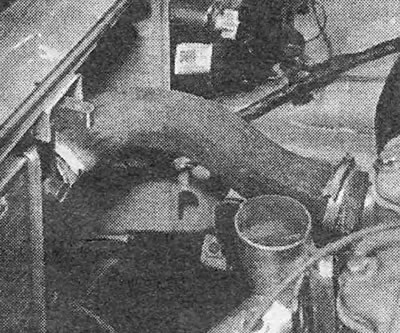
Photo 7.3. Upper radiator hose.
4. Disconnect the wiring from the thermal switch located in the lower right corner of the radiator. Disconnect the fan wiring at the electrical connector (next to the battery).
5. Remove the clamps securing the upper corners of the radiator. Pull the radiator back to release it from the upper mounts, lift it out of the lower mounts and remove it from the car (see photos).
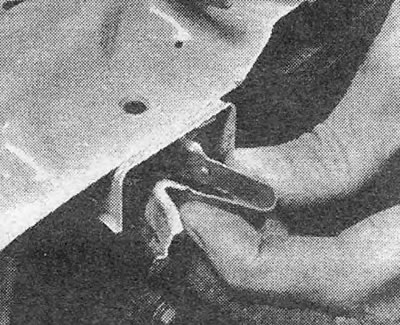
Photo 7.5A. Radiator mounting clamp.
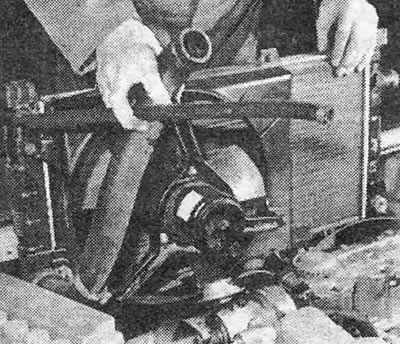
Photo 7.5B. Removing the radiator.
6. Inspect the radiator for leaks, signs of which are stains and corroded areas. If a leak is detected, you should contact a specialist or replace the radiator. In emergency situations, when a leak is discovered while driving, you can use a special product to seal leaks in the radiator (e.g. Holts Radwell).
7. Clean the inside of the radiator using a flush (see section 4) and clean the radiator core, removing all debris. Check hoses and clamps.
8. The radiator is installed in the reverse order. Check the condition of the rubber mountings of the radiator and make sure that it is correctly positioned on the lower mounting pins. Fill the system with coolant (see section 6). On models with automatic transmission, check the transmission fluid level and top up if necessary.
Visitor comments