


2. Checking the condition of the cooling system components should be done after the power unit has completely cooled down (not less than 3 hours after the engine has stopped).
3. The procedure for checking the condition and adjusting the coolant level is given in Section 4.
4. Carefully inspect the upper and lower radiator hoses along with the smaller diameter cabin heating hoses located between the power unit and the engine compartment bulkhead. Check the hoses along their entire length and replace any defective components if cracks, bulges or signs of material aging are detected. Small cracks are usually easier to see when squeezing the hose (see accompanying illustration).
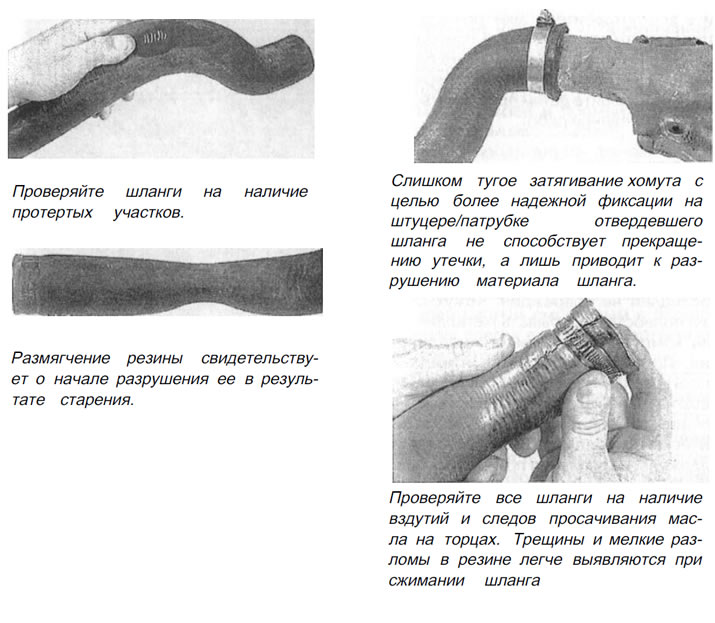
10.4. Examples of typical defects of radiator hoses
Note: The authors of this manual recommend replacing the hoses approximately every 4 years, regardless of their condition.
5. Check the reliability of the fastening of all hoses on their fittings/pipe-tubes - the hoses should be put on deep enough. Coolant leaks usually appear as rusty or white streaks on the surfaces surrounding their source. If the hoses are fastened to the fittings/pipe-tubes with twist-type clamps, it would be reasonable to replace the latter with more reliable worm or screw-type ones.
6. Using compressed air or a soft brush, remove old leaves, insect remains and other debris from the gaps between the radiator heat exchanger plates. Try not to damage the soft heat exchanger plates or cut your fingers on their sharp edges.
Visitor comments