


Note: The condition of the suspension and steering components should be checked regularly, as their wear or damage can cause a reduction in the service life of the tires, lead to a decrease in vehicle control and an increase in fuel consumption.
1. Park the car on a level, horizontal surface, if possible with a hard surface. Firmly apply the parking brake and check the tire inflation pressure.
2. Press down on one corner of the car. When you release the corner, the body should return to its original position, making no more than one or two oscillations.
3. Rocking of the body most likely indicates wear or weakening of the corresponding shock absorber.
4. Repeat the procedure, moving on to the remaining corners of the car one by one.
5. Jack up the car and place it on supports or lift the car on a lift.
6. Carefully inspect the shock absorbers for signs of fluid leaks (see accompanying illustration). The presence of a thin oil film should not cause concern. Be sure to make sure that the source of the leak is the shock absorber, if necessary, replace the shock absorbers as a set (front and back).
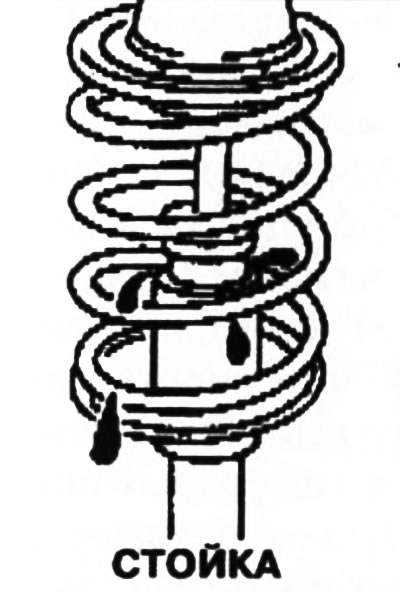
13.6 Both front and rear shock absorbers should be carefully checked for signs of leakage in the area where the piston rod enters the cylinder tube
(Text copied from an online resource: «OpelBook.ru»)
7. Check the reliability of the shock absorbers on their supports. If defects are detected, replace the shock absorbers (also included).
8. The procedure for replacing shock absorbers is described in Chapter 10.
Visitor comments