


1. Check the coolant level (see "Checking the levels of technical fluids").
2. Check the condition of the cooling system radiator. Its cells should not be clogged with dirt, especially in the radiator area opposite the air intake windows in the front bumper. If the radiator is dirty, it should be washed and blown with compressed air in the direction away from the engine.
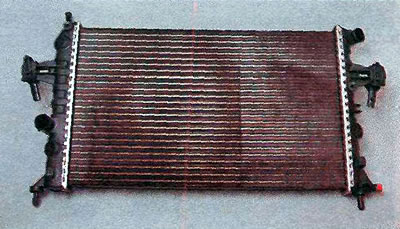
For a more thorough cleaning, it is advisable to remove the radiator (see "Cooling system radiator - replacement").
3. Check for leaks from the radiator drain fitting, from the coolant temperature sensor, connections of the rubber hoses of the cooling system, and their integrity. If there are signs of leaks, tighten the connections (replace the tie rods) or replace damaged elements.
4. Check for leaks through the coolant pump seal. For clarity, shown on a removed pump; when checking on a vehicle, it is necessary to remove the front timing belt cover (see "Timing Belt - Checking Condition, Adjusting Tension and Replacing").
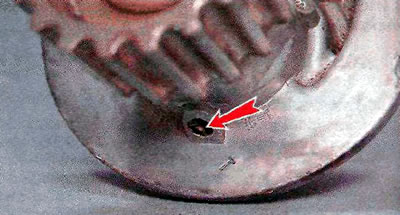
If there is a leak, the water pump should be replaced (see "Coolant pump - replacement").
Note. The need to replace the pump may also be caused by a faulty bearing. In this case, a loud noise will be heard during engine operation. To confirm, after removing the timing belt (see "Timing Belt - Checking Condition, Adjusting Tension and Replacing") check the ease of rotation (there should be no jamming) and the absence of play in the pump gear in the longitudinal and transverse directions.
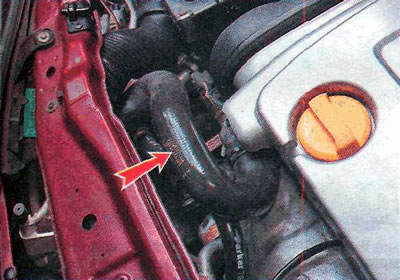
5. Check the operation of the thermostat in the following order: start the engine and control the temperature of the upper radiator hose with your hand.
6. Check the activation of the electric fan of the cooling system. With the air conditioning system turned off (or if it is not installed) the electric fan should turn on at the first speed when the temperature reaches 100°C, and turn off at 95°C. When the air conditioning system is turned on (if it is installed) the electric fan should turn on at speed 1. If the electric fan does not turn on or one of the speeds does not turn on, it must be checked (see "Electric cooling fans - checking and replacement").
Note: It is possible that the thermostat is faulty, in which case its valve starts to open on time, but ultimately does not open completely, which can also lead to engine overheating. You can check whether the thermostat valve is fully open only after removing it from the car (see "Thermostat - Checking and Replacing"). If the thermostat valve opens fully, the most likely cause of overheating is a faulty coolant pump (see "Coolant pump - replacement").
7. Check that the cooling system hoses are not compressed when the engine cools down and that they do not harden excessively when the engine is running and the coolant temperature is above 70°C. If these faults are present, the expansion tank cap of the cooling system should be replaced.
Visitor comments