


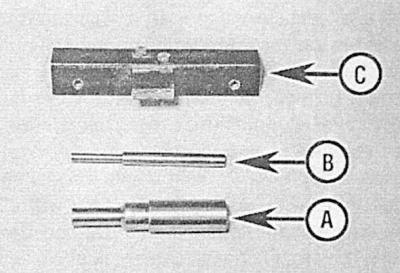
A - Crankshaft locking rod (equivalent of special tool KM-929)
B — Fuel injection pump flange fixing rod (equivalent of special tool KM-927)
C - Camshaft locking device (equivalent of special tool KM-932)
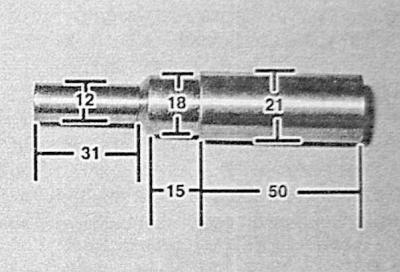
Dimensional characteristics of the crankshaft locking device (mm)
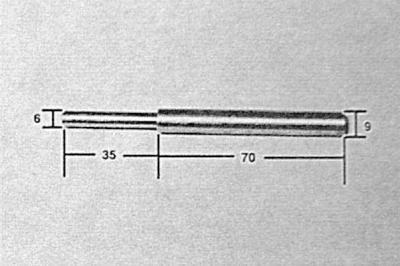
Dimensional characteristics of the device for locking the fuel injection pump flange (mm)
To perform these checks you will need the following Opel specific tools: (or their equivalents):
- 1. Camshaft locking device (KM-932)
- 2. device for locking the fuel injection pump flange (KM-927)
- 3. Crankshaft locking device (KM-929)
- 4. camshaft sprocket lever (KM-933).
If necessary, a suitable tool can be made by an amateur mechanic himself in accordance with the presented dimensional characteristics.
Using a camshaft locking device, the groove in the camshaft journal is fixed parallel to the mating surface of the cylinder head.
1. Disconnect the negative battery cable. Remove the accessory drive belt (see Chapter Routine maintenance). Remove the lower tension roller stand mounting bolt and the tensioner base axle bolt. Remove the tensioner assembly from the engine.
Do not remove the strut from the tensioner assembly, otherwise it will be necessary to grind the working surfaces.
2. Remove the brake booster servo vacuum pump (see Chapter Brake system).
3. In order to facilitate access to the fuel injection pump sprocket cover and to the pump, perform the following preparatory operations:
4. Remove the air cleaner housing and the exhaust pipe (see Chapter Power and exhaust systems).
5. Mark the position of the right engine mount bracket in relation to the cylinder head bracket. Remove the three bolts securing the right engine mount to the head bracket and the three bolts securing the engine mount to the mudguard. Support the right side of the engine with a trolley jack. Raise the engine as high as possible without overloading the remaining mounts and service lines (tubes, hoses, wiring harnesses).
- Remove the timing cover (see Removal and installation the timing cover) and bring the piston of the first cylinder to the TDC position at the end of the compression stroke (see Bringing the piston of the first cylinder to the position of the top dead center of the end of the compression stroke (TDC).
- Remove the crankshaft position (CKP) sensor (see Chapter Power and exhaust systems).
- Loosen the mounting bolts and remove the fuel injection pump sprocket cover from the timing chain cover.
7. Make sure that the mark on the crankshaft pulley is aligned with the timing mark on the timing chain cover and insert the locking rod into the hole for installing the CKP sensor, engaging it with the cutout in the shaft body.
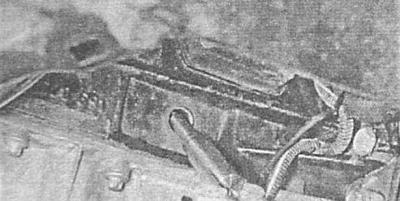
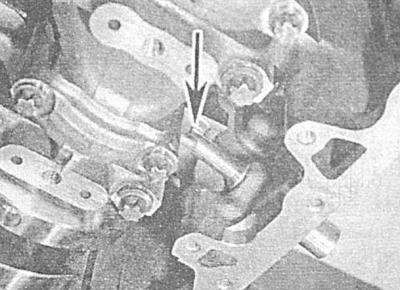
8. With the crankshaft locked, pass the locking rod through the hole in the fuel injection pump flange and push its end into the hole in the pump.
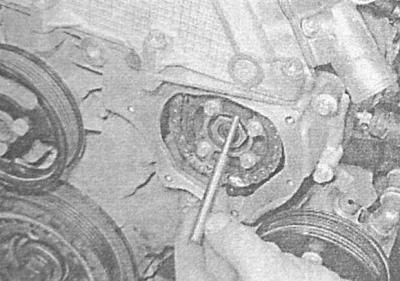
9. Then insert the camshaft locking tool into the groove in the camshaft journal.
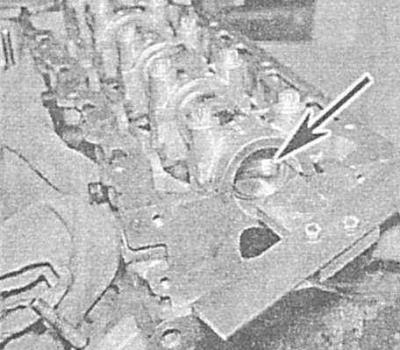
10. If all the fixing devices fit into their regular places without any obstacles, therefore, the valve timing is set correctly and no adjustment is required, proceed to the procedures (see below, pp. 22-27). If at least one tool cannot be installed properly, make the appropriate adjustment (see below), pay attention to the need to replace the crankshaft sprocket bolt and the tensioner bolt sealing ring.
11. Remove the devices that lock the camshaft and the fuel injection pump flange, unscrew the bolts that secure the right support bracket to the cylinder head.
12. Move the upper timing chain tensioner cap away from the rear of the cylinder head and remove the plunger - try to remember its installation position. Remove the sealing ring and discard it - the ring must be replaced during installation.
13. Hold the camshaft by the flats with an open-end wrench, release and unscrew the sprocket mounting bolt. Screw in a new bolt and tighten it only by hand for now.
14. Loosen the bolts securing the fuel injection pump sprocket to the pump flange.
15. Having blocked the crankshaft from turning, make sure that the TDC mark on the upper timing chain sprocket is aligned with the valve timing control hole in the fuel injection pump flange. Insert the locking rod and tighten the sprocket mounting bolts to the required force.
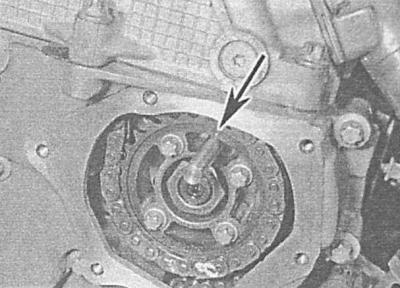
16. Push the end of the camshaft locking rod into the groove on the end of the camshaft journal, aligning the guide pin with the hole.
17. With the locking devices in place, install the camshaft sprocket lever - if there is no lever, use two bolts, inserting them into the holes in the sprocket. Then, using a large screwdriver as a lever, lock the sprocket from turning. Ask an assistant to hold the top side of the timing chain taut - you should apply a slight force to the sprocket, thereby leaving all the slack in the chain on the tensioner side.
18. Having tightened the upper chain, make sure that the rod that fixes the high-pressure fuel pump moves in its hole with slight resistance. If the rod is biting, ask an assistant to ease the pressure on the sprocket - if the rod moves too freely, the force should be increased slightly.
19. Having tensioned the upper chain as required, fix the camshaft with an open-end wrench and tighten the bolt of its sprocket with a force of the 1st stage. Check the freedom of movement of the rod fixing the injection pump, then tighten the bolt of the sprocket by an angle, first the 2nd, then the 3rd tightening stage - use a goniometer attachment to the ratchet, or apply reference marks with a marker.
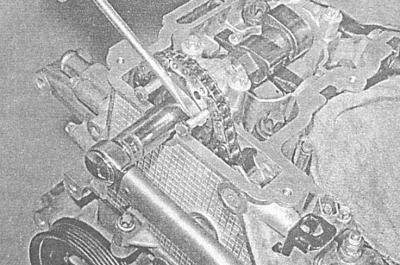
20. Remove all locking devices and install a new O-ring on the upper timing chain tensioner cap. Insert the plunger into the cylinder head (blind end to the chain), install the cap and tighten it to the required torque.
Material provided by this website [www.OPELBOOK.ru]
When installing a new tensioner, loosen it completely, pressing the central rod of the cap until it clicks - now the tensioner rod should be freely pressed and smoothly return to its original position.
21. Turn the crankshaft two full turns (720°) in the normal direction (see Bringing the piston of the first cylinder to the position of the top dead center of the end of the compression stroke (TDC), in order to bring the piston of the first cylinder to TDC at the end of the compression stroke, make sure that all fixing devices can be installed without hindrance.
22. Make sure that the mating surfaces of the fuel injection pump sprocket and timing drive covers are absolutely clean and dry. If the cover was originally installed on a gasket, replace the latter. Tighten the cover mounting bolts with the required force. If no gasket was provided, apply a sealant cushion approximately 2 mm thick to the mating surface of the cover, install the cover and tighten its mounting bolts with the required force.
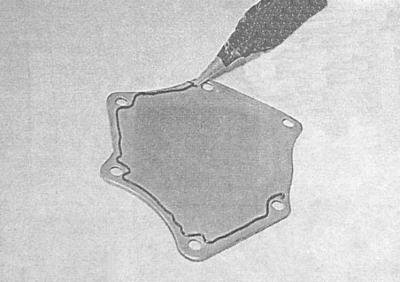
23. Install the accessory drive belt tensioner onto the engine, tightening both bolts to the specified torque. If the strut was removed from the tensioner assembly, lap it in with several successive back and forth movements, placing the head on the hexagonal portion of the base. If the strut functions properly, install the accessory drive belt (see Chapter Routine maintenance).
24. If removed, install the right powertrain mount bracket on the cylinder head and remove the jack supporting the engine. Install the right support on the mudguard and align it with the marks made on the cylinder head bracket during dismantling. Screw in the mounting bolts and tighten them to the required torque. Install the timing cover (see Fig. Removal and installation the timing cover).
25. Install the exhaust pipe and air cleaner housing in place (see Chapter Power and exhaust systems).
26. Install the brake booster servo vacuum pump on the cylinder head (see Chapter Brake system).
27. Install the CKP sensor on the cylinder block (see Chapter Power and exhaust systems) and connect the negative cable to the battery.
Visitor comments