


Contents: Sedan and Hatchback models ⬇ Removal ⬇ Installation ⬇ Station wagon and van models ⬇ Removal and installation ⬇
Sedan and Hatchback models
Removal
Disconnect the negative battery terminal.
Drain the fuel from the tank into a container. Raise the rear of the car, securing it with stands. Disconnect the flexible connection of the exhaust line. Hang it on a wire under the body.
Disconnect the rear section of the exhaust system from its rubber mounts and secure it to the rear suspension torsion bar.
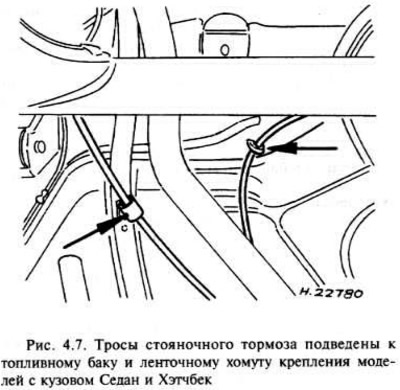
Release the parking brake cable either from the clamp on the tank or from the tank mounting strap and move it to the side.
If necessary, remove the fuel filter from the side of the fuel tank.
Clamp the fuel hose that is connected to the measuring device (located on the right side of the tank), placing a container to catch any fuel that may leak when the hose is disconnected.
Remove the plastic cap, then disconnect the hose from the sensor. Considering the possibility of leakage, take fire safety measures.
Disconnect the wiring from the fuel level sensor.
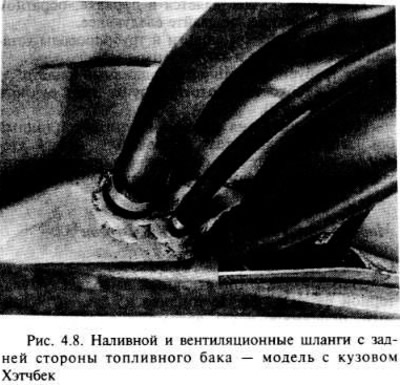
Disconnect the filler hose and vent hoses from the back of the tank.
Raise the fuel tank on a jack using a wooden block.
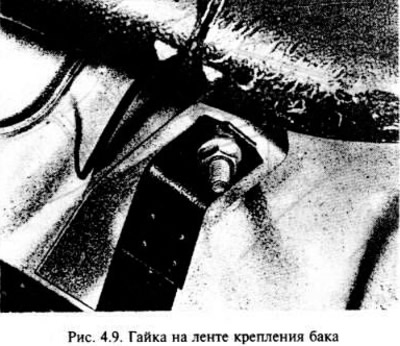
Loosen the nuts on the tank mount, then remove and lower the tank enough to allow the ventilation hose to be disconnected.
With the help of an assistant, carefully lower the tank and remove it from under the car. Be aware that any remaining fuel in the tank may leak out.
Installation
If there is sediment or water in the tank, it must be rinsed 2-3 times using clean fuel. Shake the tank vigorously, pouring new portions of fuel into it, but before doing this, remove the fuel level sensor. The operation must be carried out in a well-ventilated room, observing fire safety measures.
Fuel tank repairs should be done by professionals. Do not attempt to weld or solder the tank. Removing residual fuel vapors requires several hours of work by a specialist.
Installation is carried out in the reverse order of removal, but please remember the following.
Check that all hoses and pipes are in place and secured
Install a fuel filter where required.
If necessary, adjust the handbrake cable (chapter 9).
After finishing the work, fill the fuel tank, start the engine and check for leaks. If there is a leak, stop the engine immediately, find out the cause and eliminate the defects.
Station wagon and van models
Removal and installation
Disconnect the negative battery terminal, drain the fuel tank and raise the front of the vehicle using jack stands.
Disconnect the filler and vent hoses from the tank.
(Material published on the website OpelBook.ru)
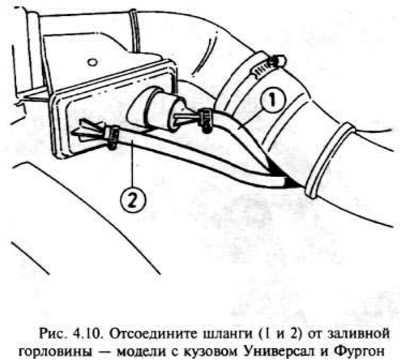
Disconnect the hoses shown in Fig. 4.10 from the filler neck.
Suspend the fuel tank on a jack using a wooden block.
Loosen the bolts holding the tank in place, then remove them and, with the help of an assistant, carefully lower the tank and remove it from under the vehicle. Remember that there is fuel left in the tank that may spill out.
See the points in the previous subsection about cleaning the tank by rinsing, using clean fuel, and prohibiting any repairs to the tank on your own.
Installation is carried out in reverse order, checking that all hoses and pipes are securely fastened in their original places.
After finishing the work, fill the fuel tank, start the engine and check for leaks. If there is a leak, stop the engine immediately. Find out the cause and eliminate the defects.
Visitor comments