
Place a clean swab under the pump outlet, then disconnect its hose. Considering the possibility of fuel leakage, take fire safety measures.
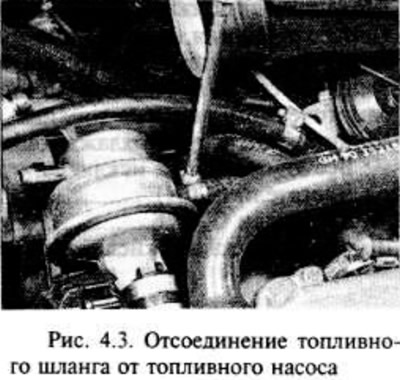
It is necessary that the assistant turned the crankshaft with a starter. Noticeable trickles of fuel will flow out of the pump outlet - if not, then something has happened to the pump (or the tank is empty). Place the gasoline-soaked swab in a safe place.
The fuel pump located at the right end of the camshaft cover, in the event of a malfunction, is completely replaced.
Disconnect the negative battery terminal.
Disconnect the fuel hoses from the pump. If necessary, attach tags to them so that they can be reinstalled in their original position later. Considering possible fuel leakage, take fire safety measures. Insert plugs into the open ends of the hoses.
Remove the two bolts and separate the pump from the crankcase.
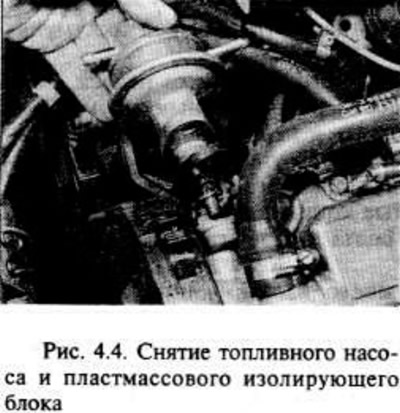
Replace the insulating plastic block.
Installation is carried out in the reverse order; making sure the fuel hoses are properly connected, tighten the bolts to the correct torque.
Start the engine, check for signs of leakage. If a leak is evident, stop the engine immediately and find out what the problem is.
Remember that the engine may start later than usual in this case, since the pump is refilled with fuel after installation.
Visitor comments