


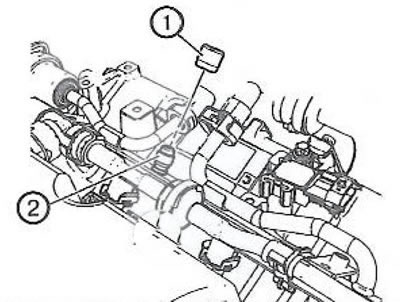
2. Remove the protective cap (1) from the test port (2).
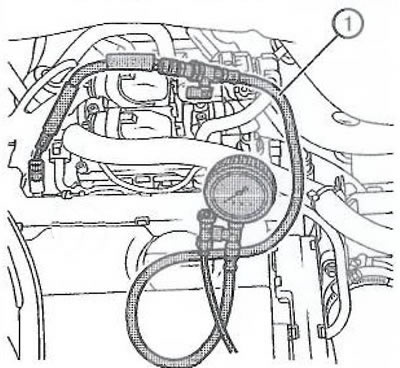
3. Connect the EN-34730-91 pressure gauge (1) to the test port.
Attention.
- Gasoline and its vapors are highly flammable. Ignition may occur if an ignition source is present. Do not drain or store gasoline or diesel fuel in open containers due to the risk of fire or explosion. A Class B dry powder fire extinguisher must be kept nearby.
- Before servicing the fuel system, remove the fuel cap to relieve pressure to reduce the risk of injury. After releasing pressure, a small amount of fuel remains in the fuel lines, injection pump, or connections. To reduce the risk of injury, cover fuel system components with a rag before disconnecting them. This will prevent fuel from splashing. After disconnecting, place the rag in a designated container.
4. Start the engine.
5. Bleed the pressure gauge with the engine idling.
6. Collect any leaked fuel in a suitable container.
7. Read the fuel pressure from the pressure gauge.
Note: Nominal fuel pressure: 380 kPa (3.8 bar).
8. Turn off the engine.
9. Relieve the fuel pressure in the pressure gauge.
[Text copied from an online resource: opelbook]
10. Collect any leaked fuel in a suitable container.
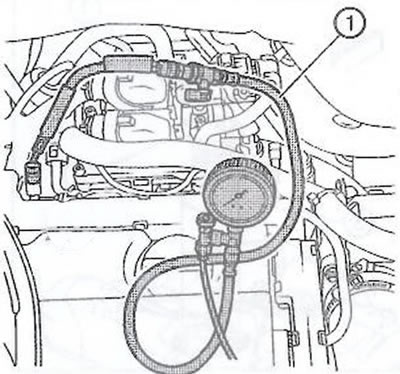
11. Disconnect the pressure gauge (1) EN-34730-91 from the test port.
Caution: To prevent possible contamination of the power supply system, the following areas must be cleaned before disconnecting any components:
- fuel line connections;
- hose connections;
- areas around the connections.
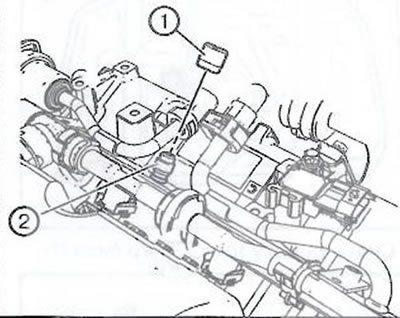
12. Install the protective cap (1) on the pressure test port (2).
Visitor comments