


Contents: Diagnostics ⬇ Repair and adjustment ⬇
Diagnostics
Carburetor problems are usually associated with contamination of the float chamber and clogged jets, which causes a lean mixture or loss of power in the engine speed range.
If a carburetor malfunction is suspected, first check the correct ignition timing and the condition of the spark plugs.
Repair and adjustment
After removing the carburetor as previously described, clean any dirt from all of its external surfaces, then remove the four screws that secure the carburetor top cover, noting their locations as different length screws are used.
Remove the top cover, take out the gasket. Now there is access to the jets of the main metering system of the carburetor.
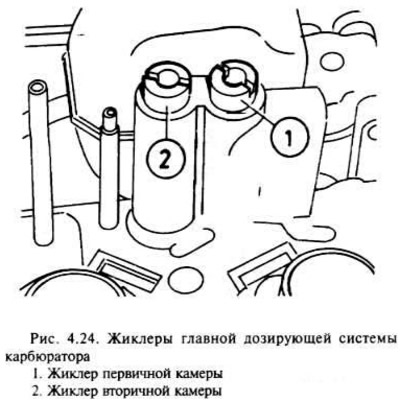
Blow out the jets and holes with compressed air (putting on protective glasses) or air flow of the foot pump. Do not clean them with wire. If it is necessary to remove the jets, carefully unscrew them with a suitable tool.
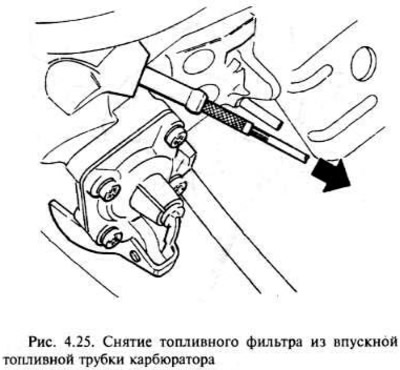
Remove the fuel filter from the fuel supply pipe to the carburetor by carefully screwing the M3 bolt into the end of the filter by about 5 mm and pulling the bolt. Insert the new filter, check that it is seated correctly.
Clean the float chamber thoroughly.
Removal and installation of the float and automatic air damper, replacement of various parts are explained in the following sections.
Further disassembly is not recommended.
Assembly is carried out in the reverse order of removal. Be sure to install new gaskets and seals.
Install the carburetor as described in the previous section.
Visitor comments