


General information
The Pierburg 2E3 carburetor is a two-chamber, complex device with various subsystems designed to improve engine control, increase efficiency and reduce the level of harmful emissions into the atmosphere.
An unusual feature of the Pierburg carburetor is that the fuel level in the float chamber is adjusted at the factory and cannot be adjusted.
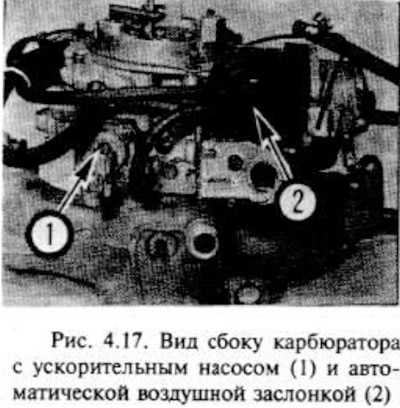
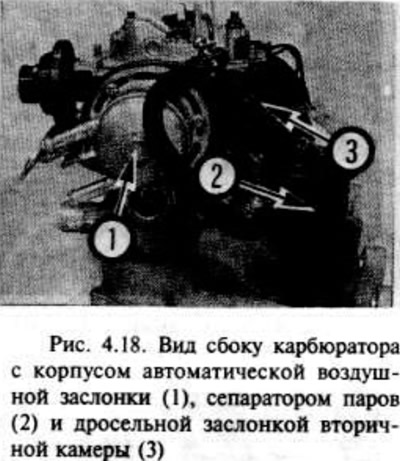
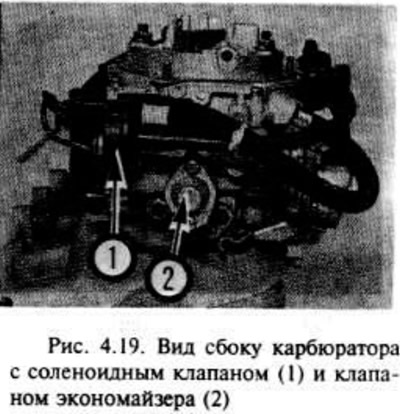
Removal
Disconnect the negative battery terminal.
Disconnect the air cleaner line, then the vacuum line and breather hose from the air box. Remove the three screws and remove the air box.
Disconnect the fuel hose from the carburetor or disconnect the fuel supply and return hoses from the vapor trap if necessary. Fuel may leak, so take fire safety precautions. Clamp the hose to prevent leakage and dirt from entering.
Remove the throttle cable clamp from the carburetor bracket, then the gasket and disconnect the end of the cable from the throttle lever.
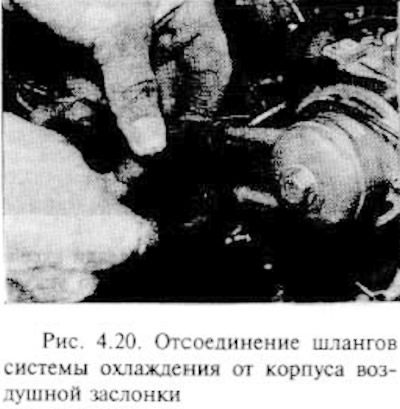
Disconnect the coolant hoses from the automatic air choke housing, noting their location for installation. Fuel leakage is possible, so clamp the hoses or secure them with the ends facing up.
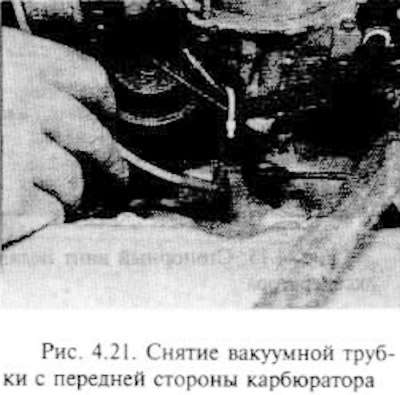
Disconnect the two vacuum lines from the front of the carburetor, making a note of their location for ease of installation.
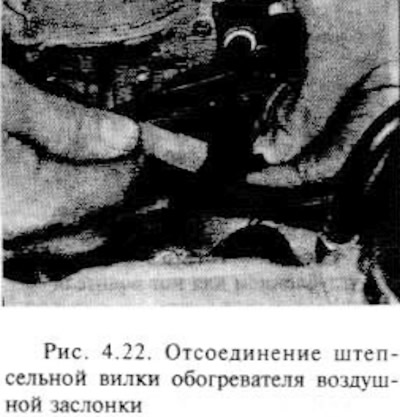
Disconnect the air damper heater wiring plug.
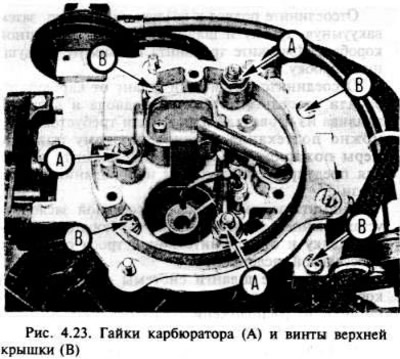
Unscrew the three nuts and remove the carburetor from the intake manifold studs.
Remove the gaskets and insulating plates between the carburetor and manifold.
Installation
Installation is carried out in the reverse order of removal, however, new gaskets must be installed.
After installation, check and adjust as follows.
Check the throttle cable free play and adjust if necessary as described above.
(Article posted on Internet portal: www.opelbook.ru)
Check and, if necessary, add refrigerant to the required level.
Check and, if necessary, adjust idle speed and mixture quality.
Visitor comments