


Contents: Examination ⬇ Typical examples of wear of…⬇
Examination
1. The multi-ribbed belt is designed to transmit engine torque to such attachments as the generator, water pump and air conditioner compressor. The multi-ribbed belt is tensioned automatically using a special tensioner. During maintenance work, it is only necessary to check the condition of the belt.
Typical examples of wear of multi-groove drive belts
2. Turn off the engine, open the hood. The belt drive is located on the right side of the engine (in the direction of the vehicle's movement). Using a flashlight, feel the belt along its entire length with your fingers, checking for cracks and delamination. The presence of scuffs, polished areas and other obvious defects on the belt is also unacceptable (see accompanying illustration). Inspect the belt on both sides by twisting it. A worn or damaged belt must be replaced. 3 Check the position of the belt tensioner lever (petrol models), it should occupy a position between the stops on the base plate (see accompanying illustration). If the tensioner lever is pressed against one of the stops, both the belt and the tensioner should be replaced. On Y20DTH/Y22DTR engines, to return the tensioner to its original position, use a key to turn it counterclockwise by the Allen key and slowly release it.
Acceptable defects
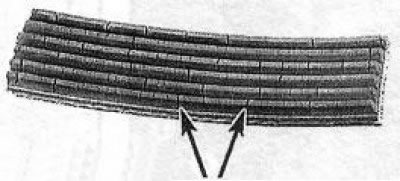
Small transverse cracks on the ribbed side of the belt
Unacceptable defects
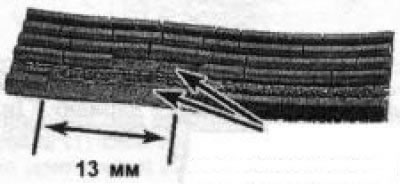
Loss of two or more adjacent ribs over areas greater than 13 mm in length
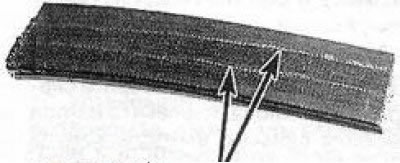
Cracks running in the longitudinal direction parallel to the belt ribs
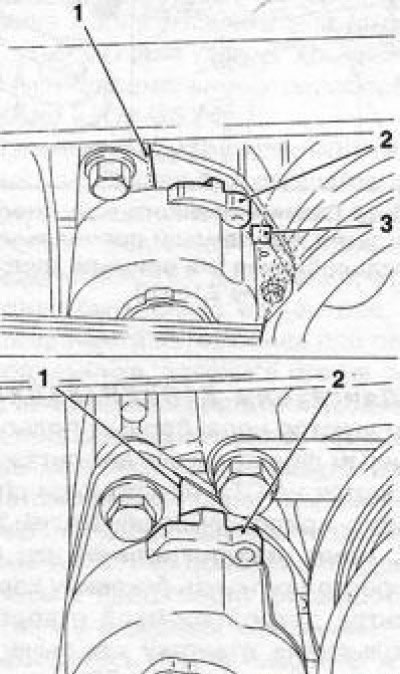
7.3 Layout of the lever (2) of the auxiliary drive belt tensioner and its stops (1) and (3)
Caution! When tensioning, make sure that the protective cover does not slip off the hydraulic element of the tensioner. The protective cover can only be put back on when the tensioner is in the tensioned position (tensioner on the stop).
Visitor comments