


Maintenance work
When performing this check, the underside of the car must be dry so that you can see the leaky areas. Brake fluid also spreads under dirt. Dark damp spots or black dirt suggest a leak in these areas.
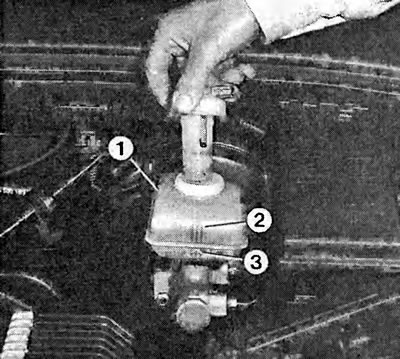
The brake fluid level should always be between the two marks (2 and 3) on the expansion tank (1) with brake fluid. It is incorrect when the level is too high, because the brake fluid rushing back (possible with hot brakes) will flow out of the tank.
Check all connections and joints; as well as brake calipers; and with an eight-valve 1.6-liter engine - brake support shields for drum brakes.
Brake hoses should not be damp, swollen or frayed. If so, replace them.
Brake lines are coated with a synthetic sheath to protect against corrosion. If this sheath is damaged, rust may form. Therefore, never clean the lines with a screwdriver, sandpaper or wire brush, but use cold cleaning agents.
If the protective layer is damaged, a thin layer of anti-corrosion primer should be applied.
Pipes with rust build-up and flattened tubes must be replaced.
Do all bleeder valves have protective caps? They are located on the brake calipers or inside the brake shields.
You can perform a temporary check of the brake system pressure yourself:
Depress the brake pedal completely.
It should not be pressed through even after several minutes of full load, otherwise the cuff in the master brake cylinder is damaged.
Due to a defective cuff, the fluid level in the expansion tank does not decrease, and the fluid under pressure squeezes past the piston of the master brake cylinder to the side that is not under pressure.
You can recognize leaky areas in the brake caliper piston seals by dark spots around the seals.
In case of doubt, contact the workshop.
Visitor comments