


Contents: Coal deposits ⬇ Oiling ⬇ Overheat ⬇ Too early ignition ⬇ Conductive gloss ⬇ Short circuit of electrodes ⬇ Normal condition of the candle ⬇ Ash formation ⬇ Wear ⬇ Detonation ⬇ Splashing ⬇ Mechanical damage ⬇
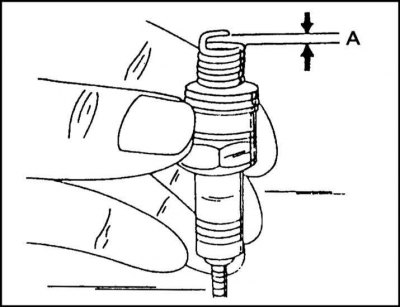
Interelectrode distance of spark plug "A"
Spark plugs have a thread diameter of 14 mm. Manufacturers recommend a certain type of spark plug, but you can use suitable spark plugs with the appropriate heat range from other manufacturers. The distance between the spark plug electrodes is 0.7-0.8 mm and is measured at the location (A) shown in the illustration.
Spark plugs should be cleaned with a sandblaster every 10,000 km. At the same time, the appropriate interelectrode distance should be set. When adjusting the distance, never bend the middle electrode, as this may cause the porcelain insulator to crack.
Before unscrewing the spark plugs, check that there are no foreign objects in the spark plug recesses. Washers, bolts or stones in the spark plug holes will damage the valves, valve seats or cylinder head when the engine is first started.
The appearance of the spark plug can be used to draw conclusions about the operation of the spark plugs, the adjustment of the carburetor, the condition of the mixture and the condition of the engine (pistons, piston rings, etc.) (see photographic inserts).
Coal deposits
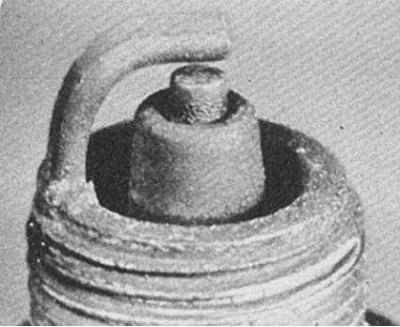
Symptoms: The presence of soot indicates an over-rich fuel-air mixture or weak spark intensity. Causes misfires, difficult starting and leads to unstable engine operation.
Recommendations: Check if the air cleaner is clogged, if the fuel level in the float chamber is too high, if the air damper is jammed, and if the contacts are too worn. Try using spark plugs with a longer insulator, which increases resistance to fouling.
Oiling
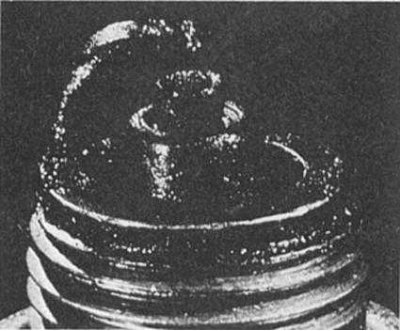
Symptoms: Oiling of the spark plug is caused by wear of the oil deflector caps. Oil enters the combustion chamber through worn valve guides or piston rings. Causes misfires, difficult starting and leads to unstable engine operation.
Recommendations: Perform mechanical repairs and replace spark plugs.
Overheat
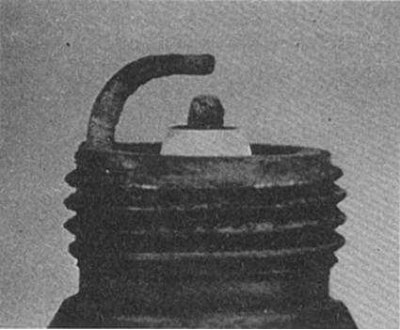
Symptoms: Porous, white insulator, eroded electrodes and no deposits. Leads to a reduction in spark plug life.
Recommendations: Check if it meets the requirements Specifications the glow plug rating, whether the ignition timing is set correctly, whether the fuel-air mixture is too lean, whether there are any vacuum leaks in the intake manifold, and whether the valves are stuck. Also check the coolant level and whether the radiator is clogged.
(The source is on the online website: www.opelbook.ru)
Too early ignition
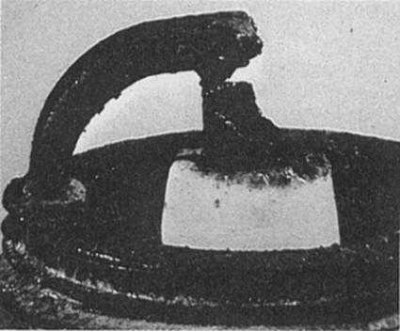
Symptoms: Electrodes are melted. The insulator is white in color, but can also be contaminated due to misfires or foreign particles entering the combustion chambers. May cause engine failure.
Recommendations: Check the glow number of the installed spark plugs, the ignition timing, and the quality of the mixture (isn't it too poor?), whether the cooling system is clogged and whether the lubrication system is functioning normally.
Conductive gloss
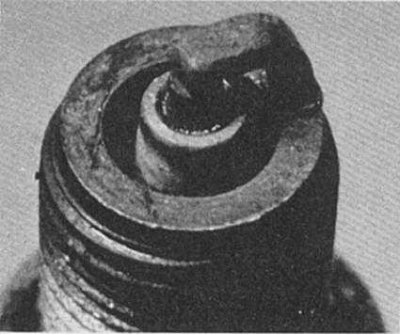
Symptoms: The insulator has a yellowish color and a polished appearance. Indicates a sudden increase in temperature in the combustion chambers during sudden acceleration. Normal deposits are melted, taking on the appearance of a varnish coating. Causes misfires at high speeds.
Recommendations: Change the spark plugs (cooler, while maintaining the same driving style).
Short circuit of electrodes
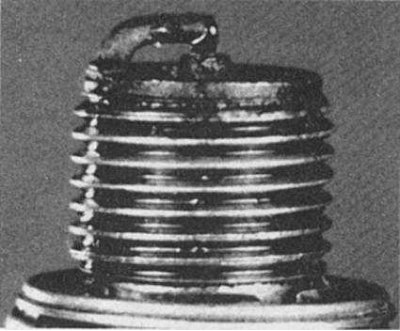
Symptoms: Combustion waste products enter the interelectrode space. Solid deposits accumulate, forming a bridge between the electrodes. Causes ignition failure in the cylinder.
Recommendations: Remove deposits from the interelectrode space.
Normal condition of the candle
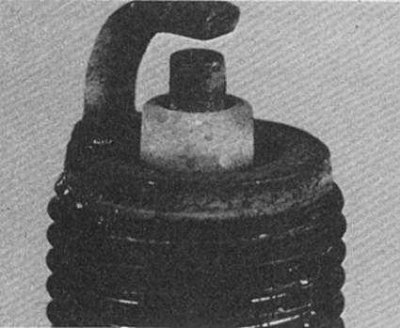
Symptoms: Gray-brown color and slight wear of the electrodes. The glow number of the spark plugs corresponds to the engine type and its general condition.
Recommendations: When replacing spark plugs, install spark plugs of the same type.
Ash formation
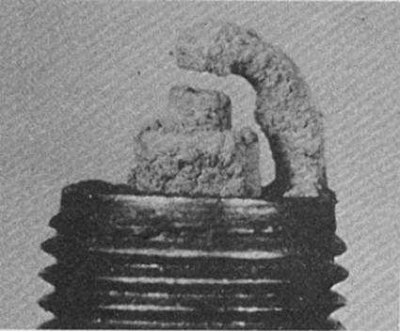
Symptoms: Soft, brownish deposits on one or both spark plug electrodes. The source of their formation is the additives used in oil and/or fuel. Excessive build-up can cause electrode insulation and cause misfires and rough engine operation under acceleration.
Recommendations: If deposits accumulate quickly, replace the oil seals to prevent oil from entering the combustion chambers. Try changing the brand of fuel.
Wear
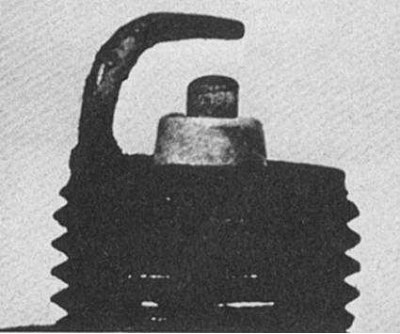
Symptoms: Rounding of the electrodes with a small accumulation of deposits at the working end. The color is normal. Leads to difficulty starting the engine in cold, damp weather and increased fuel consumption.
Recommendations: Replace the spark plugs with new ones of the same type.
Detonation
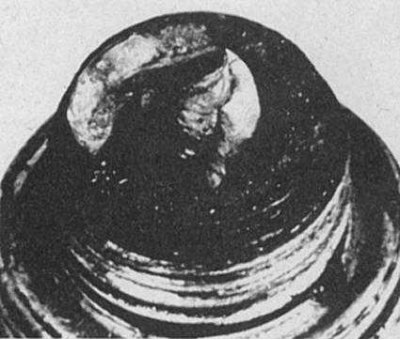
Symptoms: Insulators may be chipped or cracked. Inaccurate spark plug gap adjustment techniques can also lead to damage to the insulator. May cause damage to pistons.
Splashing
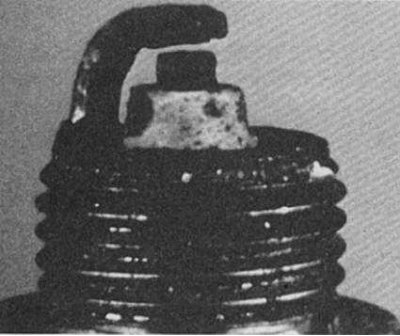
Symptoms: After misfiring for an extended period of time, deposits may become loose while the combustion chamber remains at operating temperature. At high speeds, deposits flake off from the piston and stick to the hot insulator, causing misfires.
Recommendations: Replace the spark plugs or clean and reinstall the old ones.
Mechanical damage
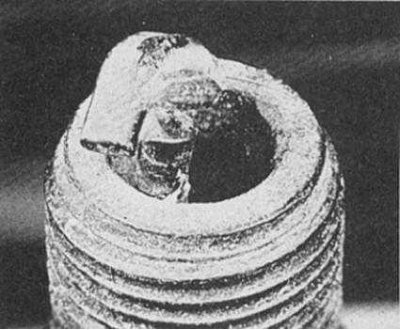
Symptoms: Can be caused by foreign material entering the combustion chamber or by the piston hitting a spark plug that is too long. Lead to failure of the cylinder and damage to the piston.
Recommendations: Remove foreign particles from the engine and/or replace
Since the service life of spark plugs is usually 15,000 km, it is enough to clean them every 8,000 km. When screwing in the spark plugs, make sure that they are not overtightened, as this may damage the sealing washer. The tightening torque must not be exceeded.
To maintain engine power, spark plugs must be replaced at least once every 2 years.
Note: Spark plugs for the new X 22 XE engine (volume 2.2 l) require replacement every 4 years or 60,000 km.
Visitor comments