


2. On carburetor models, the air cleaner is thermostatically controlled and is used to regulate the temperature of the air entering the carburetor depending on the outside air temperature and engine load. Air can enter the air purifier through two channels: through a regular air intake (cold air) and through the hot air collector mounted on the exhaust manifold (hot air).
3. The air flow through the air cleaner is regulated by a flap valve located in its neck. Depending on the outside temperature and the vacuum in the manifold, this valve opens or closes the openings for the supply of cold and hot air.
4. The flapper valve is controlled by a vacuum actuator which keeps the valve fully open when the air temperature in the air cleaner is below a set level. As the air temperature in the air intake increases, the actuator begins to open or close the valve depending on the vacuum in the manifold. Thus, when the gas pedal is released or slightly pressed, the valve remains open and hot air enters the carburetor. When you press hard on the gas pedal, the valve closes and cold air begins to flow into the carburetor.
5. When the air temperature in the air cleaner rises even more, the vacuum actuator closes the flap valve, and at any engine operating mode, only cold air begins to flow into the carburetor.
6. The vacuum actuator is driven by the vacuum created in the intake manifold and is controlled by a temperature-sensitive unit located in the air cleaner.
7. The operation of the air purifier can be checked as follows.
8. Remove the air cleaner (see next section).
9. Apply a stream of warm air to the hot air intake opening. At the same time, apply vacuum to the vacuum hose (suck air out with your mouth). Check the operation of the flap valve in different modes (with hot air/without hot air and with vacuum/without vacuum).
10. If the valve does not behave as expected (see above), check the condition and reliability of the vacuum hose connections. If they are OK, then the problem lies in the temperature control system. On 1.6 engines, the temperature-sensitive unit can be replaced (having first removed its locking plate), as well as a vacuum actuator and an air intake neck (see photos). The air intake parts for 1.3 engines are not sold separately, so in case of a fault the air intake assembly should be replaced.
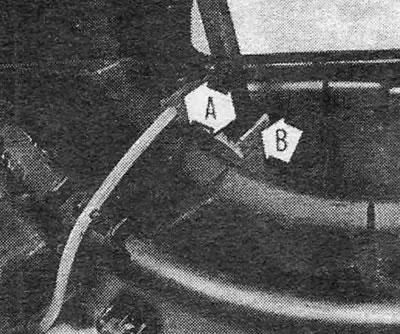
Photo 3.10A. Air cleaner temperature sensing unit vacuum hose connection (A) and locking plate (B) (engine 1.6).
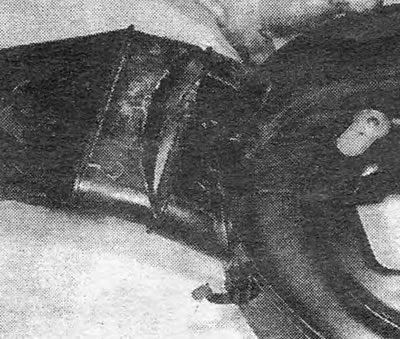
Photo 3.10B. Removing the air intake from the air cleaner housing (engine 1.6).
Visitor comments