


Bosch type starter motor
2. Loosen the two screws and remove the bearing cap from the switch cover.
3. Remove the clamp from the end of the anchor and, carefully noting the assembly sequence, remove the washers and rubber sealing ring from the anchor.
4. Mark the position of the commutator cover in relation to the starter housing, then remove the two long bolts that hold the entire assembly together. Remove the switch cover.
5. Lift the brush springs so that the positive brushes can be disconnected, then remove the brush plate. Mark and remove any washers that may be installed there.
6. Disconnect the field winding wire from the solenoid contact, then remove the two mounting screws to disconnect the solenoid from the entire assembly. Once the solenoid is removed, disconnect its mount from the operating lever.
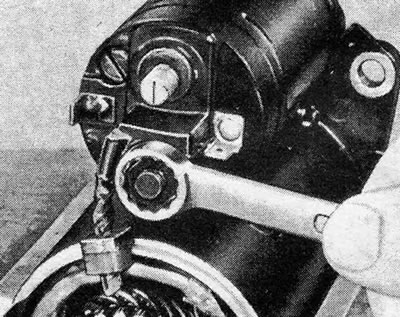
Figure 12.10. Disconnecting the field winding wire from the solenoid contact - Bosch starter
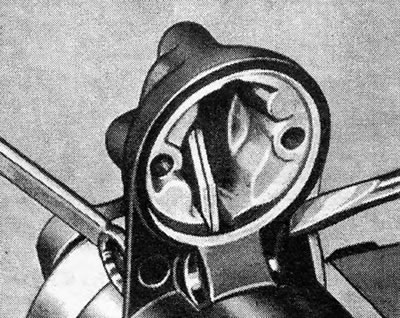
Figure 12.11. Releasing the support spindle of the operating lever of the solenoid - Bosch type starter
7. Unscrew and remove the operating lever support, then remove the outer frame from the casing structure. Once this is done, remove the rubber plug and the operating lever. Remove the anchor from the housing.
8. If it is necessary to remove the gear or clutch from the anchor, press the retaining ring backwards so that the pressure ring can be removed from the shaft. Now you can remove all the parts from the shaft (see Figure 12.12 and 12.13).
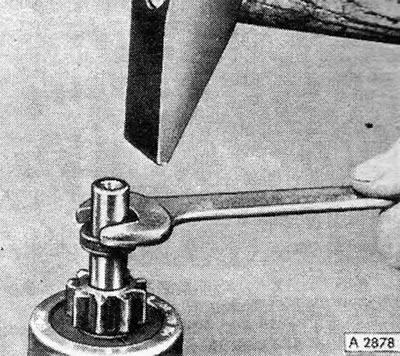
Figure 12.12. Tapping the locking edge of the clamping ring down along the armature shaft - Bosch type starter
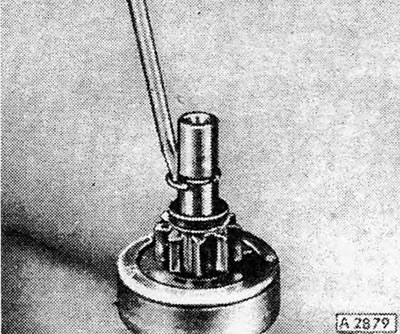
Figure 12.13. Removing the clamping ring from the armature shaft - Bosch type starter
9. Once the starter motor has been disassembled, the various components can be cleaned and examined for signs of general wear and/or damage. To clean, use a cloth soaked in gasoline, but avoid getting electrical parts wet. Dry all parts thoroughly with a dry, non-shedding cloth.
10. Replace worn or damaged brushes as described in Section 17.
11. If the starter motor has shown a tendency to stick or refuse to disengage from the clutch, it is most likely caused by the condition of the pinion gear. It can also be caused by dirt build-up on the shaft or gear. After removing such dirt, check that the gear can move freely in a spiral along the shaft. If it still has a tendency to stick or bind in any way, replace the gear.
12. A badly worn or burnt commutator will require a lathe to clean the surface, but if it is only very dirty or lightly marked it can be simply cleaned with a piece of very fine sandpaper wrapped around it. If the surface of the commutator requires treatment, this work should be left to a specialist, but make sure that the diameter of the commutator after treatment corresponds to that stated in the Specifications. After processing, the separators should be trimmed using a piece of an old jigsaw cut to the same thickness as the separators. Trim to a depth of approximately 0.5 to 0.8 mm, then sand smooth with very fine sandpaper. Do not use sandpaper on the commutator as the abrasive particles may get into the copper surface and cause rapid wear of the brushes.
13. An anchor with a bent shaft or other signs of damage must be replaced. All electrical testing should be performed by a qualified electrical technician with the proper equipment. Although simple continuity tests can be performed using a light bulb and a low voltage source, more complex tests are still required and are beyond the capabilities of the DIYer.
14. The starter motor is assembled by performing the above steps in reverse order, however, some details should be noted:
- a) After assembling the clutch and gear onto the armature shaft, install the retaining ring using a new pressure ring;
- b) Make sure that all washers and gaskets are installed in the correct order;
- c) When installing the casing on the outer frame, align the protrusion with the slot;
- d) Make sure that the carbon brushes can move freely in their guides;
- d) Lightly lubricate all sliding parts, including the anchor spiral pin, the sliding surfaces of the operating lever, the clutch bearing surfaces and the anchor bearings. Of course, not a drop of oil should get on the commutator or brushes.
Delco-Remy type starter motors
15. Mark the position of the commutator cover and drive end bearing housing in relation to the starter housing to ensure proper assembly later, then disconnect the field winding wires from the lower tab of the solenoid.
16. Loosen and remove the two connecting bolts from the switch cover and remove the cover. Carefully remove the starter housing from the armature and drive bearing housing (see photo 18.16).
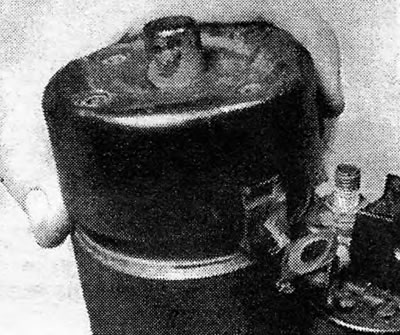
Photo 18.16 Removing the back cover (Delco-Remy)
17. Loosen the two mounting screws and remove the solenoid and its spring from the drive bearing housing. Remove the clamp from the operating lever spindle and tap the spindle out of the housing. This will allow the anchor and the operating lever to be removed together, and then the operating lever can be disconnected from the anchor structure.
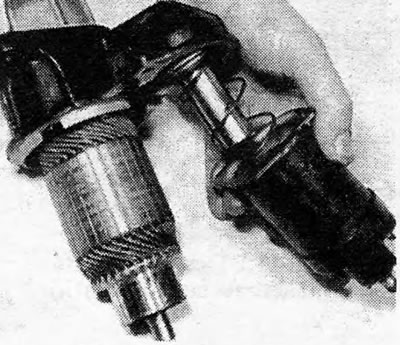
Photo 18.17A Removing the solenoid and starter spring (Delco-Remy)
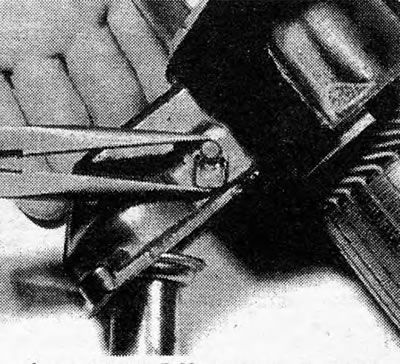
Photo 18.17B Installing the support spindle clamp (Delco-Remy)
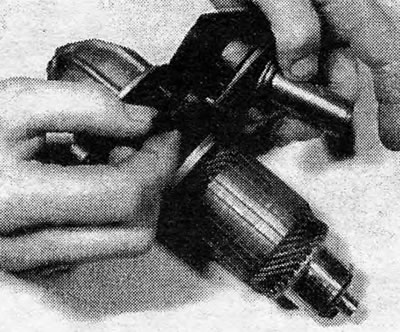
Photo 18.17 C Removing the support spindle (Delco-Remy)
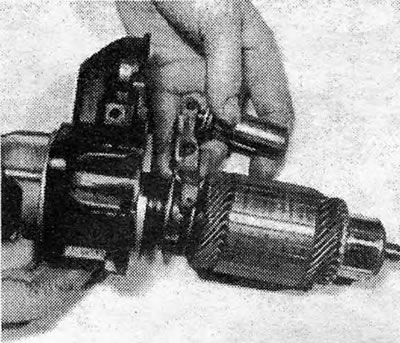
Photo 18.17D Disassembling the drive end casing (Delco-Remy)
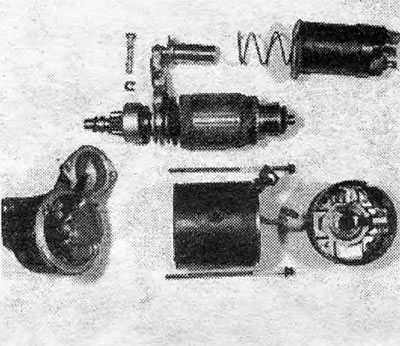
Photo 18.17E Detailed image of the Delco-Remy starter motor
18. The remainder of the disassembly process, as well as subsequent assembly for this starter, is exactly the same as described in points 8 through 14, which it is now recommended to refer to. Once the solenoid is installed into the drive bearing housing, use a small amount of hardening plastic putty to seal the slot in the housing to prevent water from entering the starter. Then continue assembly as described above.
Text was copied from the portal opelbook.ru
Visitor comments