OpelBook.ru
Cars AvtoVAZ Cars Mitsubishi Cars BMW Cars Mercedes Cars Nissan Cars Toyota Cars Chevrolet
English Русский
Български
Беларускі
Український
Српски
Hrvatski
Română
Polski
Slovenský
Magyar
 |  Sitemap  |  Contacts  |    


Main Astra Corsa Insignia Kadett Omega Vectra Zafira Others Articles
Omega A (1986-1993) Omega B (1993-1999) Omega B2 (1999-2003)
  • Main
  • Omega
  • Omega A
  • Electrical equipment
  • Power devices
  • Starter — disassembly and assembly

Starter — disassembly and assembly (Opel Omega A)

            0

1. Complete disassembly of the starter should only be carried out in a specialized workshop, since special equipment is needed for testing. But some types of repairs related to simple replacement of components can be carried out independently. Remove the starter and place it on a bench and continue as follows.

2. Remove the traction relay as described in Chapter 13. Unscrew the two screws and remove the end cap from the switch panel.

3. Using a lever, remove the bracket at the end of the anchor and, remembering the assembly sequence, remove the gaskets and rubber ring seal from the anchor.

4. Mark the position of the commutator trim relative to the starter housing, then remove the two long bolts that hold the housing assembly together. Remove the commutator trim.

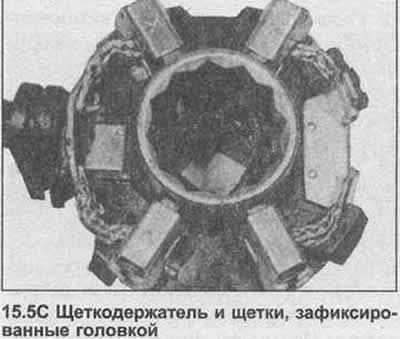
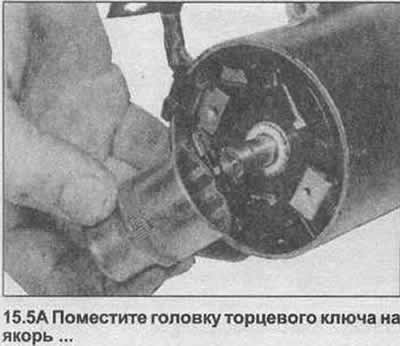
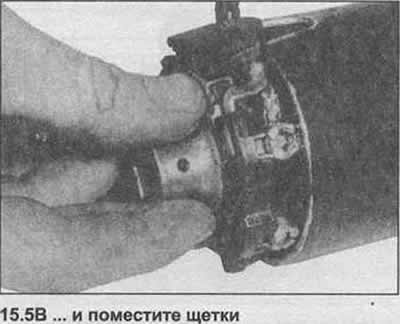
5. Lift the brush springs and remove the mounting plate. Locate and remove all the spacers. You can use a large diameter socket to secure the brushes in their holders before installing (photo).
5. Lift the brush springs and remove the mounting plate. Locate and remove all the spacers. You can…


5. Lift the brush springs and remove the mounting plate. Locate and remove all the spacers. You can…


5. Lift the brush springs and remove the mounting plate. Locate and remove all the spacers. You can…


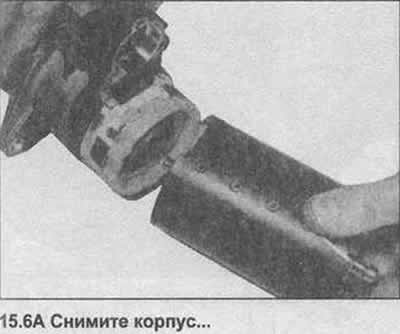
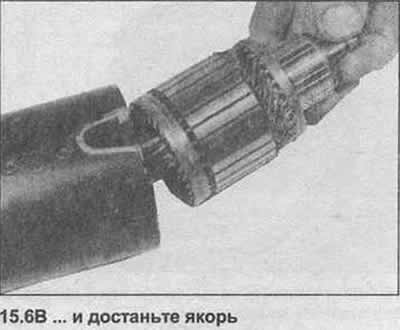
6. Remove the housing together with the anchor, then pull out the anchor (photo).


6. Remove the housing together with the anchor, then pull out the anchor (photo).

6. Remove the housing together with the anchor, then pull out the anchor (photo).


7. Where installed, unscrew the drive lever support.

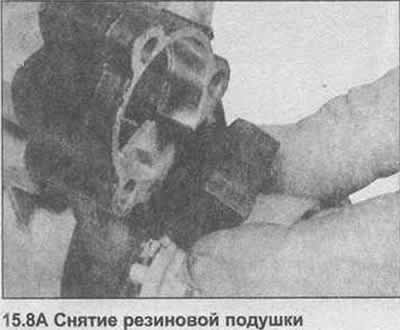
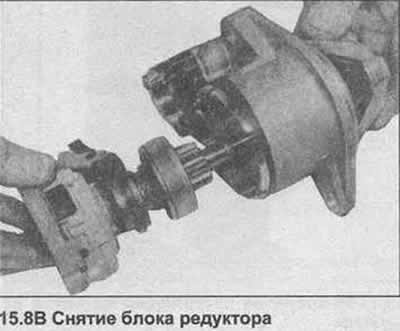
8. Remove the rubber cushion using a lever and remove the gearbox unit from the drive casing (photo).
8. Remove the rubber cushion using a lever and remove the gearbox unit from the drive casing…


(Original article on the web portal OpelBook.ru)
8. Remove the rubber cushion using a lever and remove the gearbox unit from the drive casing…


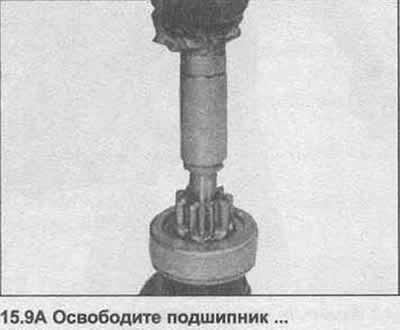
9. To remove the gear and freewheel clutch, pull back the bearing and remove the retaining ring (photo).
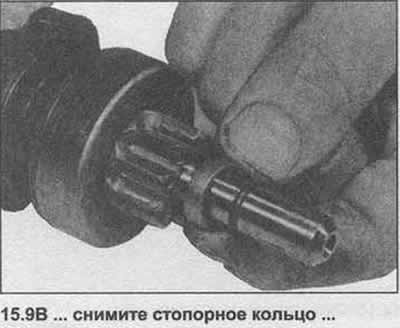
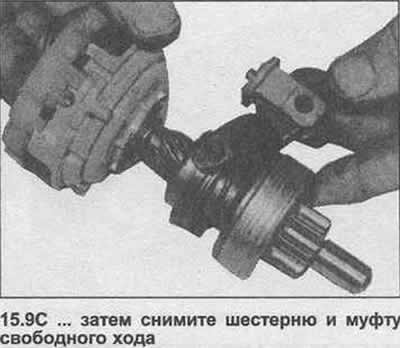
9. To remove the gear and freewheel clutch, pull back the bearing and remove the retaining ring…


9. To remove the gear and freewheel clutch, pull back the bearing and remove the retaining ring…


9. To remove the gear and freewheel clutch, pull back the bearing and remove the retaining ring…


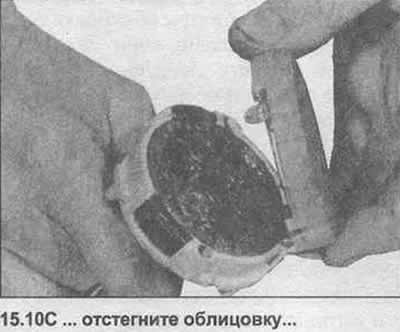
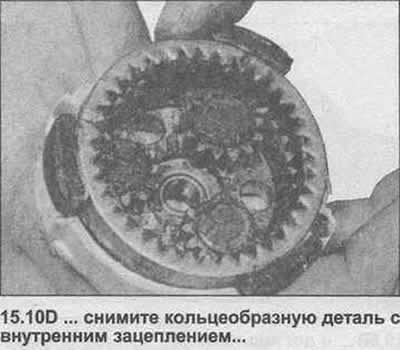
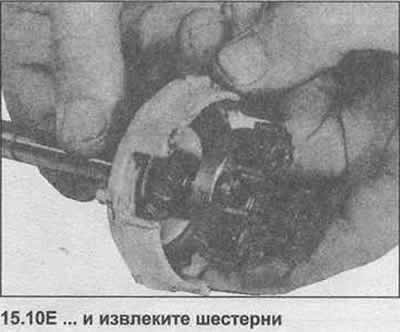
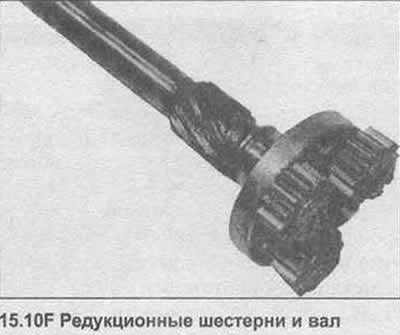
10. To disassemble the gearbox unit, remove the retaining ring, remove the gasket, unfasten the trim, remove the ring-shaped part and remove the mechanisms (photo).
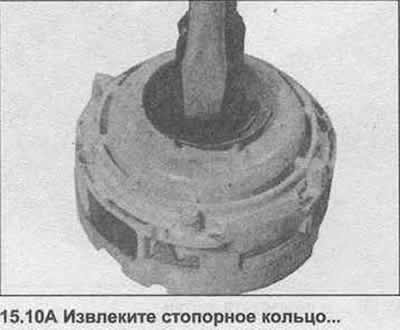
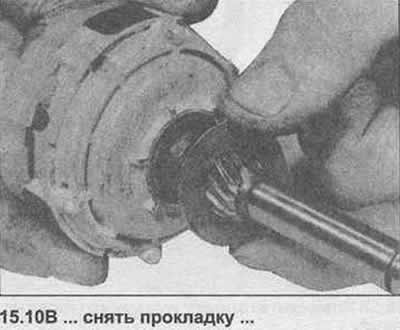
10. To disassemble the gearbox unit, remove the retaining ring, remove the gasket, unfasten the…


10. To disassemble the gearbox unit, remove the retaining ring, remove the gasket, unfasten the…


10. To disassemble the gearbox unit, remove the retaining ring, remove the gasket, unfasten the…


10. To disassemble the gearbox unit, remove the retaining ring, remove the gasket, unfasten the…


10. To disassemble the gearbox unit, remove the retaining ring, remove the gasket, unfasten the…


10. To disassemble the gearbox unit, remove the retaining ring, remove the gasket, unfasten the…


11. If necessary, remove the permanent magnets from the housing (photo).
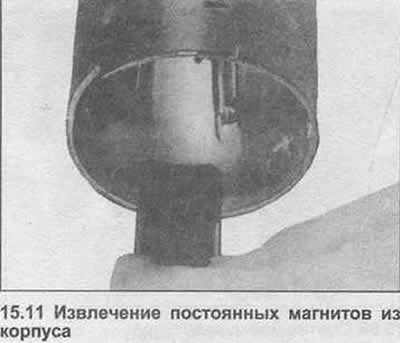


11. If necessary, remove the permanent magnets from the housing (photo).


12. With the starter motor removed, the various components can be cleaned and inspected for signs of general wear and/or damage. Use a cloth dampened with gasoline to clean, but do not wet the electrical components.

13. Replace worn or damaged carbon brushes as shown in Chapter 14.

14. If the starter sticks or disengages poorly, the pinion is most likely the cause. Dirt buildup on the shaft or pinion can also cause this. After removing all dirt, check that the pinion can move freely in a spiral along the shaft. If the starter still sticks or seizes, replace the pinion.

15. A heavily worn or burnt commutator must be processed on a lathe. If there is a small amount of carbon or oil, it can be processed with a piece of sandpaper. When processing the commutator, ensure that the minimum diameter is maintained within the limits specified in the Specifications (photo). After grinding, it is necessary to cut the dividers (separators), using a piece of an old hacksaw blade to the same thickness as the dividers(separators). The depth of the groove should be approximately 0.5-0.8 mm. Then process the grooves with fine sandpaper, do not use emery, since its particles can get on the copper parts and cause rapid wear of the brushes.
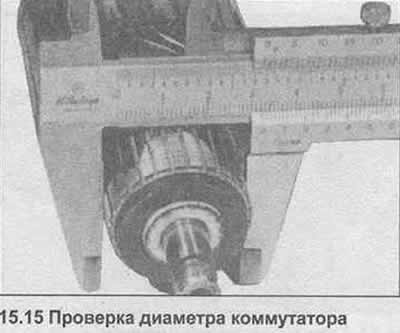


15. A heavily worn or burnt commutator must be processed on a lathe. If there is a small amount of…


16. An anchor with a bent shaft or other signs of damage must be replaced. A complete check of the electrical part must be carried out on special equipment.

17. The starter assembly is carried out in the reverse order of disassembly, but with the following points observed:
  • a) After installing the coupling and gear on the armature shaft, install the retaining ring using a new compression ring and then reinstall the retainer
  • b) Make sure all washers and gaskets are installed in the correct sequence
  • c) Align the tab and groove on the cover and casing
  • d) Make sure the carbon brushes move freely in their guides.
  • e) Lightly lubricate all moving parts, including the armature spiral groove, drive, clamping surfaces, clutch bearing running surfaces and armature bearings. Of course, the grease should not contaminate the commutator or brushes.


This article is available at russian, bulgarian, belarusian, ukrainian, serbian, croatian, romanian, polish, slovak, hungarian
Checking the article: Zinoviev Kirill

Share information:

Previous articles
Opel Omega A: Power devices
Next articles

Starter brushes — inspection and removal
Starter Solenoid Relay — Removal and Installation (Starter Removal)
Starter overhaul — general description
Starter — removal and installation
Starter — Checking in a Car
Starter — General Description


See similar ones from other Opel car manuals:
▶ Reverse Light Switch/Starter Inhibitor Circuit Opel Astra F (1991-1998, petrol)
▶ Removal and installation the starter Opel Corsa B (1993-2000)
▶ Starter Replacement — Petrol Engines Opel Insignia A (2008-2017)
▶ GM Varajet II Carburetor Manual Choke Starter Opel Kadett E (1984-1995)
▶ Starter interlock — removal and installation Opel Vectra A (1988-1995, petrol)
Link to this page in different formats

Visitor comments


No comments yet


How much will 30 + 31 =


Omega B2 (1999-2003) 
  • General information
  • User manual
  • Maintenance
  • Troubleshooting
  • Power unit
  • Petrol 4-cylinder
  • Petrol 6-cylinder
  • Engine overhaul
  • Diesel engines 2.0 l
  • Diesel engines 2.5 l
  • Cooling and heating
  • Injection system (gasoline)
  • Fuel system (diesel)
  • Fuel system
  • Exhaust system
  • Ignition system
  • Transmission
  • Clutch
  • Mechanical gearbox
  • Automatic gearbox
  • Main gear and shafts
  • Chassis
  • Brake system
  • Car suspension
  • Steering
  • Body
  • Body elements
  • Electrical equipment
  • Equipment and devices
  • Electrical circuits
Omega B (1993-1999) 
  • General information
  • User manual
  • Tips for the car owner
  • Maintenance (gasoline)
  • Maintenance (diesel)
  • Power unit
  • Petrol engine SOHC 2.0 l
  • Petrol engine DOHC 2.0 l
  • Petrol engines 2.5 and 3.0 l
  • Repair of gasoline engines
  • Diesel engine 2.0 l
  • Diesel engine repair 2.0 l
  • Diesel engine 2.5 l
  • Cooling and heating
  • Power system (petrol)
  • Emission reduction
  • Fuel system (diesel 2.0 l)
  • Fuel system (diesel 2.5 l)
  • Launch system
  • Ignition system
  • Transmission
  • Clutch
  • Mechanical gearbox
  • Automatic gearbox
  • Drive shafts
  • Chassis
  • Brake system
  • Wheel suspension
  • Steering
  • Body
  • Exterior
  • Interior
  • Doors and windows
  • Electrical equipment
  • Equipment and devices
  • Wiring diagrams (early)
  • Wiring diagrams (late)
Omega A (1986-1993) 
  • General information
  • User manual
  • Maintenance
  • Changes and additions
  • Troubleshooting
  • Power unit
  • Gasoline engines
  • Diesel engines
  • Cooling system
  • Fuel system (gasoline)
  • Fuel system (diesel)
  • Ignition system
  • Transmission
  • Clutch
  • Mechanical gearbox
  • Automatic gearbox
  • Cardan shaft
  • Drive shafts
  • Chassis
  • Brake system
  • Car suspension
  • Steering
  • Body
  • Exterior
  • Interior
  • Electrical equipment
  • Power devices
  • Lighting and appliances
  • Electrical circuits
OpelBook.ru © 2017–2026 · Mobile version · · Sitemap: EN BG BY UA RS HR RO PL SK HU · Feedback · Site search
Astra F, petrol · Astra G, petrol · Astra G · Astra H · Astra J, petrol · Corsa B · Corsa C, petrol · Corsa C · Insignia A · Kadett D · Kadett E · Omega A · Omega B · Omega B2 · Vectra A, petrol · Vectra A · Vectra B, petrol · Vectra B · Vectra C · Zafira A, petrol · Frontera A, petrol · Frontera B · Ascona C · Vivaro A ·
We want your visit to be comfortable 🤝! We use cookies 🍪 to make that happen.