


Attention! The manufacturer recommends changing the connecting rod bearings every time the engine is disassembled, regardless of their condition.
1. Both standard connecting rod bearings of various size groups and repair ones are supplied as spare parts. Bearings are selected according to the measured diameter of the connecting rod journal.
Checking clearances in main bearings
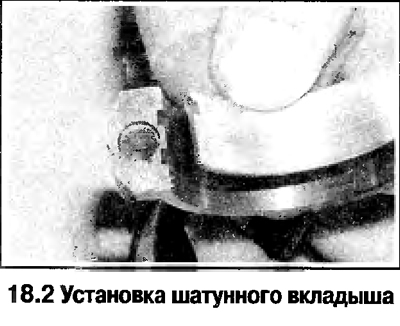
2. Insert the bearing shells into place, making sure that the protrusions on the bearing shells fit into the recesses in the connecting rod and in the connecting rod cap (see photo). If the clearance check is to be performed with the old liners, then insert these liners in their original places. The clearance in the connecting rod bearings can be checked in two ways.
3. When determining the clearance using the first method, assemble the caps with the connecting rods and connecting rod bearings, ensuring that these parts are correctly oriented relative to each other. Tighten the cap nuts to the specified torque and measure the inner diameter of each assembled pair of liners. The clearance is determined as the difference between the inner diameter of the assembled connecting rod bearings and the diameter of the connecting rod journal.
4. The second way (more accurate) consists of using plastic calibration wire.
5. Install the connecting rod bearings, orienting them correctly. Place a piece of calibration wire on each connecting rod journal of the crankshaft.
6. Clean the surfaces of the connecting rod bearings and install the connecting rods on the corresponding crankshaft journals. Install the connecting rod bearing caps. Tighten the cap nuts. When tightening, do not change the position of the wire, and do not turn the crankshaft. Remove the connecting rod caps, without allowing the crankshaft to turn or the calibration wire to move. Compare the width of the flattened wire with the scale on the package and determine the clearance in the main bearings.
7. If the clearance differs from the standard, the reason may be the incorrect selection of connecting rod bearings (or their increased wear if the liners tested were previously in use). Before deciding whether the bearings need to be replaced, make sure that there is no dirt or oil between the surfaces of the caps or connecting rods and the bearing when measuring. If the width of the flattened wire is greater on one side, this indicates that the connecting rod journal is taper.
8. If there is a gap when installing new liners, you should seek advice from a car service center, as it may be necessary to regrind the crankshaft journals and replace the liners with repair ones.
Installation of connecting rod and piston group
9. Make sure the connecting rod bearings are installed correctly. If new bearings are to be installed, wash them in kerosene. Wipe the connecting rods and bearings dry. Lubricate the cylinders, pistons and rings, then lay out the pistons and connecting rods in the order in which these parts will be installed on the engine (see photo).
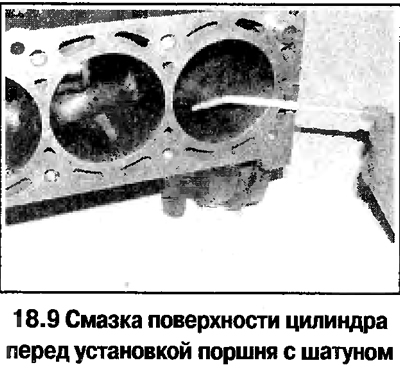
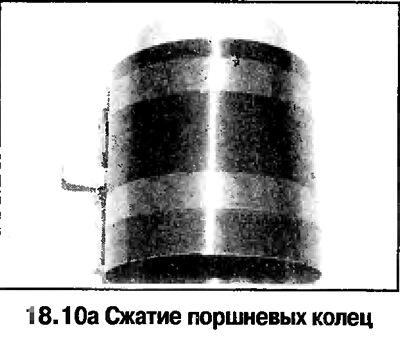
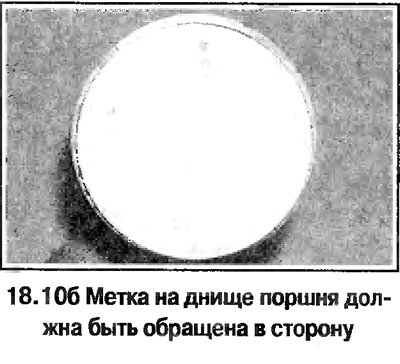
10. Start assembly with cylinder 1. Make sure the piston ring joints are correctly positioned (see above) and compress the rings with a special device (see photo). Insert the piston assembly with the connecting rod into the first cylinder. Orient the piston so that the mark on the piston bottom (in the form of an arrow or a line) facing the front of the engine. Lightly tap the piston with a hammer handle or a wooden block until the piston enters the cylinder and the piston crown is flush with the cylinder block split plane (see photo).
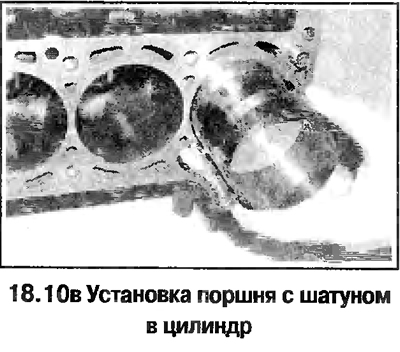
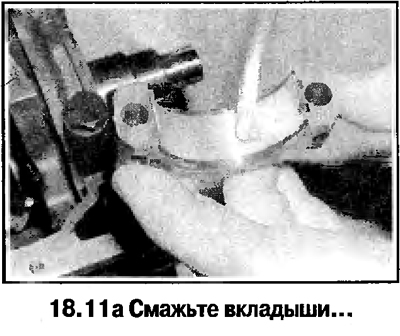
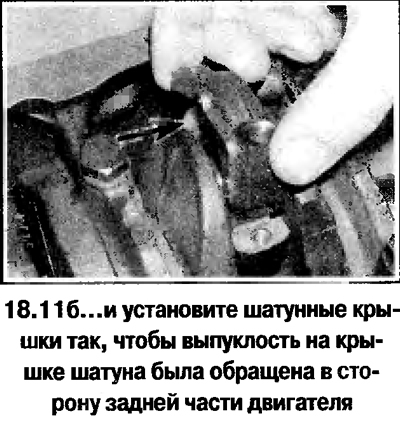
11. Make sure the connecting rod bearings are installed correctly and generously lubricate the bearings and the crankshaft journal. Carefully, so as not to damage the cylinder surface, pull the connecting rod to the crankshaft journal. Put on the connecting rod cap with the bearing and tighten the nuts by hand. Keep in mind that the bulge on the connecting rod cap should be facing the rear of the engine (flywheel). Screw on the bolts and pull by hand.
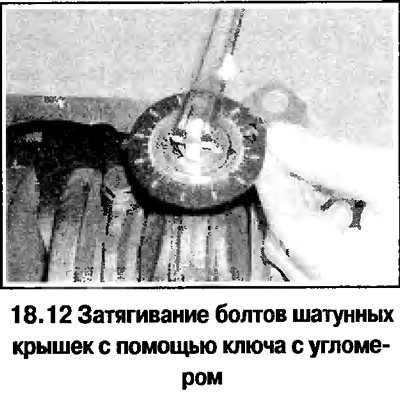
12. Tighten the connecting rod cap bolts in the order specified in the Technical Data (see photo).
13. On 2.0L engines, install a balance mechanism (or the frame of the lids).
14. Install the new rear oil seal, flywheel, cylinder head, oil pump, oil deflector, pan and camshaft belt.
15. Install the removed components and assemblies onto the engine and install the engine onto the vehicle.
Original source on the website: www.OpelBook.ru
Visitor comments