


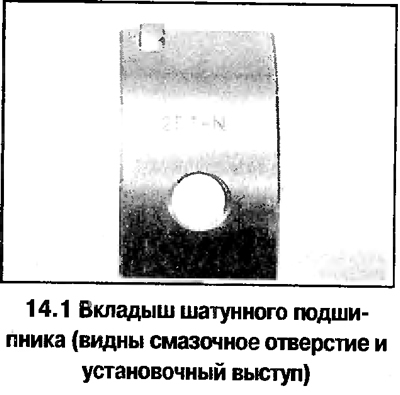
2. Causes of crankshaft bearing failure include insufficient lubrication, dirt and foreign particles, engine overload and corrosion. Regardless of the cause of bearing failure, it should be corrected before final engine assembly (see photo).
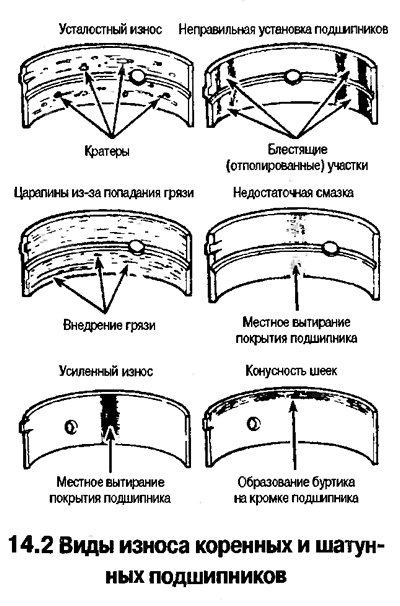
3. Remove the bearings from the cylinder block and lay the liners on a clean surface in the order they were installed. To prevent accelerated wear due to contamination, maintain cleanliness when assembling the engine. During operation, it is recommended to change the oil and filters more often.
4. If there is insufficient lubrication, the bearing coating material is wiped off the steel base, and the bearing crumbles from overheating (a bluish tint is observed).
5. When driving in difficult conditions for the engine (with the throttle fully open, or at low speed in a higher gear) the bearing coating is torn off from the steel base in the form of small particles, and the bearings are subject to fatigue wear.
6. Frequent short-distance travel can cause corrosive wear of bearings, since insufficient heating does not allow condensed moisture to be removed.
7. Incorrect installation of bearings during assembly also leads to their premature wear. If the clearance in the bearings is less than the norm, then their lubrication is difficult, which leads to wear as well as due to "oil starvation".
Visitor comments