


It is recommended to replace the main bearing shells regardless of their condition.
1. Installing the crankshaft is the first step in the actual engine assembly procedure. It is assumed that at this stage the crankshaft and engine block have already been properly cleaned, inspected and subjected to the necessary refurbishment.
2. Turn the engine upside down.
3. Loosen the mounting bolts, remove the main bearing caps and lay them out on the workbench in the order of installation on the engine.
4. If you haven't already done so, remove the old main bearing shells from their beds in the block and caps. Wipe the beds with a clean, lint-free cloth - they should be spotlessly clean.
Checking the working clearances of the main bearings
Try not to touch the surfaces of new bearings with bare hands to avoid unwanted contact of bearings with traces of oil and chemically aggressive substances that are always present on fingers.
1. Wipe the backs of the new main bearing shells and insert the halves equipped with an oil groove into their beds in the block (if old liners are used, make sure that they are placed exactly in their original places). Insert the remaining halves of the liners into the corresponding bearing caps. Make sure that the tongues of the liners enter the corresponding mounting grooves in the block beds and caps. The oil holes in the block must be correctly aligned with the holes in the liners.
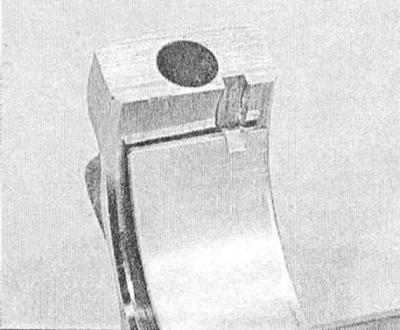
Do not attempt to hammer a stubborn bearing insert into your bed under any circumstances. Do not lubricate the bearings at this stage!
2. Remember that the combined bearing shell equipped with thrust half rings is placed in the upper bed of the third main bearing on all engines except the 1.7 l DOHC diesel, where the thrust bearing is the second bearing, and in the latter case the half rings are supplied as separate components and must be placed in special cutouts in the bearing bed with the oil drain grooves facing outward.
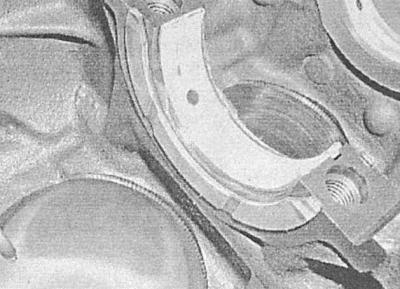
3. Wipe the bearing surfaces in the block and the crankshaft main journals with a clean, lint-free cloth.
4. Check the patency of the shaft oil holes, clean them if necessary. Any foreign particles contained in the oil flows will eventually inevitably end up in the bearings.
5. Carefully place the thoroughly cleaned crankshaft into the main bearings of the block (do not use any lubricant).
6. Before finally installing the shaft, it is necessary to check the working clearances in its main bearings.
7. Cut the calibrated plastic wire from the Plastigage measuring kit into pieces slightly shorter than the width of the bearing shells and place one piece of wire along each of the main journals of the shaft, parallel to their axis.
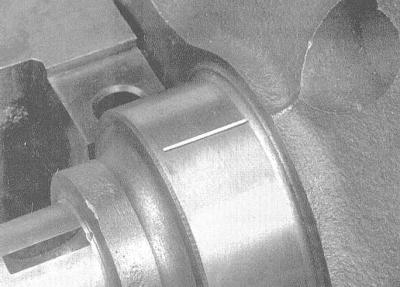
8. Wipe the surfaces of the liners in the covers and install the latter in their regular places (make sure the markings are oriented correctly). Try not to move the calibrated wire sections laid along the shaft journals. Lightly lubricate the threads of the mounting bolts with oil and screw them in, securing the covers.
9. Working in a spiral from the center outward, tighten the cover mounting bolts to the required torque in three stages (see Specifications), - do not allow the shaft to turn while tightening the fasteners!
10. Remove the bolts and carefully remove the main bearing caps. Stack the removed caps in the order they are located on the engine. Try not to damage the flattened calibrated wire and do not turn the shaft. If any of the caps cannot be removed, gently tap them with a soft-faced hammer to release them.
11. Using the width of the flattened threads measured on the scale printed on the Plastigage kit packaging, determine the size of the bearing operating clearances. Compare the measurement results with the requirements (see Specifications).
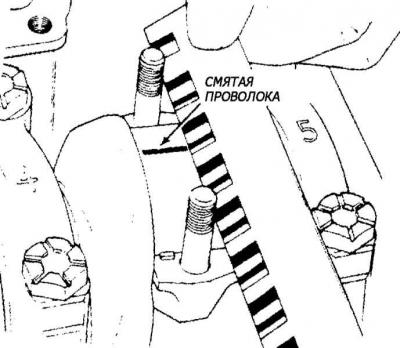
12. If the gap size is outside the permissible limits, it is possible that the wrong size bearings were installed (see Checking the condition of the main and connecting rod bearings of the crankshaft). Before looking for new inserts, make sure that no foreign particles have got under the inserts inserted at this stage. If the calibrated wire is flattened more at one end than at the other, this indicates the presence of a taper in the neck (see Checking the condition of the crankshaft).
13. Carefully remove the flattened calibrated wire from the necks, scraping off all traces of it with some not very strong tool (for example, the edge of an old credit card). In extreme cases, you can use your own fingernail - the main thing is that there are no scratches or burrs left on the surface of the necks/liners.
Final installation of the crankshaft
1. Carefully remove the crankshaft from the engine.
2. Wipe the bearing surfaces in the block and evenly lubricate them with a thin layer of molybdenum-containing or assembly engine grease. Do not forget to lubricate the thrust surfaces as well.
Try to avoid getting grease on the backs of the liners!
3. Make sure the crankshaft journals are absolutely clean, then lubricate (the same lubricant or clean engine oil) surfaces of the journals that contact the seals. Place the shaft in its regular place. Wipe and lubricate the liners in the bearing caps. Make sure that the thrust liners are placed in the beds of the corresponding bearings in the block (see above Checking the working clearances of the main bearings, p.2).
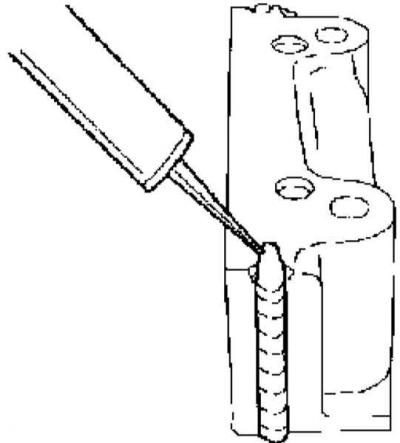
4. Install the bearing caps onto the engine all engines except diesel 1.7 l DOHC, first the 1st and 4th bearing caps are installed (the first is the bearing closest to the timing drive), — make sure that the markings on the covers are legible when looking at the engine from behind. The side grooves in the cover of the 5th (rear) bearing should be filled with sealant type No.90485251 before installation diesel engines 1.7 l DOHC the order is the same (without the fifth lid), however, the mating surfaces of the first cover should be lightly lubricated with sealant before installation; the arrows stamped on the covers should point towards the timing drive.
5. Lightly lubricate the threaded portion and the underside of the mounting bolt heads with clean engine oil, then install and hand tighten the bolts.
(Information taken from the website: OpelBook.ru)
6. Working diagonally from the center to the edges, tighten all bolts evenly to stage 1 torque, then tighten them to stage 2 and 3 corners in the same order (see Specifications), - use a protractor attachment, or apply reference marks with paint or a marker. After tightening the bolts, stuff a little more sealant into the grooves of the rear cover until it can be squeezed out of them - wipe off the excess with a clean rag.
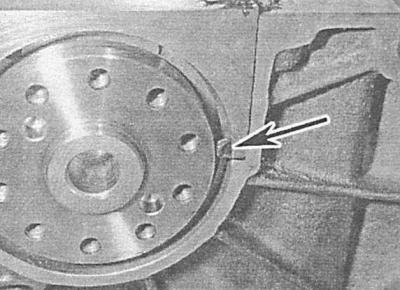
7. Tap the ends of the shaft journals with a hammer through a brass or lead drift to align the thrust surfaces and seat the shaft before finally tightening the fasteners.
8. Turn the crankshaft several times by hand, checking for freedom of rotation.
9. Finally, using a blade-type feeler gauge or a dial gauge, determine the amount of axial play of the shaft (see Removal the crankshaft). If the thrust surfaces of the shaft are not worn or damaged, and the bearings are replaced with new ones, the amount of play should not exceed the permissible range.
10. Install the connecting rod and piston assemblies (see Installation of connecting rod and piston assemblies and checking the size of working clearances in the connecting rod bearings of the crankshaft).
11. If equipped, fit a new gearbox input shaft guide bushing into the rear crankshaft journal.
12. On diesel engines 1.7 l DOHC replace the front oil seal, make sure that the mating surfaces of its housing and the cylinder block are absolutely clean and dry. Lubricate the mating surfaces with sealant, check that the guide bushings are in place and press the oil seal housing to the block. After lubricating the threaded part of the fastening bolts with sealant, screw them into their holes and tighten them with the required force. Install the rear oil seal.
13. On other engines installation of new crankshaft seals is carried out in accordance with the instructions set out in the relevant sections (see SOHC Gasoline Engine Repair Procedures Without Removing Them From The Vehicle, Repair procedures for DOHC gasoline engines without removing them from the vehicle or Repair procedures for 1.7L and 2.0L diesel engines without removing them from the vehicle).
14. If equipped, install the cast bridge link on the main bearing caps, screw in and tighten the mounting bolts to the required torque.
15. Further assembly of the engine is carried out in accordance with the instructions given in the relevant sections (see SOHC Gasoline Engine Repair Procedures Without Removing Them From The Vehicle, Repair procedures for DOHC gasoline engines without removing them from the vehicle or Repair procedures for 1.7L and 2.0L diesel engines without removing them from the vehicle).
Visitor comments