


The crankshaft can only be removed from the engine that has been removed from the vehicle. This means that the flywheel/drive plate, crankshaft pulley, timing belt/chains with toothed wheels/sprockets, oil pan, oil intake, oil pump, main bearing cap bridge, casting bridge/balance assembly/oil deflector plate (depending on the configuration) and the connecting rod and piston groups have already been dismantled (see SOHC Gasoline Engine Repair Procedures Without Removing Them From The Vehicle, Repair procedures for DOHC gasoline engines without removing them from the vehicle or Repair procedures for 1.7L and 2.0L diesel engines without removing them from the vehicle, And Removal connecting rod and piston assemblies).
1. Before removing the crankshaft from the engine, measure its axial clearance. Attach a dial gauge to the block coaxially with the crankshaft, resting its plunger against the cheek of one of the cranks or against the end of the shaft journal.
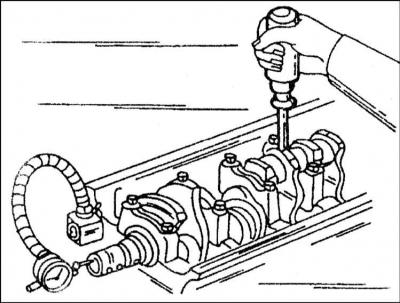
2. Push the crankshaft back as far as it will go and reset the gauge indicator. Now push the shaft in the opposite direction and read the gauge indicator. The amount of free play of the shaft in the longitudinal direction is its axial clearance. Compare the measurement result with the requirements (see Specifications). If the clearance exceeds the maximum allowable value, check the thrust surfaces of the shaft for signs of excessive wear. If there are no obvious signs of wear, installing new thrust washers will usually correct the situation.
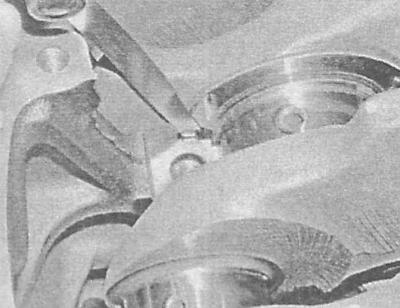
3. If you don't have a dial gauge at hand, you can use a regular blade-type feeler gauge. Carefully move the shaft forward along the engine until it stops, then determine the size of the resulting gap between the crank cheek and the half ring of the second-stage thrust combined bearing (diesel engines 1.7 l DOHC)/ third (all other engines) main bearing, tightly fitting a feeler gauge blade of the appropriate thickness into it.
4. In a diagonal order, in several steps (1/4 turn per set) loosen the main bearing cap bolts just enough to allow them to be removed by hand. If necessary, apply identification markings to the crankshaft main bearing caps (use a center punch or marker).
On most engines, all bearing caps are marked at the factory, from 1 to 5, in ascending order from the timing drive side.
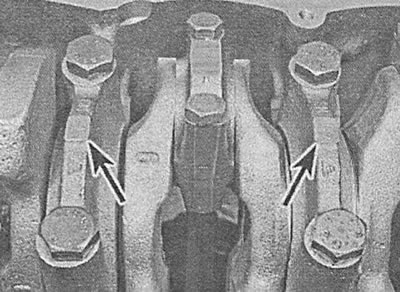
On 2.0 L diesel engines, only the 1st and 2nd main bearing caps are equipped with factory markings.
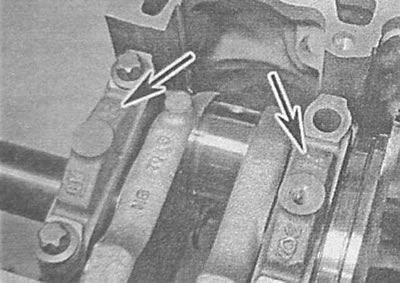
5. Carefully tap the bearing caps with a soft-faced hammer and remove them from the engine block. If necessary, use the bolts as levers. Make sure that the main bearing shells inserted in the caps are not lost when dismantling them.
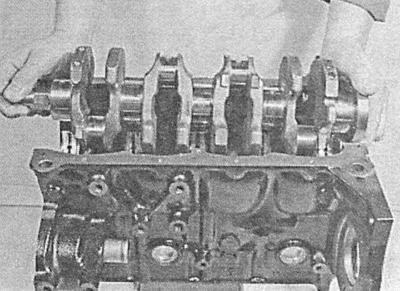
6. Carefully remove the crankshaft from the engine - due to the considerable weight of the assembly, it is wise to enlist the help of an assistant. Make sure that the main bearing shells remain in their beds in the block and covers. Install the covers in their regular places on the block, and hand tighten the mounting bolts.
[Original source is on the website: Opelbook.ru]
Visitor comments