


Removal
It should not be forgotten that fuel is a highly flammable liquid! When working with components of the fuel system, observe all accepted fire safety measures. Do not smoke, do not approach the work site with an open flame or unprotected portable equipment. Do not service the system in a room equipped with heating devices operating on natural gas and equipped with a pilot torch (such as water heaters and clothes dryers). Remember that fuel is a carcinogen that can cause cancer. Avoid contact with exposed areas of the body by wearing protective rubber gloves. In case of accidental contact, wash your hands thoroughly with warm water and soap. Collect spilled fuel immediately and do not store fuel-soaked rags near open flames. Remember that the fuel system of fuel-injected models is constantly under pressure. Before disconnecting the fuel lines, relieve any residual pressure in the system (for more information, see Chapter Power and exhaust systems). Wear safety glasses when servicing fuel system components. Always keep a class B fire extinguisher on hand!
The air conditioning system line is also constantly under pressure, so before disconnecting the refrigeration lines, the system must be discharged in a specialized workshop.
All modern cars come standard with the SRS system, the main components of which are airbags. Before performing any work near the location of the SRS directional overload sensors, in the area of the steering column or instrument panel, be sure to turn off the system to avoid accidental deployment of the airbags, which can lead to serious injuries.
The authors of this Manual recommend removing the engine together with the transmission. The assembly of the unit is lowered down and removed from under the vehicle, so care should be taken to ensure that the vehicle is securely fixed in the raised position.
1. Drive the car onto a flat, horizontal surface with a sufficiently hard surface. Remove the hood (see Chapter Body). Place the front wheels in a straight-ahead position, remove the key from the ignition switch and lock the steering column.
2. On diesel models 1.7 l remove the heater control unit from the left side of the battery support tray. Remove the battery with the tray (see Chapter Engine electrical equipment).
3. Support the rear wheels with wheel chocks, firmly set the parking brake. Loosen the front wheel mounting bolts. Jack up the front of the car and place it on supports. Remove the front wheels. If so equipped, remove the crankcase guard.
4. If the engine is removed for major repairs, drain the oil and remove the oil filter (see Chapter Routine maintenance).
5. Perform the following procedures (see Chapter Power and exhaust systems):
- Remove the air cleaner assembly with air ducts;
- Remove the exhaust pipe and the middle section of the exhaust system;
- Disconnect the power supply lines;
- On diesel models 1.7L DOHC disconnect the fuel lines from the injection pump - on other diesel models, disconnect the fuel supply and return lines from the fuel filter;
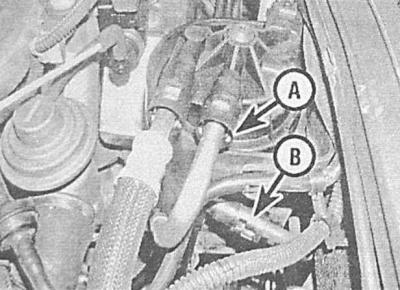
- Disconnect and move aside the gas and (with appropriate equipment) tempostat cable - try to remember the cable routes;
- Disconnect the brake booster servo vacuum hose - try to remember the cable route;
- On diesel models loosen the fastening clamps, disconnect and move aside the air hoses connecting the turbocharger to the intercooler and the intercooler to the intake manifold;
- Disconnect the hose from the vacuum pump and EGR valve, move the hose to the side;
- On petrol models disconnect the fuel tank vent valve hose from the throttle body.
6. On petrol models remove the front bumper (see Chapter Body).
7. On diesel models 1.7L SOHC loosen the fasteners and disconnect the oil cooler hoses from the pipes, which are laid between the cylinder block and the radiator.
8. Acting in accordance with the instructions given in Chapter Cooling and heating systems follow these steps:
- Drain the cooling system;
- Loosen the clamps and remove the upper and lower coolant hoses from the radiator. Disconnect all coolant hoses from the engine;
- At the rear bulkhead of the engine compartment, disconnect the coolant hoses from the heater core: squeeze the clamp, slide the ring forward and release the hose from the nipple connector - note that the upper hose connections use black rings.
- On models equipped with air conditioning disconnect from the engine and move aside the refrigeration lines;
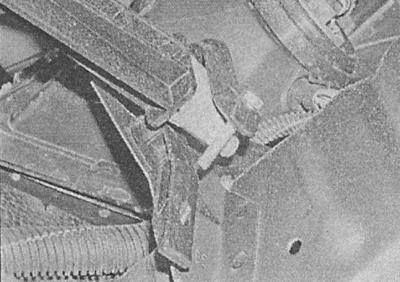
- Using suitable bolts or rods through the holes in the support brackets, secure the A/C radiator/condenser in place.
9. Disconnect the electrical wiring:
Petrol engines
1. Turn the locking ring and disconnect the large multi-pin engine wiring connector at the front of the relay mounting block in the engine compartment.
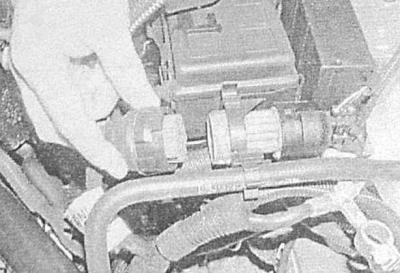
2. Connectors of all other harnesses of the engine compartment connected to the main wiring harness.
Diesel engines
1. Turn the locking ring and disconnect the large multi-pin engine wiring connector at the front of the relay mounting block in the engine compartment.
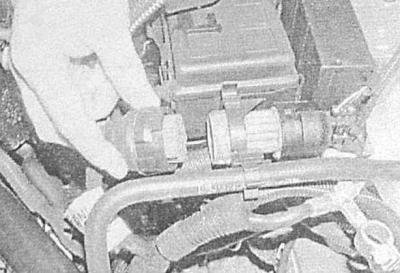
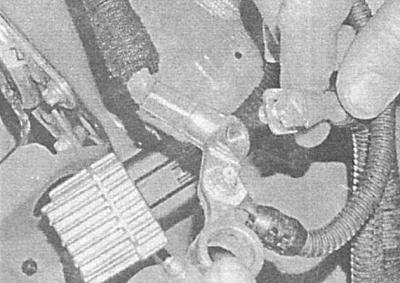
2. Remove the bolts and disconnect the loop from the positive battery cable terminal and the two loops from the negative battery cable terminal.
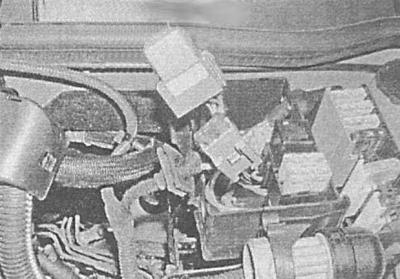
3. Open the cover of the mounting block located in the left rear corner of the engine compartment and remove the green relay and fuse with their sockets.
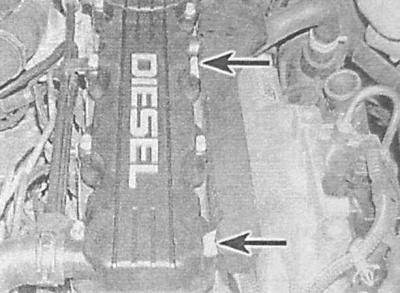
4. On 1.7L DOHC engines lift the lever and disconnect the rearmost connector from the engine control module (ECM) mounted above the intake manifold.
5. Release the wiring harnesses from all intermediate fasteners and place them on top of the engine.
6. On 1.7L SOHC engines disconnect the electrical wiring from the following components:
- EGR valve;
- Coolant Temperature (ECT) Sensor;
- Electronic Control Module (ECM) - Remove Locking Element;
- Glow plugs;
- Crankshaft Position Sensor (CKP);
- Oil temperature sensor;
- Reverse light switch sensor.
7. Finally, remove the three bolts securing the wiring harness to the rear of the timing cover and move the wiring away from the engine, also release the wiring from the clips on the front of the cylinder block - move all the harnesses away from the engine.
10. Drain the transmission oil/ATF.
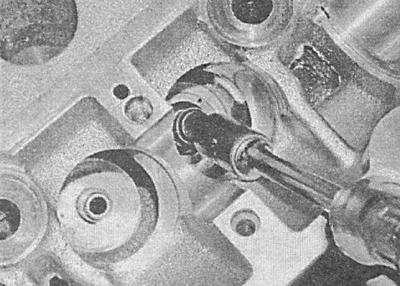
11. On models with manual transmission clamp the hydraulic hose of the clutch path drive with a clamp immediately behind the nipple connector (see Chapter Clutch and drive shafts). Using a screwdriver, carefully pry up the connector locking clip and disconnect the hose from the clutch dome.
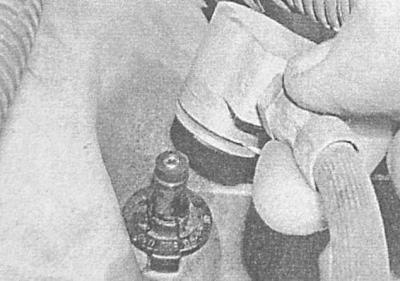
12. Disconnect the gearshift rods/selector cable from the transmission (see Chapter Manual gearbox or Automatic transmission).
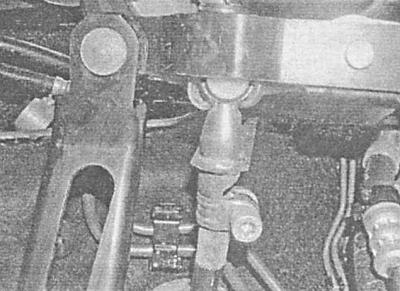
13. On models with AT disconnect the electrical wiring and ATF cooling hoses from the transmission.
14. Attach the rigging to the lifting eyes and hang the power unit.
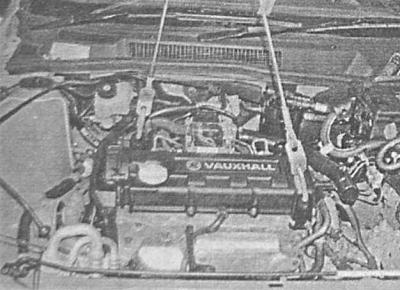
15. Remove both drive shafts (see Chapter Clutch and drive shafts).
16. Remove the front subframe (see Chapter Suspension and steering).
17. Once again, make sure that all communication lines and nothing interferes with the removal of the power unit from the engine compartment.
18. Mark the installation positions of the components of the powertrain suspension mounts and the transmission adapter plate. Remove the three bolts securing the right engine mount to the bracket on the cylinder block, and also remove the three bolts securing the mount to the body element. Remove the three bolts securing the left mount to the transmission adapter plate. On models equipped with air conditioning, disconnect the electrical wiring, release the fasteners, remove and tie the A/C compressor to the front panel. If necessary, release the refrigeration hoses from the clamps behind the right support of the power unit suspension.
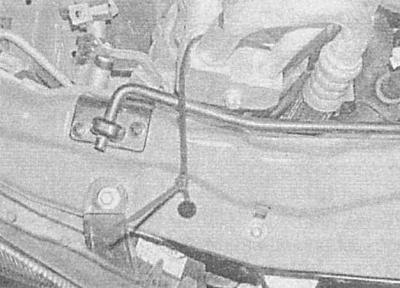
Do not open the refrigeration system under any circumstances!
19. Place a trolley jack under the engine. Lower the power unit, being careful not to pinch any hoses or wiring or damage the radiator/fan. If necessary, ask an assistant to help you - the unit may need to be tilted slightly to remove it from the engine compartment opening. Secure the unit to the jack.
20. Disconnect the lifting rigging and roll the jack with the power unit attached to it out from under the vehicle.
Separating the engine from the transmission
Models with manual transmission
1. After removing the power unit, place it on wooden blocks on a workbench or on a clean garage floor.
2. On models with stamped steel pans, remove the mounting bolts and remove the flywheel cover from the transmission case.
3. Remove the starter (see Chapter Engine electrical equipment).
4. Make sure that the weight of the power unit is evenly distributed on the supports. Unscrew the transmission-to-engine mounting bolts — try to remember the order in which all the bolts and the brackets they secure are installed.
5. Carefully separate the transmission from the engine, preventing the gearbox from hanging on the clutch with the input shaft.
6. Remove the loose guide bushings and store them in a safe place.
Models with AT
1. After removing the power unit, place it on wooden blocks on a workbench or on a clean garage floor.
2. Remove the starter (see Chapter Engine electrical equipment).
3. To gain access to the torque converter mounting bolts, release the rubber cover(s) from the pan flange. Unscrew the bolt that is accessible, then, turning the crankshaft by the pulley bolt, unscrew all the other torque converter mounting bolts to the drive disk (on the 1.4, 1.6 and 1.8 l engines three mounting bolts are used, 2.0L engines - six).
During assembly, bolts must be replaced without fail.
4. To prevent the torque converter from falling out when separating the transmission, push it along the shaft deep into the crankcase.
5. Then proceed in the order described above (see Models with manual transmission).
Connecting the engine to the transmission
All models
Proceed in the reverse order of disconnecting the power unit.
Installation
1. With the correct orientation, slide the power unit under the engine compartment of the vehicle. Attach the rigging to the engine lifting eyes. Slide the unit into the engine compartment and position it so that it is possible to install the power unit suspension supports. Install the supports and tighten the fasteners lightly for now.
2. To seat the unit on the supports, move it in different directions.
3. Lower the unit and tighten the fasteners of its suspension supports to the required force. Disconnect the lifting rigging and remove the trolley jack from under the vehicle.
4. Further installation is carried out in the reverse order of dismantling. Please note the following points:
- Tighten all fasteners to the required torque (see Specifications to the relevant Chapters of the Manual);
- Ensure that the wiring harnesses are correctly laid and that their connectors are securely fastened. Make sure that the wiring is laid at a sufficient distance from heat sources;
- Restore the original connection of all hoses and tubes - ensure that the fastening clamps are securely tightened;
- On models with manual transmission, check the adjustment of the gearshift drive and make the appropriate adjustments if necessary (see Chapter Manual gearbox);
- Fill the cooling system (see Chapter Cooling and heating systems);
- Fill the transmission with fresh oil (manual transmission) or ATF (AT) / adjust the level of the working fluid (see Chapter Routine maintenance);
- Adjust the throttle cables (see Chapter Power and exhaust systems) And (with appropriate equipment) tempostat;
- After the first engine start, carefully inspect the entire surface of the power unit and the bulkhead of the engine compartment for signs of developing leaks of working fluids.
If a major overhaul of the engine has been performed, then before starting it, see. Test run and running-in of the engine after major repairs.
Visitor comments