


Contents: Removal ⬇ Installation ⬇
Removal
1. Remove the wheel hub cap and hub nut protective cap. Remove the locking pin for the crown hub nut.
On some models, the wheel cap is secured with wheel bolts. In this case, the bolts should be loosened, then the car should be raised off the ground, the cap removed, the bolts screwed back in place, the car lowered to the ground, and only then should the hub nut be loosened.
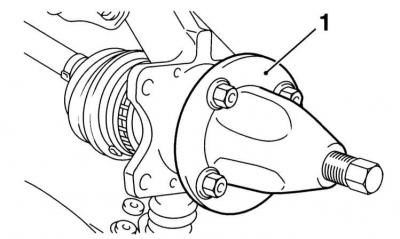
2. Loosen the crown hub nut using a socket wrench equipped with a long drive. The hub is blocked from turning by a metal strip (1).
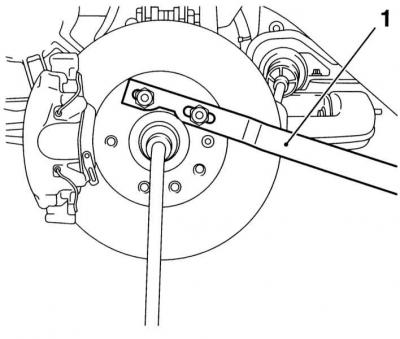
The hub nut can be loosened even after the wheel has been removed - the hub will have to be secured from turning using a bar secured with two wheel bolts, or a mounting bar inserted between the bolts.
3. Loosen the nuts of the corresponding front wheel, jack up the front of the vehicle and support it. Remove the wheel. Drain the transmission oil/ATF (see Chapter Routine maintenance).
4. Finally remove the hub nut together with the washer.
5. Loosen the tie rod end mounting nut and use a special puller to release the latter from the steering knuckle.
6. Unscrew the bolt securing the flexible brake hose support bracket to the suspension strut and release the hose from the bracket.
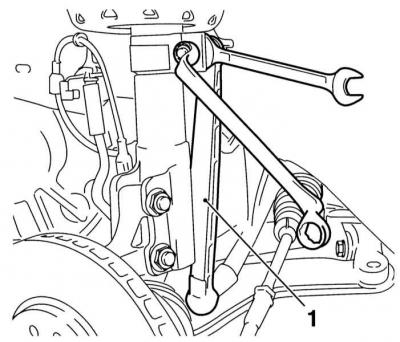
7. Holding the pivot pin with an open-end wrench by the flats, loosen the nut securing the vertical link (1) of the anti-roll bar to the suspension strut. Move the link away from the strut.
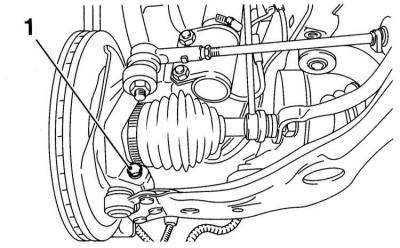
8. Unscrew the bolt of the clamp securing the ball joint to the steering knuckle - note that the bolt is turned with its head forward towards the vehicle.
9. Using a large screwdriver or chisel, wedge the ball joint clamp.
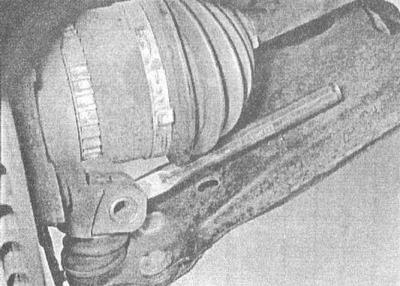
10. By moving the suspension arm down, release the ball joint pin tail from the mounting clamp. Move the strut to the side and release the arm, - try not to damage the rubber boot of the ball joint.
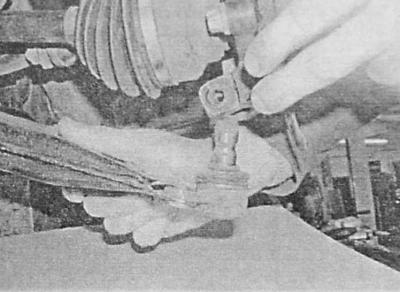
11. Pull the hub outward to remove it from the drive shaft journal. If the hub is difficult to remove, temporarily screw the hub nut onto the shaft to protect the threads and pull the steering knuckle outward while simultaneously knocking out the journal with a hammer using a suitable soft metal punch. Alternatively, you can use a special puller that is bolted to the hub with the wheel bolts.
12. Move the stand aside and place the free end of the drive shaft on a suitable support, preventing it from hanging cantilever on the inner CV joint.
13. If equipped, remove the crankcase guard.
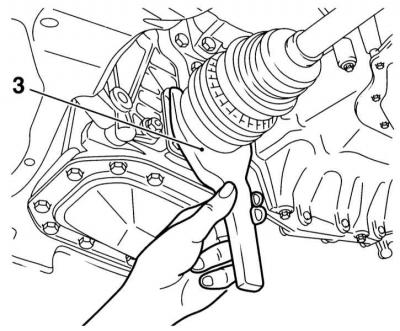
14. Using a special fork-shaped device, pry the CV joint, overcoming the resistance of the expanding retaining ring, release the inner shaft journal from the differential assembly.
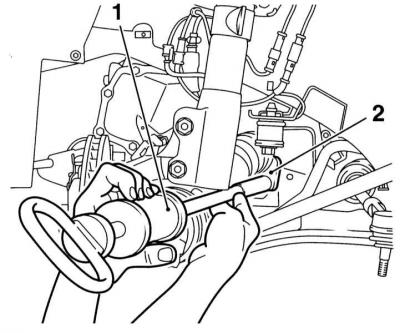
You can also use a hammer with a sliding striker screwed to a bar inserted under the inner CV joint.
Instead of a fork lever, you can use a regular crowbar just as effectively.
15. Being careful not to put any stress on the joint, release the shaft journal from the differential and remove it from under the vehicle. Immediately plug the shaft installation hole to prevent dirt from getting into the differential.
Lowering the car to the ground with even one drive shaft removed can damage the wheel bearings! If absolutely necessary, tighten the bearings using a long bolt with a nut and a couple of washers.
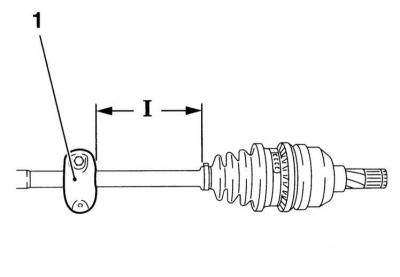
16. The right drive shaft on all models is equipped with a torsional vibration damper (1). In case of shaft replacement, the damper should be relocated to the replacement assembly. Measure the distance (I) from the outer CV joint to the damper installation location - the required value is given in Specifications.
Installation
A new hub nut and a new inner snap ring will be required.
1. Before installing the shaft, check the condition of the differential seal and replace it if necessary (see Chapter Manual gearbox or Automatic transmission).
2. Remove the retaining ring from the shaft journal and install a new one in its place.
3. Thoroughly clean the shaft splines and the hub bore. Lubricate the sealing lips of the oil seal and the shaft splines with clean transmission oil/ATF. Check the reliability of the CV joint protective boots with their clamps.
4. Carefully, being careful not to damage the seal, insert the inner journal of the shaft into the transmission and engage it with the splines of the differential side gear. Push the shaft into the differential until the retaining ring snaps into place - tap the end of the outer joint with a heavy soft-faced hammer.
5. Engage the splined pin of the outer joint with the splines of the hub.
6. Use the lever to move the lower suspension arm down and insert the ball joint tail into the clamp until it stops.
[Article posted on Internet portal: opelbook]
7. Insert the clamp tightening bolt (head first into the car) and tighten it to the required torque.
8. Connect the vertical stabilizer bar link to the suspension strut and tighten the mounting nut to the required force; hold the pivot pin from turning with an open-end wrench by the flats.
9. Insert the flexible brake hose into the support bracket and secure the latter to the suspension strut by tightening the mounting bolt securely.
10. After tightening the nut to the required force, secure the steering rod end in the steering knuckle.
11. Place the washer on the drive shaft, screw on the new nut and tighten it, but only by hand for now.
12. If equipped, install the crankcase guard. Install the wheel, lower the vehicle to the ground and tighten the wheel bolts to the required torque.
13. Tighten the hub nut to the required torque in several stages (see Specifications). Secure the nut with a new cotter pin, tightening it if necessary to align the spline with the hole - do not forget to bend the spline tabs around the shaft journal and trim off the excess.
14. Install the hub nut protective cap and wheel trim.
15. Fill the transmission with the required amount of oil/ATF of the required grade (see Chapter Routine maintenance).
Visitor comments