
OpelBook.ru
Cars AvtoVAZ Cars Mitsubishi Cars BMW Cars Mercedes Cars Nissan Cars Toyota Cars Chevrolet
English Русский
Български
Беларускі
Український
Српски
Hrvatski
Română
Polski
Slovenský
Magyar
 |  Sitemap  |  Contacts  |    


Main Astra Corsa Insignia Kadett Omega Vectra Zafira Others Articles
Vectra A (1988-1995, petrol) Vectra A (1988-1995) Vectra B (1995-2002, petrol) Vectra B (1995-2002) Vectra C (2002-2008)
  • Main
  • Vectra
  • Vectra B
  • Electrical equipment
  • Ignition system
  • Precautions when handling ignition

Precautions when handling ignition (Opel Vectra B)

            0

In the Vectra ignition system we are faced with high voltages: even on the thin control wires of the ignition system there can be voltages of up to 100 V with a high current, not to mention the ignition voltage, which, exceeding 30,000 V (but with a small current strength), extremely dangerous.

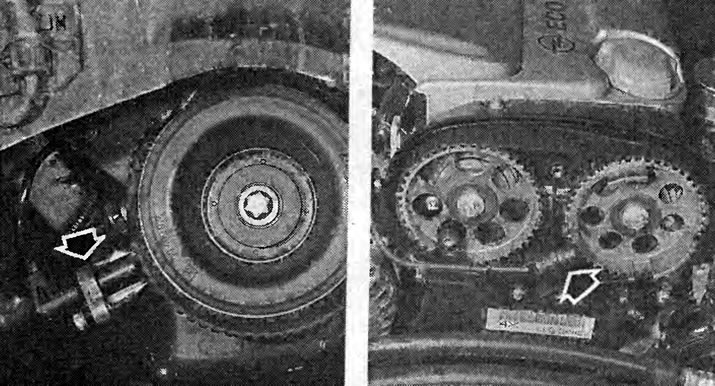
Left: the inductive pulse sensor (arrow) is located in the front left of the engine block behind…

Left: the inductive pulse sensor (arrow) is located in the front left of the engine block behind the crankshaft pulley. The pulse sensor transmits information about the speed and position of the crankshaft to the control unit. This data is important for determining the ignition timing.

Right: the arrow in the photograph shows the camshaft position sensor of a 16-valve engine with the timing belt cover removed. Its task is to transmit information about the ignition position of an individual cylinder to the control unit.


Fortunately, no one has ever heard of a car owner dying because of ignition, but still, touching the exposed contacts under unfavorable circumstances, especially for people with heart disease and especially for those with pacemakers, would be very dangerous. Therefore:
  • Touch all electrical wires - including instrument connections - only when the ignition is off, this also applies to connecting and disconnecting them.
  • Disconnect the battery only when the ignition is off.
  • If the engine needs to be turned over with the starter without starting it, the ignition must be disconnected (see next section).
  • When washing the engine, the ignition must also be turned off.
  • To start the engine with a discharged battery using a boost charger, it must be connected for a maximum of one minute and the voltage must not exceed 16.5 V.
  • Also, do not replace thick ignition wires and their connectors with the first ones you come across.
  • The same applies to spark plug connectors.
  • Before electric welding on a vehicle, the wires must be disconnected from the battery.


This article is available at russian, bulgarian, belarusian, ukrainian, serbian, croatian, romanian, polish, slovak, hungarian
Checking the article: Shapovalov Yaroslav

Share information:

Previous articles
Opel Vectra B: Ignition system
Next articles

Camshaft Position Sensor
Inductive pulse sensor
Knock control
The brain of the ignition system
Ignition coils in a distributorless ignition system
This is how the ignition spark is created
Work on the ignition system
Troubleshooting Ignition
Checking the ignition timing
High voltage unit
Replacing spark plugs
Buying new spark plugs


See similar ones from other Opel car manuals:
▶ Safety precautions when handling the emergency seat belt… Opel Corsa B (1993-2000)
▶ Safety precautions when operating an electronic ignition… Opel Kadett D (1979-1984)
▶ Safety precautions when working with ignition system… Opel Frontera A (1991-1998, petrol)
▶ Ignition system of carburetor engines — check Opel Astra F (1991-1998, petrol)
▶ Precautions to prevent poisoning by vapors or gases Opel Insignia A (2008-2017)
Link to this page in different formats

Visitor comments


No comments yet


How much will 19 + 17 =


Vectra C (2002-2008) 
  • General information
  • User manual
  • Vehicle device
  • Maintenance
  • Troubleshooting
  • Power unit
  • Engine repair
  • Cooling system
  • Power and control system
  • Engine electrics
  • Transmission
  • Clutch
  • Car gearbox
  • Drive shafts
  • Chassis
  • Car suspension
  • Steering
  • Brake system
  • Body
  • Exterior
  • Interior
  • Doors, locks and windows
  • Heating and ventilation
  • Electrical equipment
  • Equipment and devices
  • Headlights and lighting
  • Electrical circuits
Vectra B (1995-2002) 
  • General information
  • User manual
  • Weekly checks
  • Maintenance (gasoline)
  • Maintenance (diesel)
  • Troubleshooting
  • Power unit
  • SOHC gasoline engine
  • DOHC petrol engine
  • Diesel engine 1.7 liter
  • Diesel engine 2.0 liters
  • Engine repair
  • Cooling system
  • Fuel system (gasoline)
  • Fuel system (diesel)
  • Charging system
  • Launch system
  • Ignition and preheat
  • Transmission
  • Clutch
  • Mechanical gearbox
  • Automatic gearbox
  • Drive shafts
  • Chassis
  • Brake system
  • Wheel suspension
  • Steering
  • Body
  • Exterior
  • Interior
  • Doors and windows
  • Heating and ventilation
  • Electrical equipment
  • Equipment and devices
  • Electrical circuits
Vectra B (1995-2002, petrol) 
  • General information
  • Maintenance
  • Help with malfunctions
  • Power unit
  • Engine repair
  • Exhaust system
  • Cooling system
  • Fuel system
  • Multec injection system
  • Four point injection
  • Transmission
  • Clutch
  • Gearbox and drive
  • Chassis
  • Wheel suspension
  • Steering
  • Brake system
  • Wheels and tires
  • Body
  • Exterior
  • Interior
  • Electrical equipment
  • Fuses and electronics
  • Power devices
  • Ignition system
  • Lighting and signaling
  • Equipment and devices
  • Heating and ventilation
  • Electrical circuits
Vectra A (1988-1995) 
  • Power unit
  • Engine repair
  • Ignition system
  • Lubrication system
  • Cooling system
  • Injection system
  • Fuel system (carburetor)
  • Fuel system (diesel)
  • Exhaust system
  • Transmission
  • Clutch
  • Car gearbox
  • Chassis
  • Front suspension
  • Rear suspension
  • Steering
  • Brake system
  • Wheels and tires
  • Body
  • Exterior
  • Interior
  • Electrical equipment
  • Electrical circuits
Vectra A (1988-1995, petrol) 
  • General information
  • User manual
  • Maintenance
  • Power unit
  • SOHC engine
  • DOHC engine
  • Cooling and ventilation
  • Fuel system (carburetor)
  • Fuel system (injector)
  • Exhaust converter
  • Transmission
  • Clutch
  • Mechanical gearbox
  • Automatic gearbox
  • Drive shafts
  • Chassis
  • Brake system
  • Car suspension
  • Steering
  • Body
  • Body elements
  • Electrical equipment
  • Power devices
  • Equipment and devices
  • Electrical circuits
OpelBook.ru © 2017–2026 · Mobile version · · Sitemap: EN BG BY UA RS HR RO PL SK HU · Feedback · Site search
Astra F, petrol · Astra G, petrol · Astra G · Astra H · Astra J, petrol · Corsa B · Corsa C, petrol · Corsa C · Insignia A · Kadett D · Kadett E · Omega A · Omega B · Omega B2 · Vectra A, petrol · Vectra A · Vectra B, petrol · Vectra B · Vectra C · Zafira A, petrol · Frontera A, petrol · Frontera B · Ascona C · Vivaro A ·
We want your visit to be comfortable 🤝! We use cookies 🍪 to make that happen.