


Contents: Removal ⬇ Installation ⬇
Removal
Replace both brake shoes, even if only one is oily or worn.
1. Remove the brake drums.
It is recommended to disassemble only one side, so that the other side remains a sample for assembly.
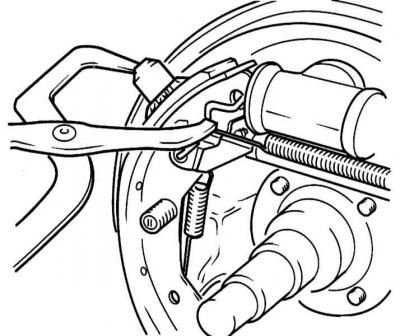
2. Disconnect the upper tension spring using special pliers, for example, HAZET 797. Disassembly can also be done using a section of pipe, but this is somewhat more difficult.
Removal the upper tension spring
3. Use a screwdriver to remove the tension spring retainer from the hole in the brake shoe.
Removal the tension spring holder
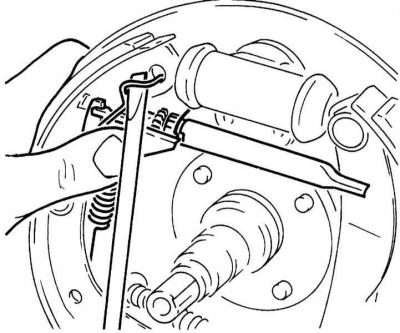
4. Remove the adjusting lever from the brake shoe and disconnect the tension spring.
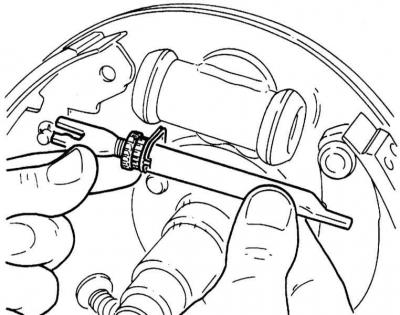
5. Pull the brake shoes slightly outward and remove the adjusting expansion bar. Remove the brake shoes.
Removal the expansion bar
6. Remove the front brake shoe retaining pin. To do this, press the spring plate and turn it 90 degrees. At the same time, hold the pin from behind. Remove the spring plate and remove the pin.
Removal the brake shoe retaining pin
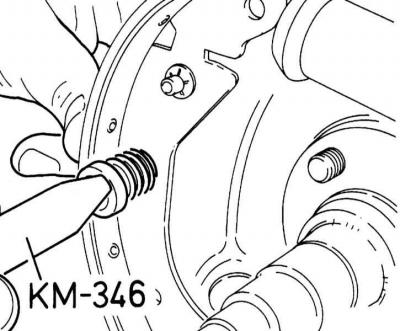
7. Remove the rear brake shoe mounting retaining pin in the same manner.
8. Disconnect the lower tension spring.
9. Remove the brake shoes. At the same time, disconnect the parking brake cable from the anchor pin.
Installation
Replace all (four) brake shoes at the same time. You can replace both the brake shoes and just the brake pads. Replacing the brake pads is described in Section Replacing brake linings of drum brakes. It is recommended to use only original brake shoes and linings or those recommended by Opel. Clean the brake drum and brake shield with compressed air or wipe them with alcohol.
Do not inhale brake dust. When removing the brake shoes, do not press the brake pedal, the piston may come out of the brake cylinder. If there are traces of brake fluid on the brake cylinder, it should be replaced.
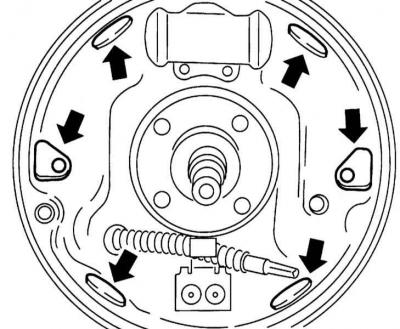
1. Lubricate the anchor pin in the area where the shoes meet with a thin layer of heat-resistant grease, for example, OPEL 19 42 588 (90 166 282) or high temperature copper grease. Pre-clean the areas to be lubricated with a soft wire brush.
Lubrication application areas
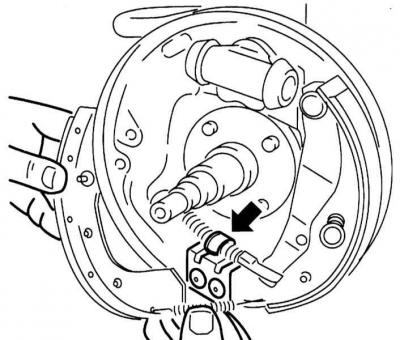
2. Connect the brake shoe lever to the parking brake cable. Make sure the cable is positioned correctly.
Connecting the shoe lever to the parking brake cable
3. Install the lower tension spring.
4. Install the brake shoes on the anchor pin. To do this, push the locking pin from the rear and install the spring. Pull the spring with the plate, then turn the plate 90 degrees and fix it in this position. At the same time, hold the locking pin from the rear.
5. Check the ease of movement of the adjusting wheel and the adjusting expansion bar of the lever. If necessary, disassemble the bar and clean it.
6. Lubricate the strip with a thin layer of silicone grease, for example, OPEL 19 70 206 (90 167 353). Screw the adjusting wheel back until it stops, then release it again. The adjusting wheel should not lock in the stop.
(Material copied from this website: opelbook.ru)
Do not confuse the left and right brake release plates.
7. Install the adjusting bar on top between the brake shoes. Make sure to keep an eye on its position.
Position of the adjustment bar when installed
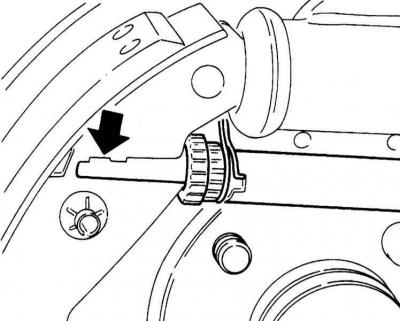
When installing new brake shoes, make sure that the adjuster lever disc spring is installed.
8. Install the adjusting lever with the spring onto the pin.
Installing the adjusting lever
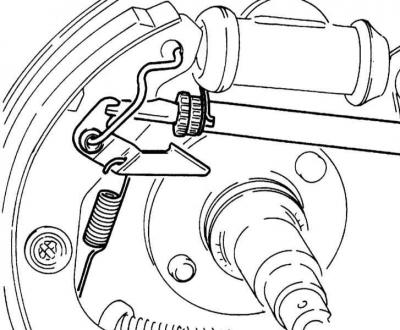
9. Connect the adjusting lever tension spring to the brake shoe using a collet.
10. Insert the tension spring holder into the clamp pin and press it into the hole in the brake shoe.
11. Connect the upper tension spring with pliers to the holder (refer to illustration).
Visitor comments