OpelBook.ru
Cars AvtoVAZ Cars Mitsubishi Cars BMW Cars Mercedes Cars Nissan Cars Toyota Cars Chevrolet
English Русский
Български
Беларускі
Український
Српски
Hrvatski
Română
Polski
Slovenský
Magyar
 |  Sitemap  |  Contacts  |    


Main Astra Corsa Insignia Kadett Omega Vectra Zafira Others Articles
Astra F (1991-1998, petrol) Astra G (1998-2004, petrol) Astra G (1998-2004) Astra H (2004-2009) Astra J (2009-2015, petrol)
  • Main
  • Astra
  • Astra J
  • Chassis
  • Brake system
  • Replacing the master brake cylinder

Replacing the master brake cylinder (Opel Astra J)

            0

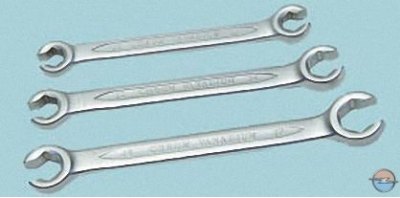
You will need: tORX T20 key, 24 mm socket head and a special 13 mm key for brake pipes.

You will need: tORX T20 key, 24 mm socket head and a special 13 mm key for brake pipes.


Note: The nuts that hold the brake pipes are usually very tight. When trying to loosen them with a regular wrench, the edges of the nuts are crushed, so we recommend using special wrenches for brake pipes.


1. Disconnect the wire from the negative terminal of the battery.

1. Disconnect the wire from the negative terminal of the battery.


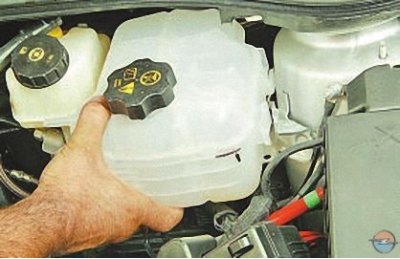
2. Disconnect the expansion tank from its mount and move it to the side without disconnecting the hoses or draining the coolant (see Replacing the brake master cylinder reservoir).

Note: Removal of the expansion tank is necessary to gain access to the clutch master cylinder feed hose and the right brake master cylinder mounting nut.


Note: Removal of the expansion tank is necessary to gain access to the clutch master cylinder feed…


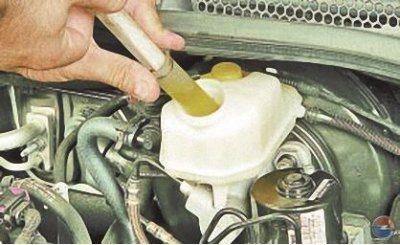
3. Unscrew the cap of the brake master cylinder reservoir and pump out the brake fluid from the reservoir, for example, with a large medical syringe. Install the cap to prevent dirt from getting into the brake master cylinder reservoir.


3. Unscrew the cap of the brake master cylinder reservoir and pump out the brake fluid from the…


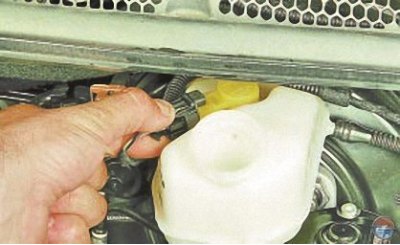
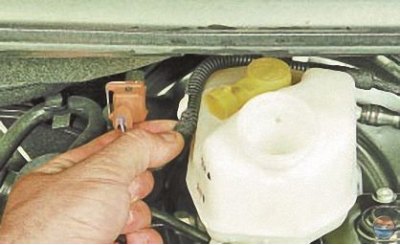
4. Squeeze the clamps of the brake fluid level sensor wiring harness connector…

4. Squeeze the clamps of the brake fluid level sensor wiring harness connector…


5. …disconnect the wiring harness connector from the sensor.

5. …disconnect the wiring harness connector from the sensor.


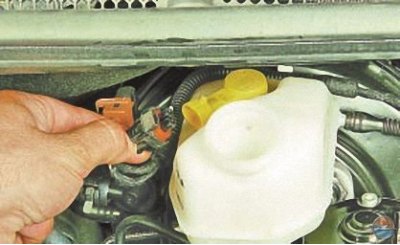
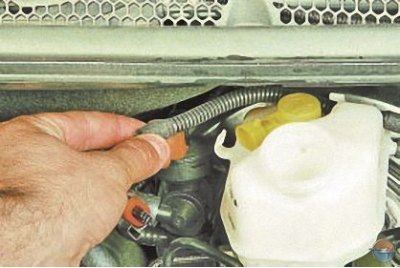
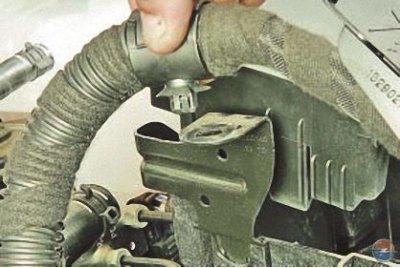
6. Pull up on the brake fluid level sensor wiring harness…

6. Pull up on the brake fluid level sensor wiring harness…


7. …disconnect the harness from the tank.


7. …disconnect the harness from the tank.


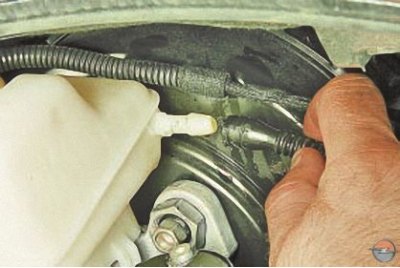
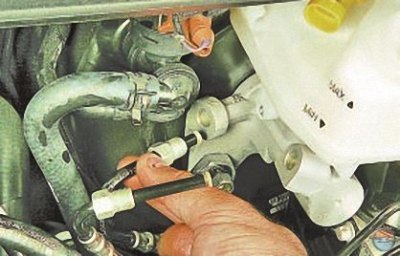
8. Disconnect the hose from the reservoir to the clutch master cylinder.

Note: Immediately after disconnecting the hose from the reservoir, plug its opening without lowering the hose down. There will be some working fluid left in the hose; after installing the reservoir and connecting the hose to it, there is no need to bleed air from the clutch release hydraulic drive.


Note.
  • On a vehicle with an automatic transmission, a spring-loaded plug is installed on the nipple of the master brake cylinder reservoir instead of the hose tip.
  • There is no need to remove it unless necessary.


There is no need to remove it unless necessary.


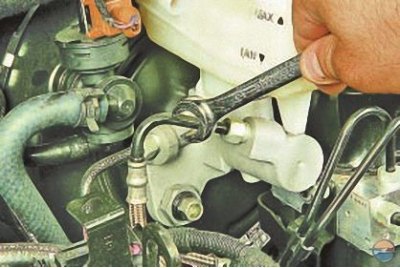
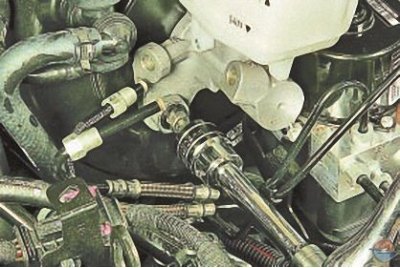
9. Unscrew the nuts securing the two pipelines to the cylinder…

9. Unscrew the nuts securing the two pipelines to the cylinder…


10. …and move the pipes to the side.


Note: Seal the pipes using any available method (for example, by putting protective caps on their ends to release air), to prevent brake fluid from leaking out.


Note: Seal the pipes using any available method (for example, by putting protective caps on their…


11. Disconnect the wiring harness from the battery mounting shelf and move it to the side (see Removal and installation the battery mounting shelf).

Note: It is necessary to disconnect the wiring harness because it obstructs access to the right brake master cylinder mounting nut.


Note: It is necessary to disconnect the wiring harness because it obstructs access to the right…


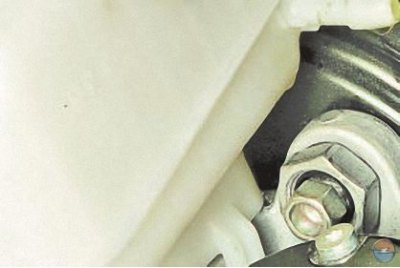
12. Turn away the left…

12. Turn away the left…


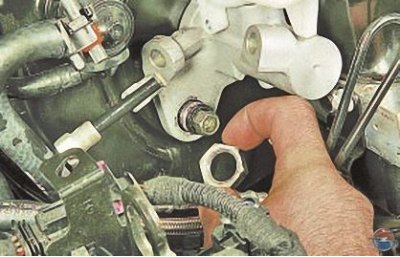
13. …and the right nut securing the master brake cylinder to the vacuum booster...


The article was published on the website [www.OPELBOOK.ru]

13. …and the right nut securing the master brake cylinder to the vacuum booster...


14. …remove the nuts from the brake booster mounting bolts…

14. …remove the nuts from the brake booster mounting bolts…


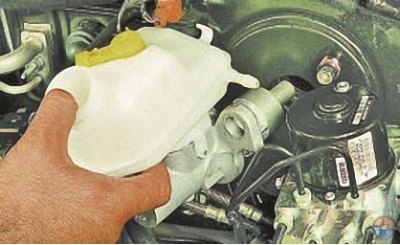
15. …and remove the master brake cylinder assembly with the reservoir.
15. …and remove the master brake cylinder assembly with the reservoir.


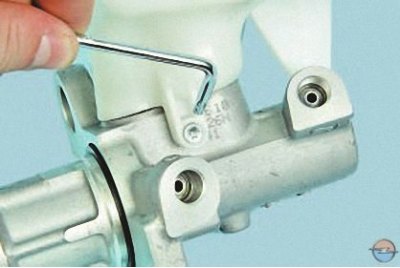
16. If the new master cylinder does not have a reservoir or it is necessary to replace the rubber connecting bushings of the reservoir, remove the reservoir by unscrewing the screw that secures it and removing its pipes from the connecting bushings (see Replacing the brake master cylinder reservoir).


16. If the new master cylinder does not have a reservoir or it is necessary to replace the rubber…


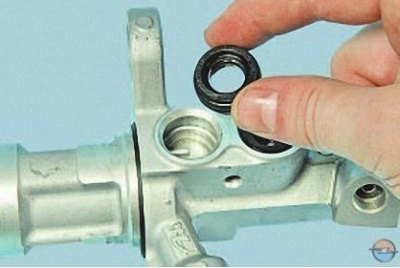
17. If during operation a leak of brake fluid was observed through the connecting bushings, remove the bushings from the holes in the cylinder body.

Attention! Reuse of connecting bushings is not allowed, replace them with new ones.

Attention! Reuse of connecting bushings is not allowed, replace them with new ones.


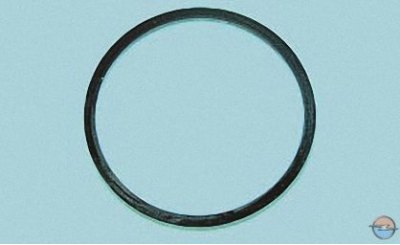
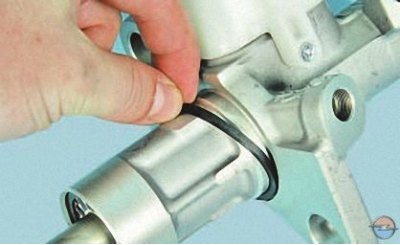
18. Remove the rubber sealing ring from the master cylinder housing.

18. Remove the rubber sealing ring from the master cylinder housing.


Caution! Replace the master cylinder sealing ring with a new one each time the connection is disassembled.


Caution! Replace the master cylinder sealing ring with a new one each time the connection is…


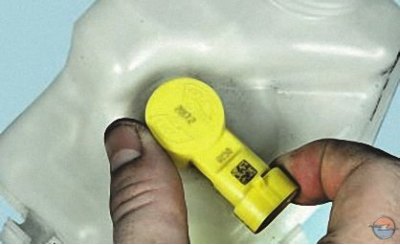
19. If during operation the brake fluid level sensor fails, to replace it, turn the sensor clockwise until it stops..
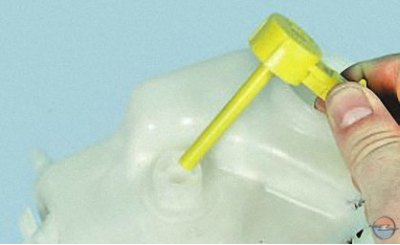
19. If during operation the brake fluid level sensor fails, to replace it, turn the sensor…


20. …and remove the sensor from the tank.

21. Install the brake master cylinder and all removed parts in the reverse order of removal, fill with brake fluid and bleed air from the system (see Bleeding the hydraulic brake system).


This article is available at russian, bulgarian, belarusian, ukrainian, serbian, croatian, romanian, polish, slovak, hungarian
Checking the article: Trifonova Emilia

Share information:

Previous articles
Opel Astra J: Brake system
Next articles

Replacing the brake master cylinder reservoir
Replacing brake fluid
Bleeding the hydraulic brake system
Checking the parking brake
Checking the degree of wear of brake pads and discs
Checking the operation of the brake booster
Replacing the brake booster
General information about replacing brake hydraulic hoses and tubes
Replacing brake hoses
Replacing brake pipes
Removal and installation the brake pedal
Replacing the brake pads of the front wheel brake mechanism


See similar ones from other Opel car manuals:
▶ Replacing the master brake cylinder Opel Insignia A (2008-2017)
▶ Master brake cylinder Opel Corsa C (2000-2006, petrol)
▶ Removal and installation the brake master cylinder Opel Kadett E (1984-1995)
▶ Master Brake Cylinder — Removal and Installation Opel Omega B (1993-1999)
▶ Master brake cylinder Opel Vectra B (1995-2002, petrol)
Link to this page in different formats

Visitor comments


No comments yet


How much will 24 + 31 =


Astra J (2009-2015, petrol) 
  • General information
  • Vehicle device
  • User manual
  • Faults en route
  • Maintenance
  • Power unit
  • Engine repair
  • Cooling and lubrication system
  • Engine power system
  • Exhaust system
  • Transmission
  • Clutch
  • Car gearbox
  • Drive shafts
  • Chassis
  • Front suspension
  • Rear suspension
  • Steering
  • Brake system
  • Wheels and tires
  • Body
  • Exterior
  • Interior
  • Doors and windows
  • Body Care
  • Heating and air conditioning
  • Security systems
  • Electrical equipment
  • Equipment and devices
  • Lighting and signaling
  • Power devices
  • Electrical circuits
Astra H (2004-2009) 
  • General information
  • Introduction to the guide
  • Troubleshooting
  • User manual
  • Maintenance
  • Power unit
  • Engine repair
  • Cooling and heating
  • Power and exhaust system
  • Ignition system
  • Launch and charge system
  • Transmission
  • Mechanical gearbox
  • Automatic gearbox
  • Drive shafts
  • Chassis
  • Brake system
  • Car suspension
  • Steering
  • Body
  • Interior
  • Exterior
  • Electrical equipment
  • Equipment and devices
  • Electrical circuits
Astra G (1998-2004) 
  • General information
  • Introduction to manual
  • User manual
  • Maintenance
  • Power unit
  • SOHC gasoline engines
  • DOHC gasoline engines
  • Diesel engines 1.7 and 2.0
  • Engine repair
  • Cooling system
  • Supply system
  • Injection system (gasoline)
  • Injection system (diesel)
  • Exhaust system
  • Charge and launch system
  • Ignition system (gasoline)
  • Preheat system (diesel)
  • Transmission
  • Manual gearbox
  • Automatic gearbox
  • Clutch
  • Drive shafts
  • Chassis
  • Brake system
  • Wheel suspension
  • Steering
  • Body
  • Exterior
  • Interior
  • Doors and windows
  • Ventilation and heating
  • Electrical equipment
  • Equipment and devices
  • Electrical circuits
Astra G (1998-2004, petrol) 
  • General information
  • User manual
  • Car care
  • Maintenance
  • Power unit
  • Single shaft engines
  • Twin shaft engines
  • Engine repair
  • Cooling and heating
  • Fuel and exhaust systems
  • Starting and charging system
  • Ignition system
  • Transmission
  • Clutch
  • Mechanical gearbox
  • Automatic gearbox
  • Drive shafts
  • Chassis
  • Brake system
  • Car suspension
  • Steering
  • Body
  • Interior
  • Exterior
  • Electrical equipment
  • Equipment and devices
  • Wiring diagrams Opel Astra
  • Wiring diagrams Opel Zafira
Astra F (1991-1998, petrol) 
  • General information
  • Maintenance
  • Power unit
  • Engine in car
  • Engine removed
  • Cooling system
  • Heating and ventilation
  • Fuel supply (carburetor)
  • Fuel supply (injector)
  • Emission control
  • Ignition system
  • Transmission
  • Clutch
  • Mechanical gearbox
  • Automatic gearbox
  • Drive shafts
  • Chassis
  • Brake system
  • Car suspension
  • Steering
  • Body
  • Exterior
  • Interior
  • Electrical equipment
  • Equipment and devices
  • Electrical circuits
OpelBook.ru © 2017–2026 · Mobile version · · Sitemap: EN BG BY UA RS HR RO PL SK HU · Feedback · Site search
Astra F, petrol · Astra G, petrol · Astra G · Astra H · Astra J, petrol · Corsa B · Corsa C, petrol · Corsa C · Insignia A · Kadett D · Kadett E · Omega A · Omega B · Omega B2 · Vectra A, petrol · Vectra A · Vectra B, petrol · Vectra B · Vectra C · Zafira A, petrol · Frontera A, petrol · Frontera B · Ascona C · Vivaro A ·
We want your visit to be comfortable 🤝! We use cookies 🍪 to make that happen.