


- Insufficient lubrication due to low oil level.
- Water in engine oil as a result of a defective cylinder head gasket.
- Too high revs with a cold engine and therefore too viscous oil
- Torn lubricant film at high oil temperatures; perhaps due to the wrong viscosity oil.
Measures to take in case of bearing damage
We warn you in advance - the defect is almost always found in connecting rod plain bearings. It is very rare in crankshaft main bearings.
Usually, bearing damage means extensive engine repair. But if you recognize a defective connecting rod bearing at an early stage, replacing the liner may be sufficient. Therefore:
- If you hear a hard knock in the engine compartment, turn off the engine immediately. Often, the oil pressure warning light will also come on.
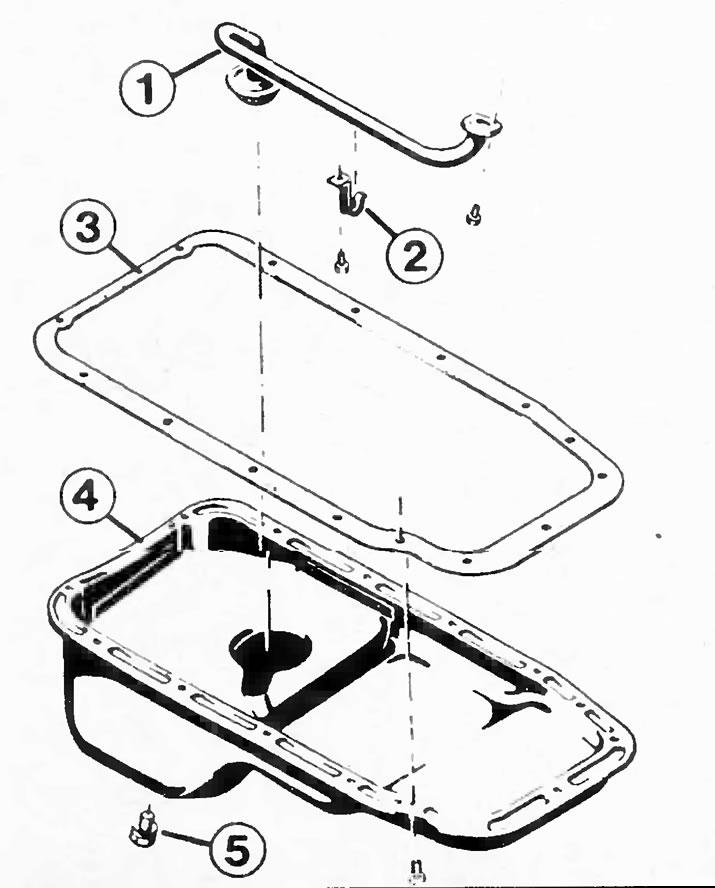
The engine crankcase includes the following parts:
1 - mesh oil filter with suction snorkel;
2 - suction pipe bracket;
3 - gasket;
4 - crankcase;
5-threaded plug of the oil drain hole.
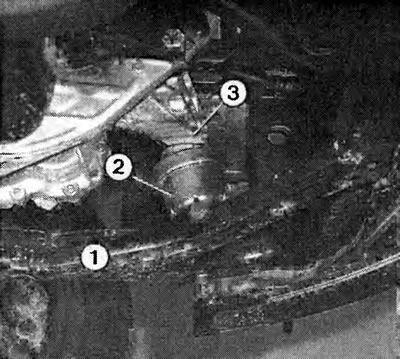
The photograph shows the engine and gearbox mount at the front left. The gearbox support (3) rests on the front axle body (1) via the hydraulic damping unit (2) of the engine.
- Do not start the engine again, have the car towed to a workshop.
- If the engine has a mileage of less than 100,000 km, then a partial repair may be sufficient
- Let them dismantle the crankcase and unscrew the caps from all the connecting rod bearings.
- If only individual bearing shells are damaged, and the crankshaft journals are still smooth, then it is sufficient to replace only the bearing shells.
- It is necessary to remove any stuck bearing material from the crankshaft journals, if any.
- In any case, have them measure the connecting rod bore with the defective bearing. Most often, the connecting rod bore needs to be reamed out - a job for an engine repair shop.
Visitor comments