
OpelBook.ru
Cars AvtoVAZ Cars Mitsubishi Cars BMW Cars Mercedes Cars Nissan Cars Toyota Cars Chevrolet
English Русский
Български
Беларускі
Український
Српски
Hrvatski
Română
Polski
Slovenský
Magyar
 |  Sitemap  |  Contacts  |    


Main Astra Corsa Insignia Kadett Omega Vectra Zafira Others Articles
Frontera A (1991-1998, petrol) Frontera B (1998-2004) Ascona C (1981-1988) Vivaro A (2001-2014)
  • Main
  • Opel
  • Vivaro A
  • General information
  • User manual
  • Electronic engine immobilizer

Electronic engine immobilizer (Opel Vivaro A)

            0

The electronic engine immobilizer prevents the engine from starting by means other than the coded ignition key.

Operating principle


A few seconds after the key is removed from the ignition switch, the electronic engine immobilizer is activated automatically. After turning on the ignition, indicator light 1 lights up for a few seconds and then goes out. The code is recognized by the electronics - the engine is ready to start. If the ignition key code is not recognized, the starter remains locked; signal lamp 1 flashes continuously.

Warning! Unauthorized intervention or changes to the electronic engine immobilizer system (electronic control units, wiring kits, etc.) can be dangerous. All necessary work must be carried out at an authorized RENAULT service station.
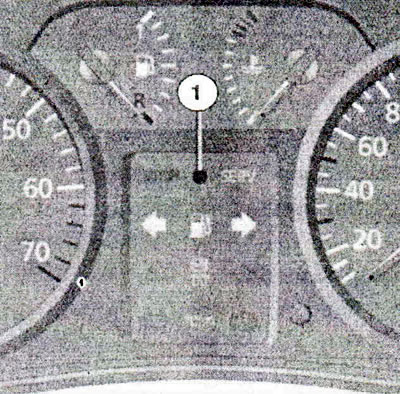

Warning! Unauthorized intervention or changes to the electronic engine immobilizer system…


Functional indicator light of the system. After the ignition is switched on, indicator light 1 lights up for approximately 3 seconds and then goes out. The engine is ready to start.

Anti-theft alarm signal light. A few seconds after the ignition is switched off, indicator light 1 starts to flash continuously. The electronic engine immobilizer is activated only after the key is removed from the ignition, and the vehicle becomes protected from theft.


Functional disturbance indicator light. If after the ignition is switched on, the indicator light 1 flashes or lights up continuously, there is a functional fault in the system.

In all these cases, be sure to contact an authorized RENAULT service station, as only they have the right to decode the electronic engine blocking system or perform work on this system.

(Text copied from an internet website www.OpelBook.ru)

If the ignition key is coded (transponder) does not work, use spare key (comes with the car). If you do not have it at your disposal, you must contact an authorized RENAULT service station, as only they have the right to carry out work on the electronic engine immobilizer system.


This article is available at russian, bulgarian, belarusian, ukrainian, serbian, croatian, romanian, polish, slovak, hungarian
Checking the article: Meshcheryakov Damir

Share information:

Previous articles
Opel Vivaro A: User manual
Next articles

Anti-theft system
Rear liftgate
Rear hinged door
Side doors
Front doors
Electric door drive from inside
Front seats
Front headrests
Rear view mirrors
Instrument panel
Instrument panel
Setting the time


See similar ones from other Opel car manuals:
▶ Removal and installation of the electronic engine control… Opel Astra J (2009-2015, petrol)
▶ Electronic engine control unit Opel Insignia A (2008-2017)
▶ Anti-theft alarm system and engine immobilizer Opel Omega B (1993-1999)
▶ Electronic Engine System Warning Light Opel Vectra B (1995-2002)
▶ Electronic Engine Control Unit 1.8 DOHC — Replacement Opel Zafira A (1999-2005, petrol)
Link to this page in different formats

Visitor comments


No comments yet


How much will 18 + 28 =


Vivaro A (2001-2014) 
  • General information
  • User manual
  • Power unit
  • Petrol engine F4R
  • Diesel engine F9Q
  • Diesel engine G9U
  • Transmission
  • Clutch and drive shafts
  • Manual gearbox
  • Chassis
  • Front suspension
  • Rear suspension
  • Brake system
  • Body
  • Exterior
  • Interior
  • Electrical equipment
  • Heating and ventilation
  • Air conditioner
  • Equipment and devices
  • Electrical diagrams
Ascona C (1981-1988) 
  • General information
  • Maintenance
  • Power unit
  • Gasoline engines
  • Diesel engines
  • Cooling system
  • Fuel and exhaust system
  • Contact ignition system
  • Contactless ignition system
  • Transmission
  • Clutch
  • Mechanical gearbox
  • Automatic gearbox
  • Drive shafts
  • Chassis
  • Steering
  • Brake system
  • Car suspension
  • Body
  • Exterior
  • Interior
  • Doors and windows
  • Electrical equipment
  • Equipment and devices
  • Power devices
  • Electrical circuits
Frontera B (1998-2004) 
  • General information
  • User manual
  • Maintenance
  • Power unit
  • Petrol engines 2.2 l
  • Petrol engines 3.2 l
  • Diesel engines 2.2 l
  • Cooling system
  • Fuel system (petrol)
  • Fuel system (diesel)
  • Ignition system
  • Transmission
  • Clutch
  • Manual gearbox MUA5C
  • Automatic gearbox 4L30E
  • Chassis
  • Suspension and axles
  • Steering
  • Brake system
  • Body
  • Exterior
  • Interior
  • Doors, locks and windows
  • Heating and air conditioning
  • Electrical equipment
  • Power devices
  • Equipment and devices
  • Lighting and signaling
  • Electrical diagrams
Frontera A (1991-1998, petrol) 
  • General information
  • Introduction to guide
  • User manual
  • Maintenance
  • Power unit
  • Engine repair
  • Lubrication system
  • Cooling system
  • Power and exhaust system
  • Engine electrics
  • Transmission
  • Clutch
  • Mechanical gearbox
  • Cardan shafts
  • Chassis
  • Brake system
  • Front suspension
  • Rear suspension
  • Steering
  • Body
  • Repair and care
  • Electrical equipment
  • Equipment and devices
  • Electrical circuits
OpelBook.ru © 2017–2026 · Mobile version · · Sitemap: EN BG BY UA RS HR RO PL SK HU · Feedback · Site search
Astra F, petrol · Astra G, petrol · Astra G · Astra H · Astra J, petrol · Corsa B · Corsa C, petrol · Corsa C · Insignia A · Kadett D · Kadett E · Omega A · Omega B · Omega B2 · Vectra A, petrol · Vectra A · Vectra B, petrol · Vectra B · Vectra C · Zafira A, petrol · Frontera A, petrol · Frontera B · Ascona C · Vivaro A ·
We want your visit to be comfortable 🤝! We use cookies 🍪 to make that happen.