


Contents: System for restricting the movement…⬇ Front seat belts ⬇ Adjusting the height of the upper…⬇ Rear seat belts ⬇ Lap seat belt (5-door models) ⬇
System for restricting the movement of passengers and the driver
The system components include three-point seat belts and driver and passenger airbags (if provided).
In this case, depending on the severity of the overload accident, the system operates in two stages. At the first stage, the seat belts are locked, which ensures that the driver and passengers are secured in their seats. Furthermore, in case of significant frontal overload, the airbag system is triggered (if such is provided), providing additional protection for the driver and front passenger.
Attention! Remember that the presence of airbags in the car does not relieve the driver and front passenger from the need to fasten their seat belts while driving!
Front seat belts
The seats of Opel Frontera cars are equipped with three-point seat belts, which provide sufficient freedom of movement for the driver and passengers when the car is moving at a constant speed. At the same time, the inertial return device constantly keeps the belts taut, removing all excess slack.
At the same time, the inertial return device ensures reliable belt locking during sudden braking or a frontal impact.
Article posted on an online resource OPELBOOK
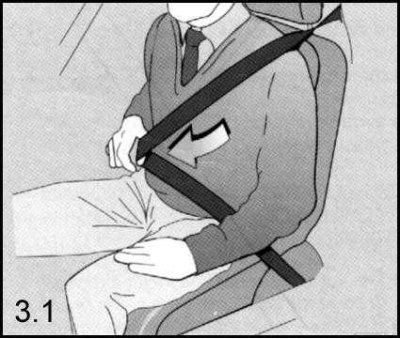
1. To put it on, carefully pull the belt out of the return device and, being careful not to twist it, throw it over your shoulder.
2. Insert the metal shackle of the lock into the buckle until it clicks. The seat back should not be tilted back too much. The waist section of the belt should also fit snugly against the body without twisting.
3. To ensure a secure grip on your body, jerk the diagonal section of the belt sharply several times.
4. Bulky clothing prevents the belt from fitting properly around the body. The belt should not be placed over hard objects in pockets such as pens, keys, glasses, etc. to avoid injury. Also, do not put cosmetic bags or handbags under your belt.
5. To remove the belt, press the red button on the buckle button. The belt rewinds automatically after the buckle is released.
Adjusting the height of the upper seat belt anchor
Adjustments should not be made while driving.
1. Pull the belt slightly out of the return device.
2. Tilt the upper belt guide upward.
3. Adjust the height of the anchor position.
4. Release the belt guide and check the reliability of the anchor assembly.
The belt should fit snugly against the shoulder without touching the neck area or restricting the freedom of movement of the arm.
Rear seat belts
The rear side seats are equipped with three-point seat belts with an automatic inertia-type return device.
5-door models
In 5-door models, the height of the upper anchor point of the rear seat side seat belts can be adjusted.
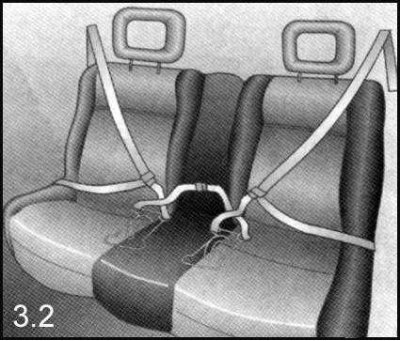
The safety of the central passenger is ensured by a static type lap belt. The belt arrangement diagram is shown in the illustration.
Lap seat belt (5-door models)
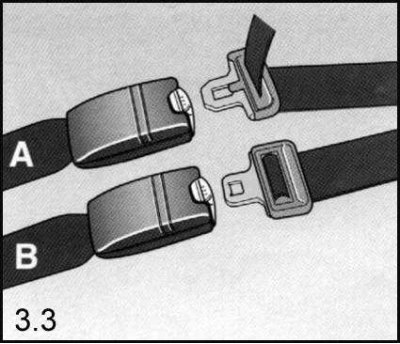
The buckles and locks of the side seat belts (A) differ in design from the buckles of the lap belt (B).
1. Place the waist belt as low as possible across your hips.
2. Make sure the belt is not twisted and fasten the buckle. The belt should fit tightly against your hips - the palm of your hand should fit tightly under it.
Note: When transporting pregnant women, the lap belt should be positioned as low as possible in the pelvic area of the body so that the stomach is not pressed against it.
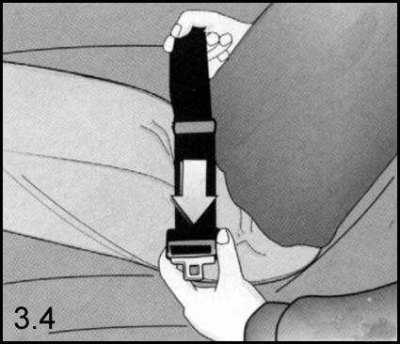
3. To adjust the length of the waist belt, press the top of the buckle plate and pull the free end of the belt.
4. To release the waist belt, press the red button on its buckle.
When not in use, keep the belt in the fastened position.
Visitor comments