


Contents: Removal ⬇ Installation ⬇
Removal
Caution: The cylinder head can only be removed from a cold engine (room temperature, approximately 20°C).
Disconnect the ground cable from the battery.
Remove the air filter.
Drain and collect coolant see p. 3.2.
Remove the camshaft housing cover.
Remove the vacuum pump, see item 7.14.
Disconnect and remove all water hoses from the cylinder head.
Disconnect the electrical wires from the thermal switch and glow plugs.
Clean the high-pressure fuel lines on the pump and injector pipes with fuel, then unscrew them. Close all openings with appropriate plugs.
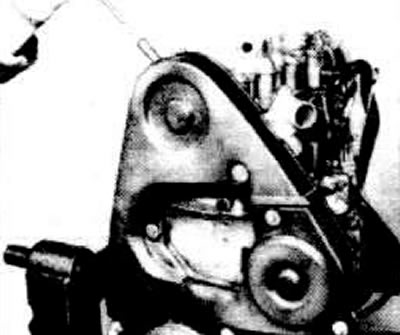
Remove the V-belt, see item 22.3.
Remove the upper and lower timing belt covers.
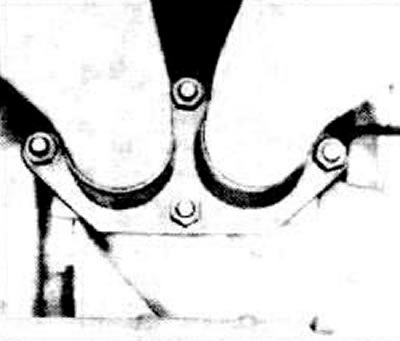
Remove the intake manifold completely.
Remove the clutch dome cover, see also Figure B4735, item 7.11.
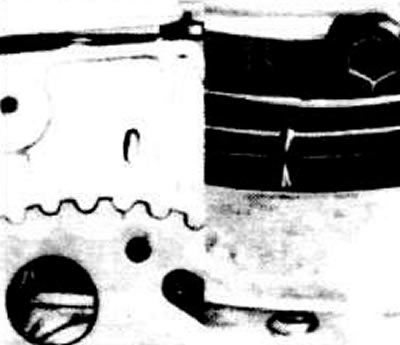
Turn the crankshaft in the direction of engine rotation until the TDC mark on the flywheel (right picture) and the TDC mark on the high pressure fuel pump will not match.
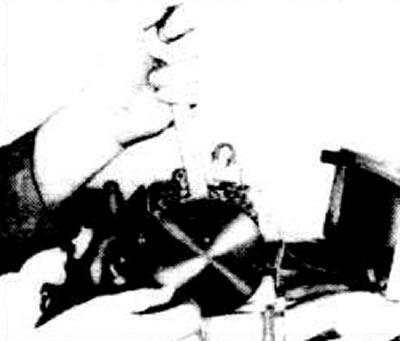
Install the KM-537 tool from OPEL instead of the vacuum pump and lock the camshaft. Locking is not necessary if you will remove the camshaft later.
Loosen the camshaft gear mounting screws. Use a wrench to hold the shaft from turning (flattened area between the intake and exhaust cams of the fourth cylinder).
Remove the timing belt only at the top, see p. 6.5.
Spiral from outside to inside (starting from 1) unscrew the cylinder head screws; first unscrew all the screws with a cylindrical head by 1/4 turn, then by half a turn. Finally, unscrew the screws completely.
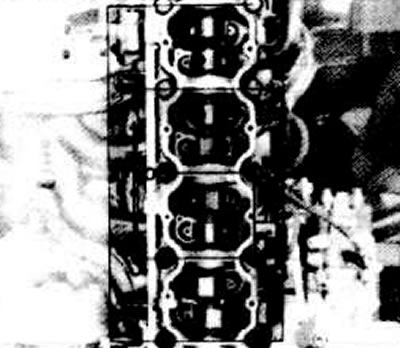
Caution: Unscrew the cylinder head screws only on a cold engine (room temperature approx. 20°C).
Remove the camshaft housing.
Remove the cylinder head together with the intake manifold and exhaust manifold.
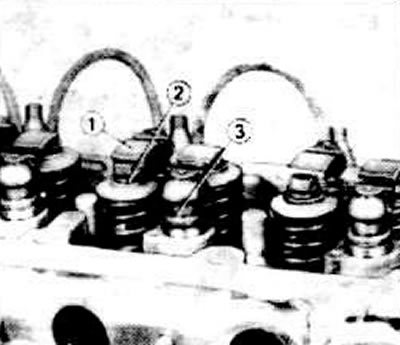
Remove the levers -1-, the pressure element -2- and the valve clearance compensator -3- for cleaning. First mark all these parts so that they can be installed in the same place later.
Installation
Clean the mating surfaces of the engine block, cylinder head and camshaft housing. Make sure that no dirt gets into the cylinders.
Before installation, thoroughly clean the cylinder head and steering gear housing.
Check the cylinder head and cylinder block for flatness, see paragraph 1.19.
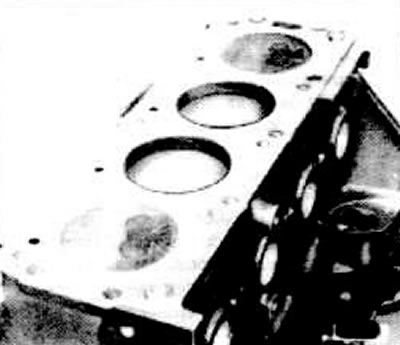
Install a new cylinder head gasket, do not use a sealant.
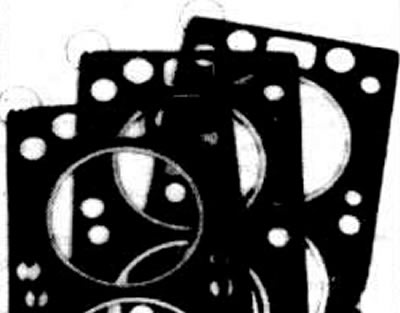
Note: Depending on how much the piston protrudes above the cylinder edge, three different thicknesses of cylinder head gaskets are used. When replacing a gasket, carefully read the markings on the old one so that you can use a gasket with exactly the same markings later.
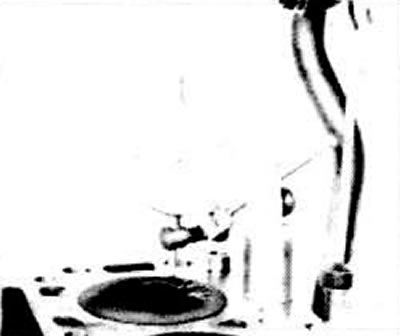
Inspect the pistons and valves for signs of contact and replace them if necessary. If such signs are minor, it is sufficient to use a thicker gasket. To do this, use a dial indicator to determine how much the piston protrudes above the edge of the cylinder.
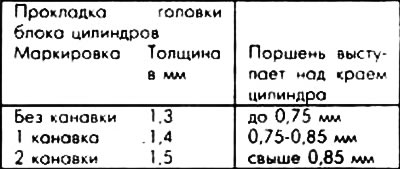
Install the cylinder head.
Apply a small amount of sealant to the mating surfaces of the cylinder head/camshaft housing (OPEL #1503166).
Spread this product evenly with a brush.
Install the camshaft housing.
Caution: Replace the cylinder head mounting bolts completely.
Screw in the cylinder head screws by hand.
Tighten the cylinder head bolts by hand.
Lightly, but not completely, tighten the cylinder head screws in a spiral pattern (from 1 to 10).
Caution: The cylinder head bolts must be tightened in four stages. A properly functioning torque wrench is required to tighten these bolts.
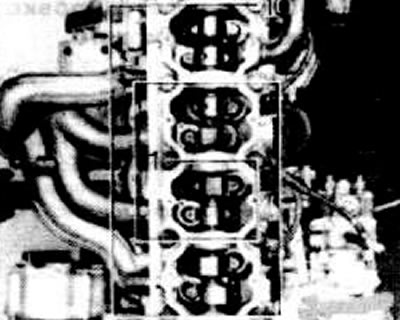
Using a torque wrench, tighten the cylinder head bolts to 25 Nm, working in a spiral from the inside out.
In the second stage, use a strong wrench to turn all the cylinder head screws 90°, doing this in a spiral from the inside out.
But in the third stage, tighten all the cylinder head screws another 90°, doing this in a spiral.
But in the fourth stage, tighten all the cylinder head screws in a spiral by another 45°.
To maintain this angle of tightening the screws (90° or 45°), it makes sense to apply corresponding marks on the camshaft housing cover. To do this, put a wrench on the screw and apply marks with chalk at a distance of 90° or 45°.
When the engine is warm, the cylinder head bolts should be tightened again.
The cylinder head bolts must be tightened very carefully. The torque wrench must first be checked for accuracy.
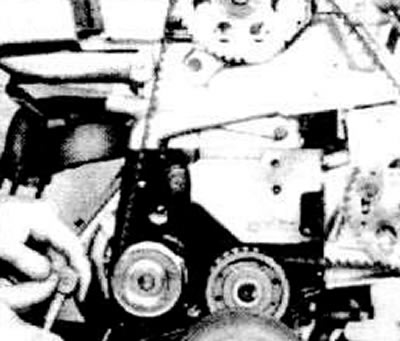
Install the timing belt and tighten it, see p. 6.6.
Tighten the water pump mounting screws.
Check if all TDC marks match, adjusting if necessary, see p. 6.4.
Install the camshaft gear and tighten the fasteners to 90 Nm. Use a wrench to hold the camshaft from turning.
Remove the KM-537 tool.
Check the valve timing, see item 7.15.
Install the vacuum pump.
Install the upper and lower timing belt covers.
Install and tension the V-belt.
Connect the fuel lines to the pump and injectors.
Connect the cables to the glow plugs and thermal switch.
Check the start of fuel supply by the high-pressure fuel pump, see item 7.11.
Connect the water hoses to the cylinder head.
Install the air filter.
Screw on the exhaust pipe.
Screw on the clutch dome cover.
Fill with coolant.
Check the engine oil level and top up if necessary.
Connect the ground cable to the battery.
Start the engine and warm it up to operating temperature (approximately 80°C).
Tighten the cylinder head screws by 30°, turning them in a spiral from the inside out.
Caution: After 1000 km, the cylinder head bolts should be tightened by another 45°.
Check the idle speed and maximum speed and adjust if necessary, see p. 4.27.
Check the coolant level, see p. 3.2.
Visitor comments