


Contents: Removal the engine ⬇ Engine installation ⬇
The diesel engine, together with the gearbox and differential, is removed downwards. In specialized workshops, a hydraulic device is used for these chains to remove the engine. The engine can be lowered downwards using a crane. To raise the car, either a car lift or a jack is used. In case of installation work in the engine compartment, it is necessary to cover the fenders well to protect against damage.
Removal the engine
Raise the engine hood. First, use a scriber to mark the position of the mounting screws and washers. This will make it easier to install the engine hood quickly and correctly at a later stage.
Disconnect the engine compartment light plug.
Disconnect the ground cable from the battery.
Disconnect the "+" cable from the battery and disconnect the plug (arrow).
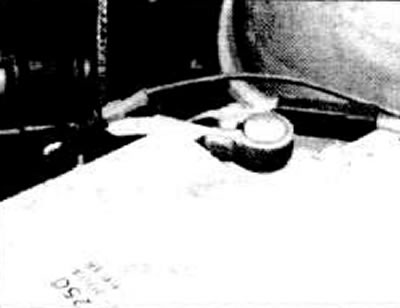
Remove the lock washer between the suction cap and the suction pipe.
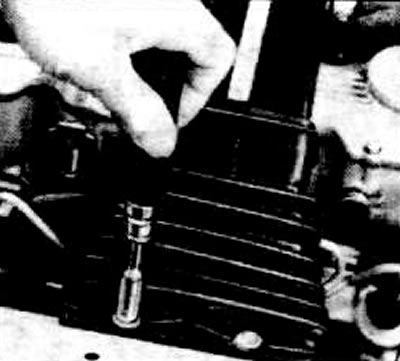
Drain the coolant, see p. 3.2.
Remove the supply hose between the thermostat housing/expansion tank from the thermostat housing (arrow left, Figure B4755).
Remove the return hose from the expansion tank.
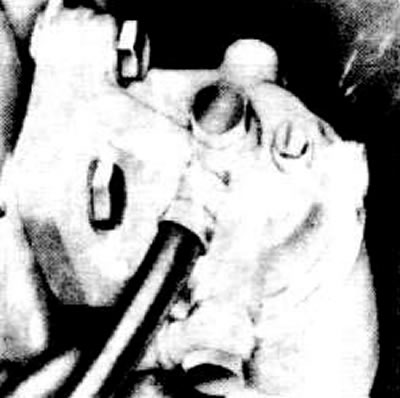
Unscrew the fuel hose (top) from the fuel filter.
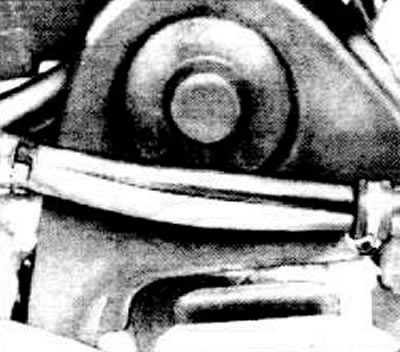
Disconnect the hose fastening straps (arrow left) and unscrew the clamps on the upper cover of the timing belt (arrow to the right).
Disconnect the vacuum hose from the vacuum pump.
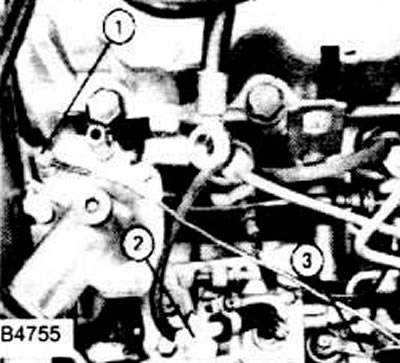
Remove the thermoswitch -1-, magnetic valve -3- and glow plug connectors (arrow, Figure B4752, see below).
Remove the fuel return hose from the tee -2-.
Remove the male from the hydraulic switch, see Figure B4776 below.
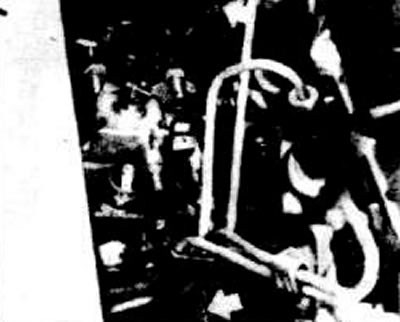
Disconnect the gas cable (top arrow). To do this, disconnect the return spring, move the throttle lever to the full throttle position, disconnect the throttle cable from the ball joint. Pull the throttle cable up on the support, do not remove the lock washer.
Disconnect the cold start cable (bottom arrow). To do this, release the cable from the locking clamps, remove the locking washer from the support and remove the cold start cable.
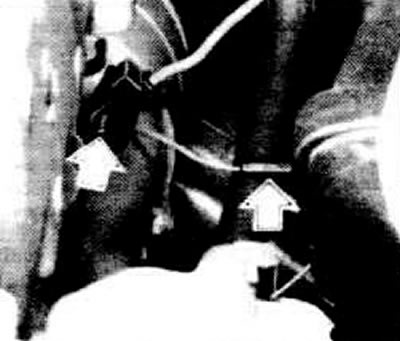
Unscrew the electrical wires from the generator (arrow left) and disconnect the plug connection (arrow to the right).
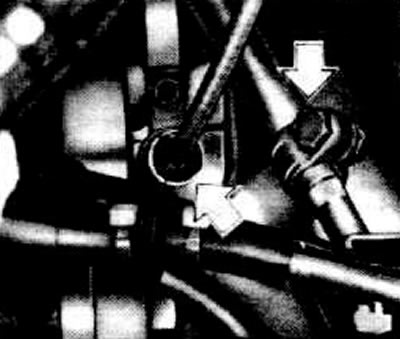
Unscrew the speedometer shaft from the gearbox housing.
Disconnect the gear shift fork rod. To do this, disconnect the retaining clamps.
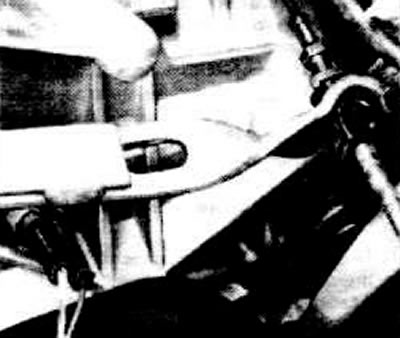
Disconnect the clutch control cable rod from the clutch release lever. First, remove the fastening clamps from the cable rod.
Remove the cable from the reverse gear switch.
Unscrew the right engine mount (arrow).
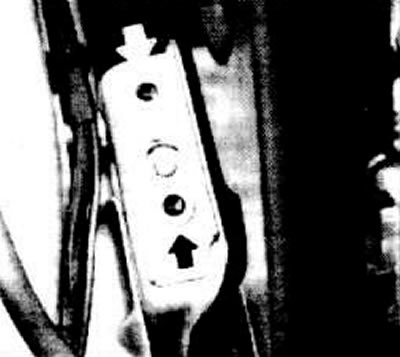
Remove the screws on both front wheels.
Raise the car with a jack.
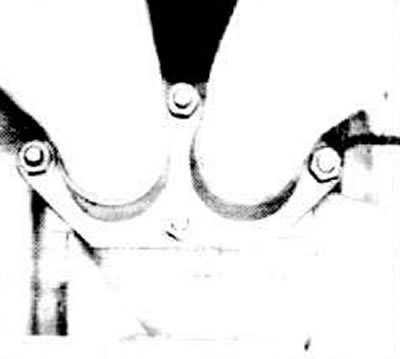
Unscrew the inlet pipe from the manifold.
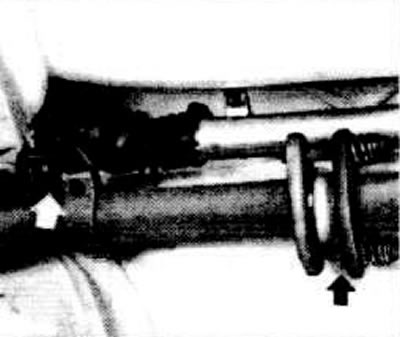
Disconnect the flange connection, disconnect the outlet pipe from the inlet pipe and remove.
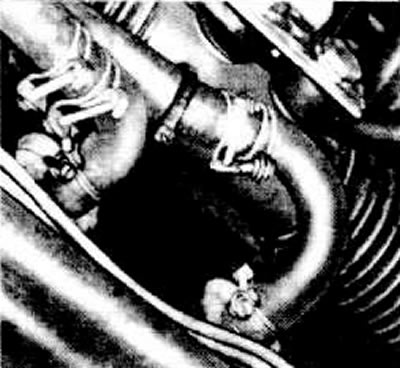
Remove the heating hoses from the heat exchanger.
Disconnect the ground wire from the gearbox housing (arrow to the right).
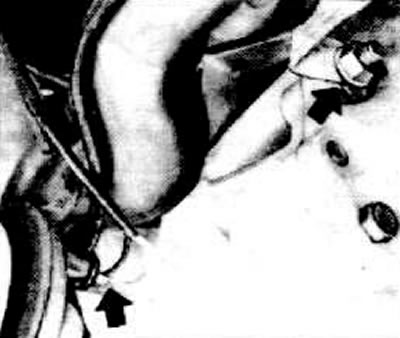
Remove both front wheels.
Disconnect the guide joint from the steering knuckle, remove the drive shaft from the gearbox, see item 12.5.
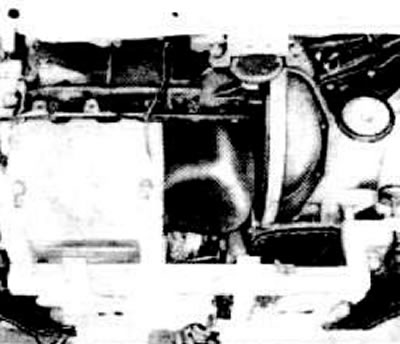
Place an engine lifting device under the engine and gearbox and lift them slightly so that the engine bearings become free. If you do not have such a device, the engine and gearbox should be lifted slightly on a cable with a crane. The cable placement points are located on the engine (Figure B4755, arrow on the right) and on the gearbox at the rear left. A fairly thick metal strip should be used for the gearbox.
Disconnect the engine mount at the rear, front left and from the torque arm.
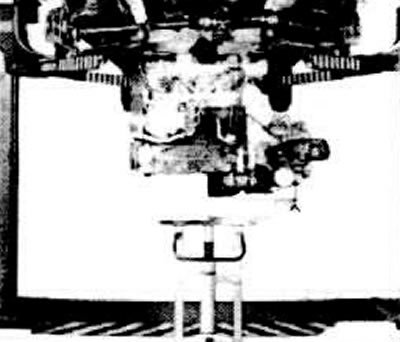
Remove the engine together with the gearbox downwards from the engine compartment.
Lower the engine with the gearbox using a crane, while carefully moving them. Lower the engine onto the trolley and pull it out. The car must be raised for this by about 80 cm.
Caution: Never lower the engine using a garage jack, as this may cause damage to the engine.
Engine installation
The engine is installed in reverse order.
Start the engine slowly and evenly from below, together with the gearbox, into the engine compartment.
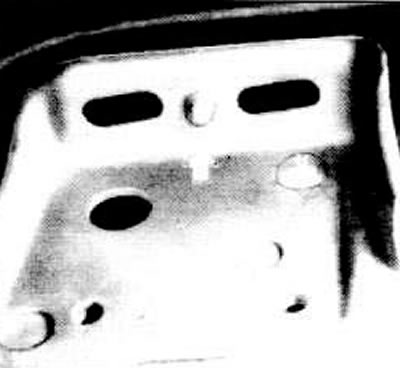
Lubricate the engine mount centering pin, front right.
Install the front and rear engine mounts without tension. The mounts must not be tilted during installation. Tighten the screws to 40 Nm.
Lower the engine and remove the cable.
Install the drive shaft and guide joint.
Screw on the front wheels.
Connect the ground wire to the gearbox housing.
Install the inlet pipe with a new gasket.
Connect the heating hoses to the heat exchanger. Ensure free access to the outlet pipe.
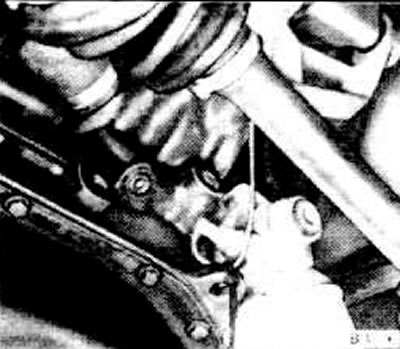
Connect the cable to the hydraulic switch.
Lower the vehicle and tighten the front wheel bolts to 90 Nm.
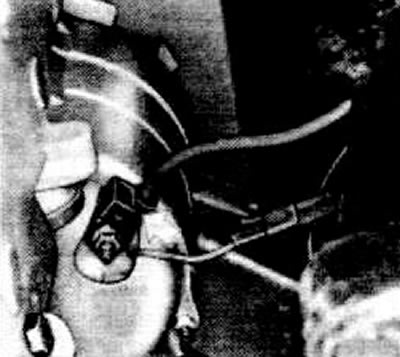
Connect the cable to the generator and plug in the plug. Make sure that the cable (arrow) is well insulated from the generator body.
Connect the clutch control cable rod to the clutch release lever.
Connect the reverse light switch cable.
Screw the speedometer cable to the gearbox housing.
Move the shift fork rod to the "neutral position" and secure it with a clamp. Secure the cold start cable without tension and secure it with clamps on the support.
Secure the throttle cable to the support and install it on the conical joint of the throttle lever. Secure the return spring. Secure the fuel hose to the fuel filter.
Place the return fuel hose onto the tee and secure with a clamp.
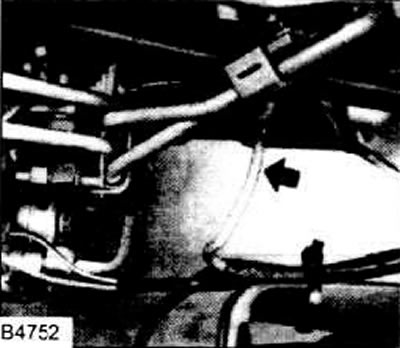
Connect the cables to the temperature sensor, electromagnetic valve and preheating system (arrow). Tie the cable harness to the fan motor bracket with plastic straps.
Connect the vacuum hose to the vacuum pump.
Attach the straps and clamps to the top cover of the timing belt.
Connect all coolant hoses and secure them with clamps.
Material copied from this portal OpelBook
Fill with coolant, see p. 3.2.
Connect the male wires to the battery and plug in the plug.
Install the air filter retaining washer.
Install the engine hood. Orient the hood by screwing in the screws according to the marks made earlier. Connect the plug.
Check the oil level in the gearbox.
Check the engine oil level.
Start the engine and check the fuel and water hoses for leaks.
After reaching operating temperature, check the coolant level and top up if necessary.
Check the idle speed and maximum speed, see p. 7.3.
Visitor comments