
OpelBook.ru
Cars AvtoVAZ Cars Mitsubishi Cars BMW Cars Mercedes Cars Nissan Cars Toyota Cars Chevrolet
English Русский
Български
Беларускі
Український
Српски
Hrvatski
Română
Polski
Slovenský
Magyar
 |  Sitemap  |  Contacts  |    


Main Astra Corsa Insignia Kadett Omega Vectra Zafira Others Articles
Vectra A (1988-1995, petrol) Vectra A (1988-1995) Vectra B (1995-2002, petrol) Vectra B (1995-2002) Vectra C (2002-2008)
  • Main
  • Vectra
  • Vectra B
  • Power unit
  • Exhaust system
  • Lambda probe function

Lambda probe function (Opel Vectra B)

            0

Lambda probe (also called an oxygen probe or O ₂ probe) bolted to the exhaust manifold before the catalytic converter (in engines with a working volume of 1.6 l) or in the front exhaust pipe (in engines with a working volume of 1.8 and 2.0 l).

The special ceramics of the probe are exposed to exhaust gases on the outside, and are in contact with atmospheric air on the inside.
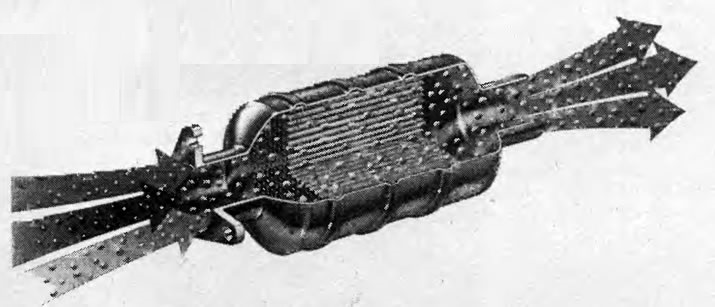
Here is a schematic representation of the operation of a catalytic converter. NOx emissions are…

Here is a schematic representation of the operation of a catalytic converter. NOx emissions are released from the engine (nitrogen oxides), SO (carbon monoxide) and NS (hydrocarbons). After the reaction, N ₂ (nitrogen), CO ₂ come out of the catalytic converter (carbon dioxide) and H 2 O (water).
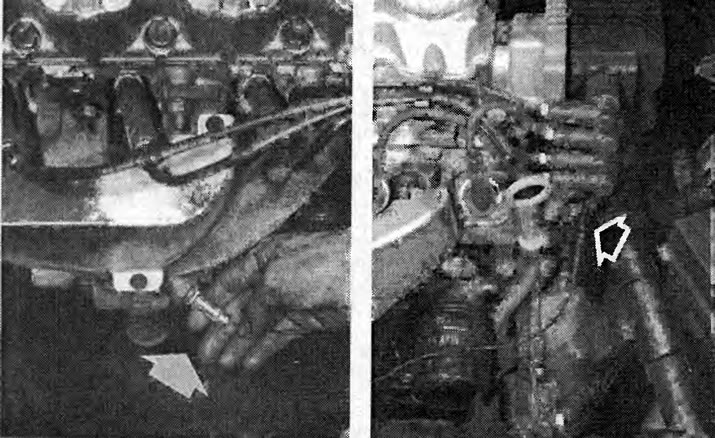

Left: In the Vectra's 1.6-liter, eight-valve engine, the lambda probe (arrow) is located directly…

Left: In the Vectra's 1.6-liter, eight-valve engine, the lambda probe (arrow) is located directly in the exhaust manifold. The lambda probe removal procedure is described in the chapter on injection.

Right: the plug connection for the lambda probe wires is located on the right side of the engine under the DIS ignition module.


Due to the different oxygen content in the exhaust gases and in the atmospheric air, the probe creates a voltage that increases sharply at a certain content of residual oxygen in the exhaust gases. This voltage jump occurs exactly at that ratio of fuel and air when λ=1. With a lack of oxygen (λ is less than 1), i.e. with a rich fuel-air mixture, the voltage is 0.9-1.1 V. With a lean fuel-air mixture (λ is greater than 1) 0.1 V is reached.


The lambda signals are sent to the injection system control unit. From there, the fuel-air mixture is influenced in order to maintain the fuel-air ratio as close as possible to λ=1.

The lambda probe reacts to fluctuations in the amount of oxygen depending on its operating temperature at different speeds: at 300°C it reacts in about 1 second, at 600°C in less than 50 ms. O Due to the built-in heating in 1.8-2.0 l engines, the most favorable operating temperature of about 600°C is reached faster.


This article is available at russian, bulgarian, belarusian, ukrainian, serbian, croatian, romanian, polish, slovak, hungarian
Checking the article: Shapovalov Yaroslav

Share information:

Previous articles
Opel Vectra B: Exhaust system
Next articles

Reducing toxicity of exhaust gases
What does the engine emit?
Ensuring clean exhaust
Replacing the exhaust system
Checking the suspension and condition of the exhaust system
Exhaust system components
Operating a vehicle with a catalytic converter
Exhaust Gas Recirculation (AGR)
Secondary air boost


See similar ones from other Opel car manuals:
▶ Lambda probe — removal and installation Opel Omega B2 (1999-2003)
▶ Three-function information display (TID) Opel Astra H (2004-2009)
▶ Removal and installation lambda probes (petrol models) Opel Corsa C (2000-2006)
Link to this page in different formats

Visitor comments


No comments yet


How much will 18 + 50 =


Vectra C (2002-2008) 
  • General information
  • User manual
  • Vehicle device
  • Maintenance
  • Troubleshooting
  • Power unit
  • Engine repair
  • Cooling system
  • Power and control system
  • Engine electrics
  • Transmission
  • Clutch
  • Car gearbox
  • Drive shafts
  • Chassis
  • Car suspension
  • Steering
  • Brake system
  • Body
  • Exterior
  • Interior
  • Doors, locks and windows
  • Heating and ventilation
  • Electrical equipment
  • Equipment and devices
  • Headlights and lighting
  • Electrical circuits
Vectra B (1995-2002) 
  • General information
  • User manual
  • Weekly checks
  • Maintenance (gasoline)
  • Maintenance (diesel)
  • Troubleshooting
  • Power unit
  • SOHC gasoline engine
  • DOHC petrol engine
  • Diesel engine 1.7 liter
  • Diesel engine 2.0 liters
  • Engine repair
  • Cooling system
  • Fuel system (gasoline)
  • Fuel system (diesel)
  • Charging system
  • Launch system
  • Ignition and preheat
  • Transmission
  • Clutch
  • Mechanical gearbox
  • Automatic gearbox
  • Drive shafts
  • Chassis
  • Brake system
  • Wheel suspension
  • Steering
  • Body
  • Exterior
  • Interior
  • Doors and windows
  • Heating and ventilation
  • Electrical equipment
  • Equipment and devices
  • Electrical circuits
Vectra B (1995-2002, petrol) 
  • General information
  • Maintenance
  • Help with malfunctions
  • Power unit
  • Engine repair
  • Exhaust system
  • Cooling system
  • Fuel system
  • Multec injection system
  • Four point injection
  • Transmission
  • Clutch
  • Gearbox and drive
  • Chassis
  • Wheel suspension
  • Steering
  • Brake system
  • Wheels and tires
  • Body
  • Exterior
  • Interior
  • Electrical equipment
  • Fuses and electronics
  • Power devices
  • Ignition system
  • Lighting and signaling
  • Equipment and devices
  • Heating and ventilation
  • Electrical circuits
Vectra A (1988-1995) 
  • Power unit
  • Engine repair
  • Ignition system
  • Lubrication system
  • Cooling system
  • Injection system
  • Fuel system (carburetor)
  • Fuel system (diesel)
  • Exhaust system
  • Transmission
  • Clutch
  • Car gearbox
  • Chassis
  • Front suspension
  • Rear suspension
  • Steering
  • Brake system
  • Wheels and tires
  • Body
  • Exterior
  • Interior
  • Electrical equipment
  • Electrical circuits
Vectra A (1988-1995, petrol) 
  • General information
  • User manual
  • Maintenance
  • Power unit
  • SOHC engine
  • DOHC engine
  • Cooling and ventilation
  • Fuel system (carburetor)
  • Fuel system (injector)
  • Exhaust converter
  • Transmission
  • Clutch
  • Mechanical gearbox
  • Automatic gearbox
  • Drive shafts
  • Chassis
  • Brake system
  • Car suspension
  • Steering
  • Body
  • Body elements
  • Electrical equipment
  • Power devices
  • Equipment and devices
  • Electrical circuits
OpelBook.ru © 2017–2026 · Mobile version · · Sitemap: EN BG BY UA RS HR RO PL SK HU · Feedback · Site search
Astra F, petrol · Astra G, petrol · Astra G · Astra H · Astra J, petrol · Corsa B · Corsa C, petrol · Corsa C · Insignia A · Kadett D · Kadett E · Omega A · Omega B · Omega B2 · Vectra A, petrol · Vectra A · Vectra B, petrol · Vectra B · Vectra C · Zafira A, petrol · Frontera A, petrol · Frontera B · Ascona C · Vivaro A ·
We want your visit to be comfortable 🤝! We use cookies 🍪 to make that happen.