


All engines, both petrol and diesel, have an overhead camshaft with a toothed belt drive. In the most powerful versions, the engines have four valves per cylinder and, accordingly, two camshafts on one cylinder head.
The fuel system of gasoline engines can be either with a carburetor or with a gasoline injection system. Both gasoline and diesel engines can be equipped with turbocharging. All engines use electronic control systems (computer), ensuring the stability of operational characteristics and minimal toxicity of exhaust gases.
The engine make and number are stamped on the front side of the engine.
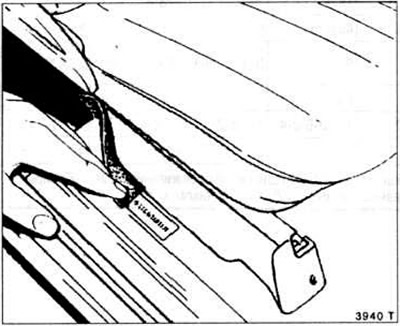
The vehicle number is stamped on the nameplate located on the bottom of the vehicle between the driver's door and the driver's seat.
Engine code decoding
Example:
| WITH | 20 | N | E | N |
| 1 | 2 | 3 | 4 | 5 |
- 1 — Type of exhaust gas toxicity reduction system. "C" — controlled catalyst
- 2 — Working volume of cylinders. "20" - 2.0 l
- 3 — Compression ratio. "G": 8.5, "L": 8.5-9.0, "N": 9.0-9.5. "S": 9.5-10.0, "X": 10.0-11.5, "Y": 11.5
- 4 — Fuel system. "E" - distributed injection, "Z" - central injection, "V" - carburetor, "D" - diesel engine
- 5 — Performance. "T" - turbocharging, "R", "H" - increased power, "J" - limited power
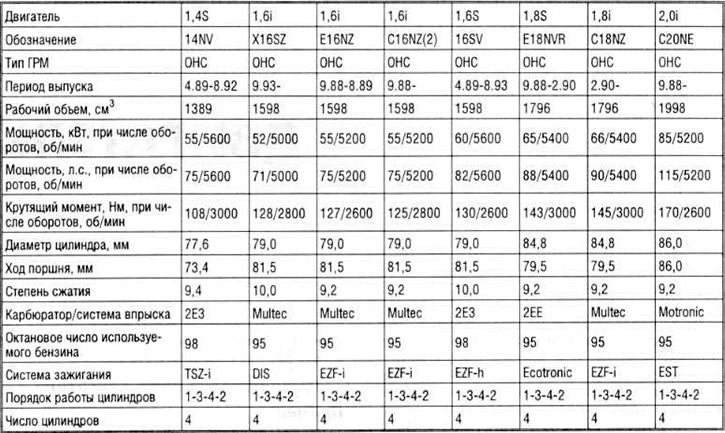
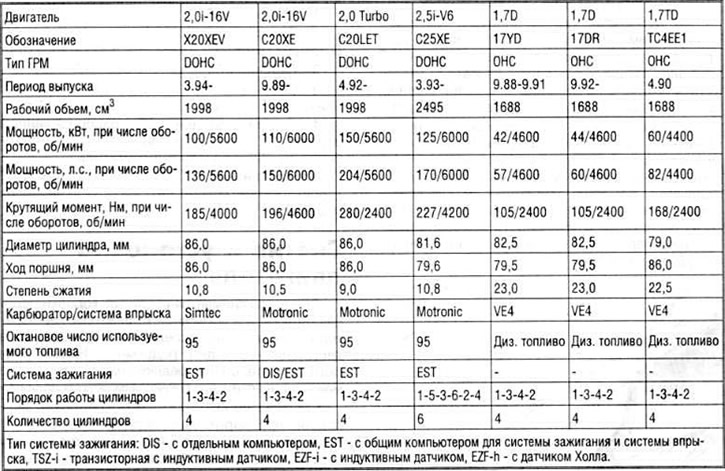
Main engine parameters
Visitor comments