


Intake manifold (1.3 and 1.6)
2. Before removing the intake manifold, it is necessary to drain the coolant and disconnect the cooling hoses from the manifold.
3. On 1.3 engines, disconnect the wire from the coolant temperature sensor switch.
4. Disconnect the brake servo cylinder vacuum hose.
Text copied from a web portal [OpelBook.ru]
5. Now you can remove the intake manifold with or without the carburetor.
b. If you want to remove the carburetor first, refer to Section 12 or 17.
7. To remove the manifold together with the carburetor, follow the instructions in the section that describes removing the carburetor, but leave in place the nuts that secure the carburetor to the manifold.
8. Unscrew the nuts securing the manifold and remove the manifold with the carburetor from the cylinder head (see photo).
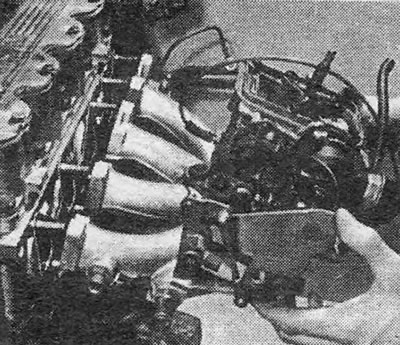
Photo 29.8. Removing the intake manifold (together with the carburetor).
9. Remove and discard the carburetor flange gasket.
10. The manifold is installed in the reverse order, replacing the carburetor flange gasket. Fill the system with coolant and bleed it.
Intake manifold (1.8)
11. Removal and installation of the throttle body, which on injection models plays the role of a carburetor, is described in section 25.
Exhaust manifold
12. Unscrew the bolts and remove the heat shield from the manifold (warm air collector).
13. Disconnect the manifold from the exhaust downpipes by unscrewing the nuts on the connecting flange (see photo).
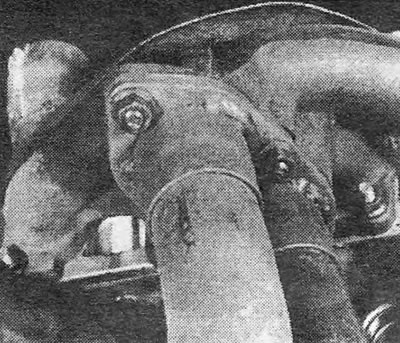
Photo 29.13. Flanges of the downcomers at their connection to the manifold.
14. Unscrew the exhaust manifold nuts and remove it from the cylinder head (see photo).
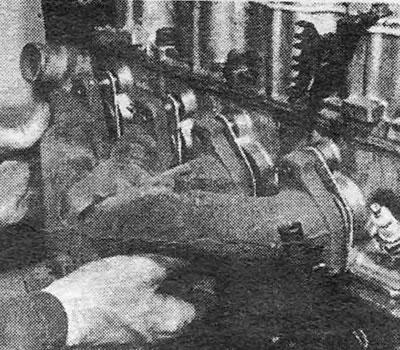
Photo 29.14. Removing the exhaust manifold.
15. Remove the manifold flange gaskets.
16. Installation of the exhaust manifold is carried out in the reverse order. Replace the gaskets with new ones. If the flange connection of the downpipe to the manifold is leaking gases, you can try to fix the situation by installing 2 gaskets.
Visitor comments