


Check and maintain tire pressure regularly. The check should be done when the tires are cold and not immediately after you have used the car. If you check the pressure when the tires are hot, you will get high readings as a result of expansion from heat. In this case, under no circumstances should you attempt to reduce the pressure to the values specified for cold tires, otherwise the result will be that the tires will be underinflated.
Under-inflated tires will cause them to overheat because the tire will flex more and the tire tread will not properly contact the road surface. This will cause subsequent loss of traction and excessive wear, not to mention the risk of sudden tyre failure due to heat build-up.
Over-inflating your tires will cause rapid wear of the center portion of the tire tread, reduced traction, a harsher ride, and the risk of impact damage occurring in the tire casing.
Check your tires regularly for damage such as cuts or bulges, especially in the sidewalls. Remove any nails or rocks that are caught in the tire tread before they penetrate the tire and cause a flat tire. If removing the nail reveals that the tire is punctured, replace the nail to mark the puncture site. Then immediately replace the wheel and take the tire to a tire dealer for repair. Do not drive on a tire in this condition. In many cases, the puncture can be simply repaired with an inner tube of the appropriate size and type. If you have any doubts about the possible consequences of the damage found, please consult your local dealer.
Periodically remove the wheels and clean off any dirt or soil from the inside and outside surfaces. Inspect the wheel rims for signs of rust, corrosion or other damage. Wheels made of light alloys are easily damaged by hitting a curb when parking, and wheels made of steel can also become bent or pitted. In many cases, replacing the wheel is the only option.
The balance of each wheel and tire assembly must be maintained to avoid excessive wear not only of the tires but also of the steering and suspension components. Wheel imbalance is usually indicated by vibration in the car body, although in many cases it is especially noticeable in the steering wheel. On the contrary, it should be noted that wear or damage in suspension or steering components can cause excessive tire wear. This category also includes out-of-round tires, improper tire installation, wheel damage, and worn/misaligned wheel bearings. Balancing will generally not eliminate vibration caused by this type of wear.
Wheel balancing can be performed with the wheel either on the vehicle or removed. If you are balancing on a vehicle, make sure that the wheel-hub relationship is marked in some way before removing the wheel so that it can be reinstalled in its original position.
Driving style has a major impact on tire wear - hard braking and acceleration or driving fast when cornering will cause tires to wear out faster. Interchanging tires can help achieve more even wear, but this should only be done if you are not using different types of tires on your vehicle.
However, it should be remembered that if this is done to a full extent, it entails the cost of replacing the entire set of tires at once, which can be financially difficult for many car owners.
Front tires may wear unevenly as a result of improper wheel alignment. The front wheels must always be correctly positioned in accordance with the settings specified by the machine manufacturer.
There are legal restrictions on mixing tire types on a vehicle. Essentially this means that a vehicle should not have tires of different designs on the same axle. Although it is not recommended to mix tire types between
front and rear axle, but the only combination permitted by law is the combination of cross ply tires at the front and radial ply tires at the rear. When mixing radial tires, always install textile radial tires on the front axle and steel radial tires on the rear axle. The obvious downside to mixing this way is that you will have to carry two spare tires to avoid breaking the law in the event of a puncture.
In the UK, many aspects of tyre use and fitting are covered by the Construction and Use of Motor Vehicles Regulations. It is recommended that you obtain a copy of these regulations from your local police station if you are in any doubt about the actual legal requirements regarding tyre condition, minimum tread depth etc.
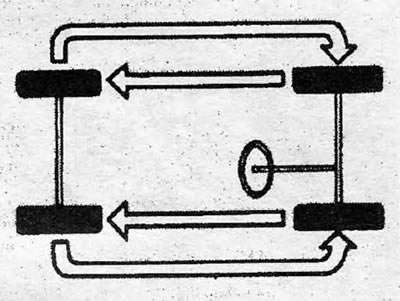
Figure 10.36. Interchangeability of wheels and tires for wear equalization as recommended by manufacturers
Visitor comments