


Contents: Oil pump ⬇ Crankshaft ⬇ Main and connecting rod bearings ⬇ Cylinder channels ⬇ Connecting rods ⬇ Pistons and piston rings ⬇ Camshaft ⬇ Toothed drive belt ⬇ Hydraulic valve lifters, rocker arms…⬇ Flywheel/drive disc ⬇ Cylinder block ⬇
Oil pump
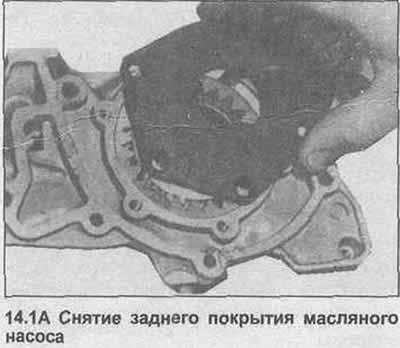
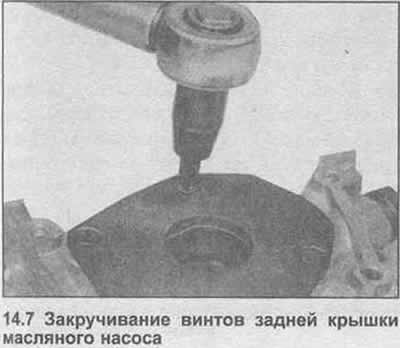
1. Remove the connecting rod head screws, remove the rear cover (photo).
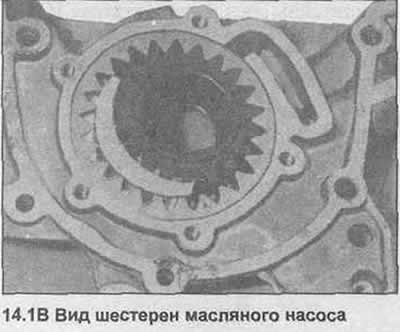
2. Use feeler gauges to check the lateral clearance of the two gears, then check the clearance between the two gears (photo).
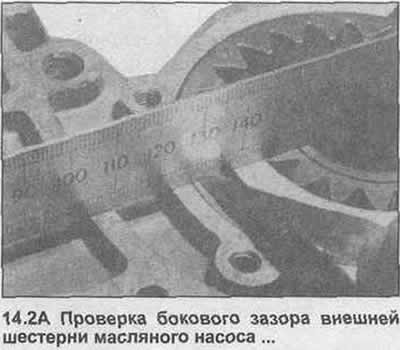
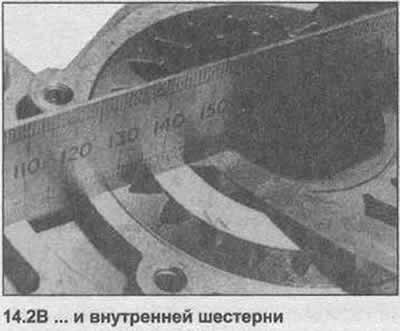
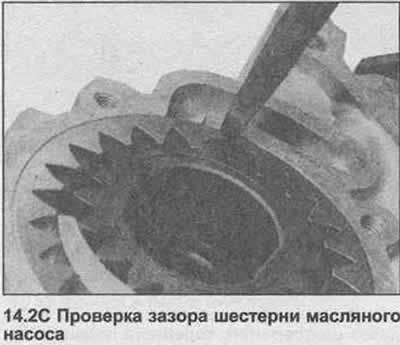
3. If any value is outside the specified tolerances, it is recommended to replace the oil pump, although individual parts are available.
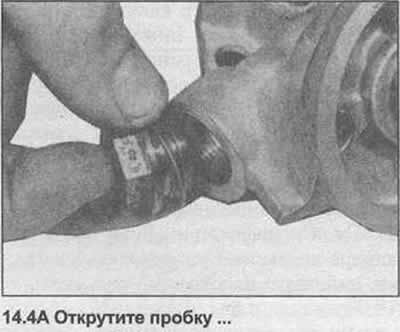
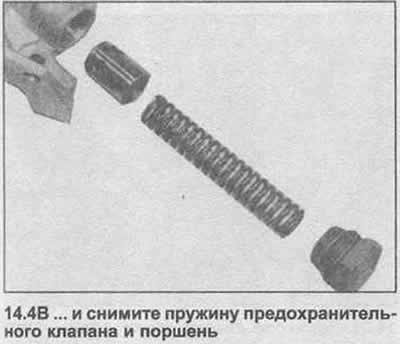
4. Unscrew the plug, remove the safety valve spring and piston (photo). Check their condition.
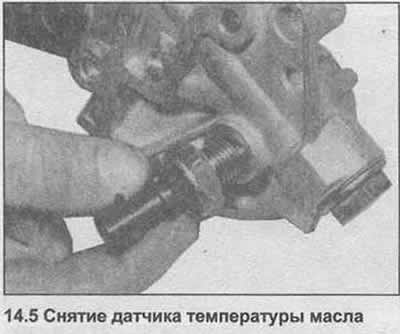
5. If necessary, unscrew the oil temperature sensor (photo).
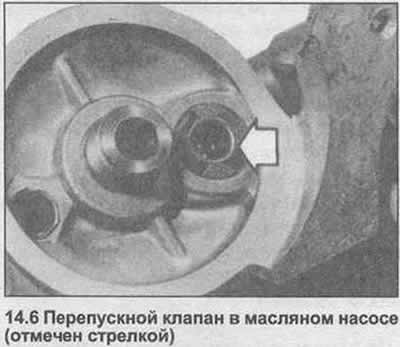
6. Check that the bypass valve ball is positioned correctly (photo). If necessary, pull out the old valve and press in the new one.
7. Clean all components thoroughly, then reassemble in reverse order, using a new plug sealing gasket (photo).
Crankshaft
8. Check the condition of the surfaces of the main and connecting rod journals of the crankshaft, check the ovality and taper of the connecting rod pins and main journals. If the dimensions of the working surface of the bearing do not fall within the tolerance ranges given in the Specifications at the beginning of the Section, the main and/or connecting rod journals must be reground.
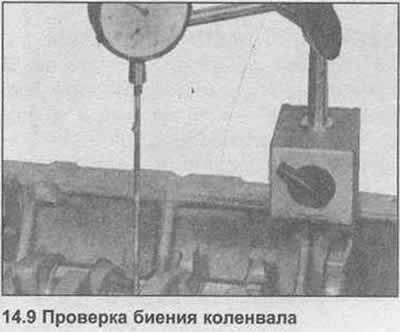
9. Check the crankshaft runout by installing it in the crankcase using only the front and rear bearings. With the micrometer placed on the center main journal, rotate the crankshaft (photo).
10. Wear of the lower connecting rod head and crankshaft journal is accompanied by distinct metallic detonation and also some reduction in oil pressure. Wear of the main bearing and main journal is accompanied by strong engine vibration, rumble and again loss of oil pressure.
11. If the crankshaft requires regrinding, take it to a specialist who will tell you the correct dimensions of the bearing repair liners.
12. On some engines, the crankshaft journals are reground during production to allow for larger manufacturing tolerances.
Main and connecting rod bearings
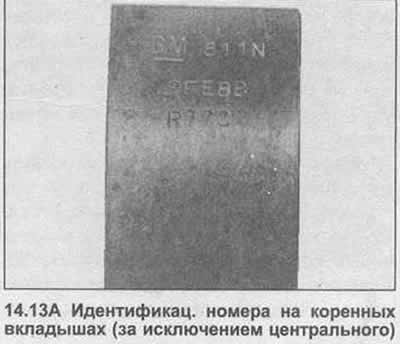
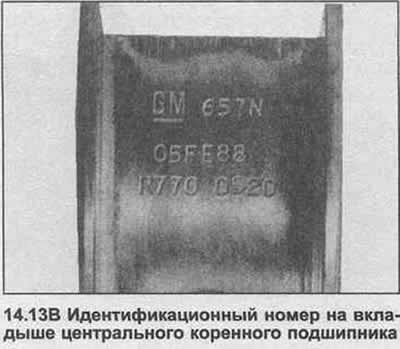
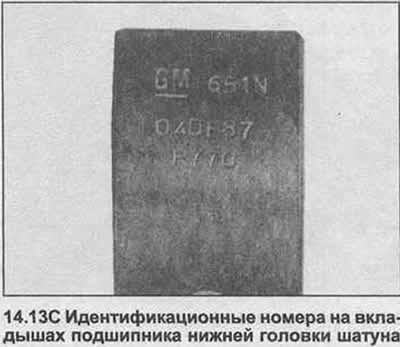
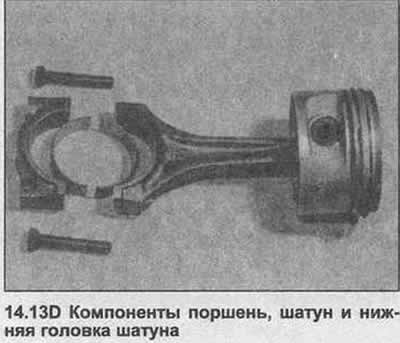
13. Check the condition of the main and connecting rod bearings. The bearings should be matte. If there are traces of copper, the bearings are badly worn. Replace them if they are in poor condition or if there are scuffs or pitting. We strongly recommend replacing bearings regardless of their condition - during a major overhaul. Installing used bearings is false economy (photo).
14. The repair dimensions are designed for use on a reground crankshaft. The bearings are actually slightly larger than the specified outside dimension, as working clearances are allowed.
Cylinder channels
15. The cylinder bores should be checked for taper, ovality, scoring and scratches. Carefully examine the top of the cylinder bores. If they are worn, you will find a small ridge on the thrust side. This forms at the top of the piston stroke. Excessive oil consumption, accompanied by blue smoke from the exhaust pipe, can be caused by worn cylinder bores and piston rings.
16. Measure the cylinder bore diameter across the block, just below the ridge. This can be done with an inside micrometer (bore gauge). Compare it with the diameter of the base of the bore, which is not subject to wear. If there are no measuring devices, use a piston without rings and measure the clearance between the piston and the cylinder wall with a feeler gauge.
17. See Specifications. If cylinder wear exceeds permitted tolerances, the cylinders must be rebored.
18. If the cylinders have worn to their maximum possible diameter, it may be possible to fit special liners.
Connecting rods
19. Check the mating surfaces of the connecting rod caps; if any attempts have been made to remove wear by grinding, the connecting rods must be replaced.
20. Visually check the straightness of the connecting rods, and if there is a suspicion of curvature, check them on special equipment at a service station.
Pistons and piston rings
21. If pistons and/or rings are to be reused, remove the rings from the pistons.
22. Repeat the process for the second and third rings.
23. Mark the rings or store them so that they do not get mixed up during installation.
24. Inspect the pistons to ensure they are suitable for reuse.
25. Clean the ring grooves using a piece of old piston ring of suitable width.
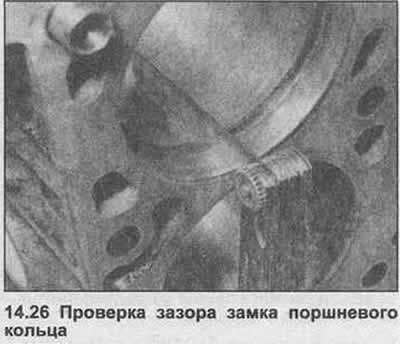
26. Check that the rings fit the cylinder bores. Insert the ring until the unworn bottom of the bore (use a piston for this). Measure the ring split clearance and check that it is within tolerance (see Specifications) (photo). Also check the side clearance of the ring in the piston groove. If these measurements exceed the specified tolerances, the rings must be replaced, and if the ring grooves in the pistons are worn, they must also be replaced.
27. It is possible to install piston rings that will reduce oil consumption due to bore wear without reboring the cylinder during engine repair. Depending on the degree of wear, the improvement from installing such rings may not last long.
28. If new rings are installed (or pistons and rings), it is necessary to eliminate the wear ridge at the top of the hole.
29. Check the clearance and the cut size of the new rings as described in point 26. If the ring is slightly pinched in the groove, it can be filed down with sandpaper. If the cut clearance is less than specified, it can be carefully widened with a file.
30. If new pistons are installed, they must be selected from those available (see Specifications) after measuring the cylinder diameter as described in point 16.
31. Removing and installing pistons on the connecting rod is a job for a dealer or specialist. This requires piston pin removal and insertion equipment.
Camshaft
32. With the camshaft removed, inspect the bearing surfaces for signs of wear. If there is wear, a new camshaft housing will be required.
33. There should be no scoring on the camshaft surface or journals. If there are any, replace the camshaft.
34. The locking plate must be unworn and free of grooves. In any case, check the camshaft side play, install a new plate where necessary.
Toothed drive belt
35. Carefully inspect the belt. Replace it if necessary. The belt must be replaced in any case at the intervals given in "Maintenance" at the beginning of this Manual.
36. When reusing a timing belt, always mark the direction of rotation to prevent subsequent noisy operation.
Hydraulic valve lifters, rocker arms and axial pressure pads
37. In case of wear, the hydraulic valve lifter can only be replaced, since the block cannot be disassembled.
38. Inspect the condition of the rocker arm and axial pressure pads, replace if necessary.
Flywheel/drive disc
39. If the teeth on the starter ring gear are badly worn, the ring gear on the flywheel may need to be replaced.
40. Cut the ring. Be very careful not to damage the flywheel.
41. Clean and polish four evenly spaced areas on the outside surface of the new starter ring with emery cloth.
42. Heat the ring evenly with a flame until the smooth parts turn dark blue. Alternatively, heat the ring in an oil bath to 200°C. Keep the ring at this temperature for five minutes and then quickly install it on the flywheel, with the groove towards the gearbox. Wipe off all oil from the ring before installing it.
43. The ring should cool down, then check that it sits securely on the flywheel. Do not overheat the ring (do not heat it until it turns light blue)If this happens, the ring will release (will lose its temper).
44. If the flywheel clutch contact surface has scoring or fine cracks caused by overheating, the flywheel surface can be reground, but only so that the overall thickness of the flywheel is not reduced too much. Consult a specialist and if this is not possible, replace the flywheel.
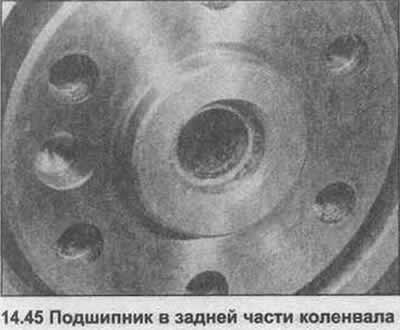
45 If the needle bearing in the center of the crankshaft flange is worn, fill it with grease and knock it out with hydraulic pressure. Insert a new bearing in place (photo).
Cylinder block
46. Check that the internal oil and grooves are free of sediment and not clogged.
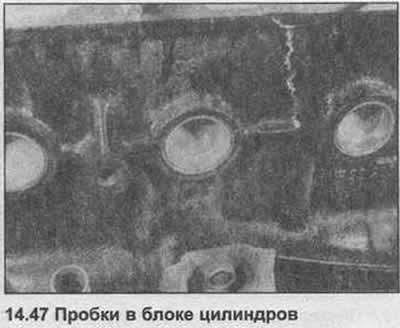
47. If the plug (photo) leaks, it can be replaced by inserting a screwdriver and levering it out of the block. Clean the seating surface, then use a punch or hammer to drive in a new plug. No sealant is required.
48. The crankshaft main bearing bolts and cylinder head mounting bolts must be replaced.
Visitor comments