


2. Remove the valves by compressing the valve spring with a puller and lifting the valve locks. Release the compressor, remove the valve spring retainer and spring. Remove the inlet valve spring seat (photo).
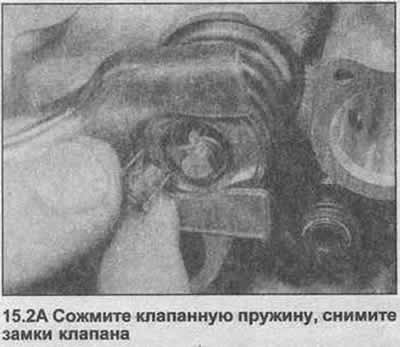
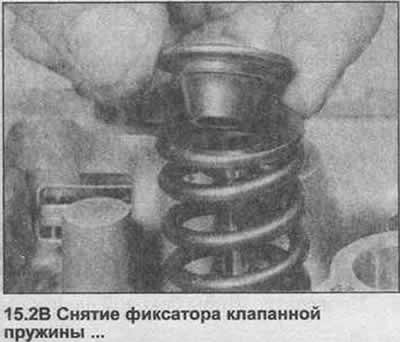
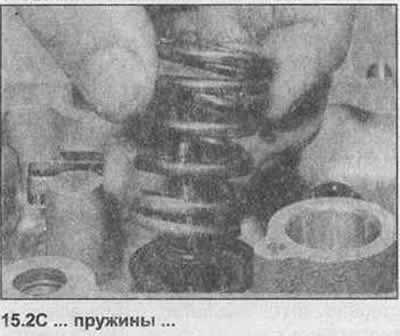
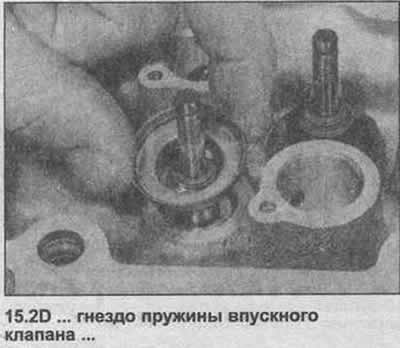
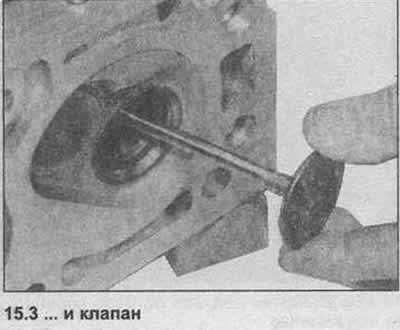
3. Remove the valves, stack them in strict order to ensure correct installation (photo).
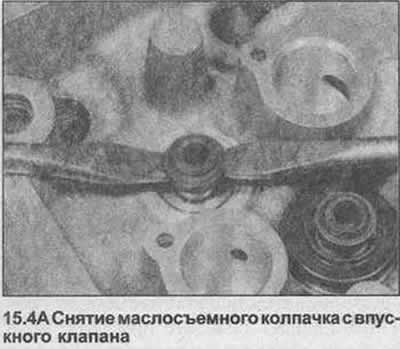
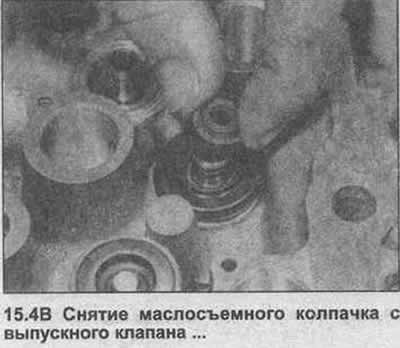
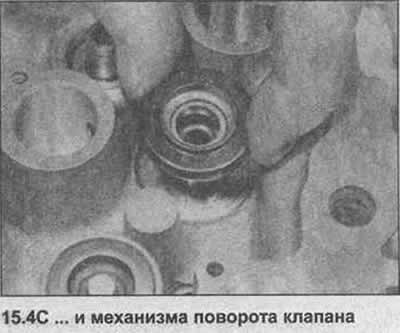
4. Lift the valve stem seals off the valve guides, then remove the exhaust valve rotators (photo).
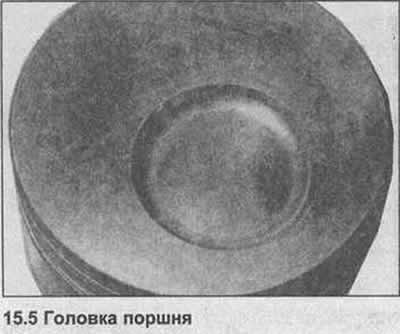
5. Clean the valves, combustion chambers and bores of carbon deposits. The piston crowns can also be cleaned at this stage, being careful not to get carbon between the piston and the bore (photo).
6. Check the condition of the valve heads and seats. If there is slight corrosion on the valve and seat, it can be removed by grinding the valve and seat, and then lapping the valve. If the pitting is deep, the valves must be re-ground on a valve grinder, and the seats must be ground down. Both of these operations are work for a specialist.
7. Check the condition of the valve guides by inserting the valve into the guide and moving it from side to side. If there is any play, the valve guides must be replaced.
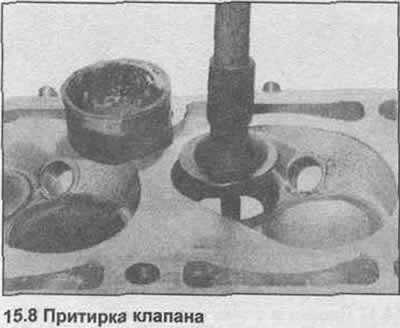
8. Lapping of valve seats is done as follows. Using a suction cup, lap the valve in the seat with a rotating motion, lifting the valve and turning it from time to time (photo). A light spring under the valve head will help in this action. When a matte smooth surface appears on the valve and seat, wash off the coarse paste. Repeat lapping with fine paste until a continuous gray matte ring appears on the valve and seat. Carefully wash off all traces of paste.
9. Check the condition of the valve springs, if possible, compare their length with the new spring. Replace them if necessary.
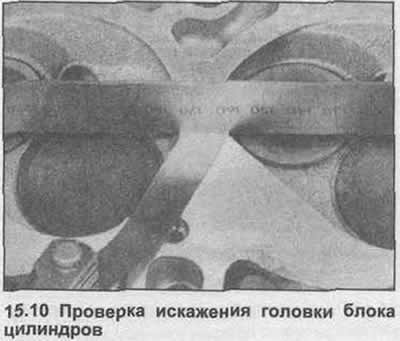
10. Using the edge of a ruler and a feeler gauge, check the distortion of the cylinder head connector surface (photo). If it is greater than the maximum permissible value given in Specifications, the head can be reground. Consult your GM dealer if necessary.
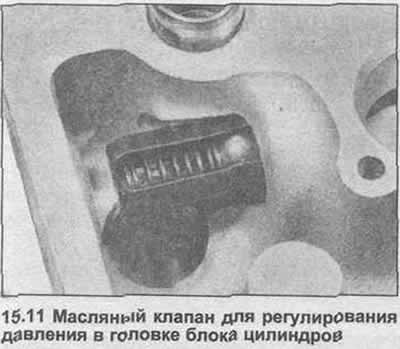
11. The oil pressure regulating valve in the cylinder head stabilizes the pressure applied to the valve lifters (photo). To replace the valve, remove the plug in the head.
Material taken from an internet portal: OpelBook.ru
12. Begin assembly by installing the exhaust valve rotators over their corresponding guide bushings.
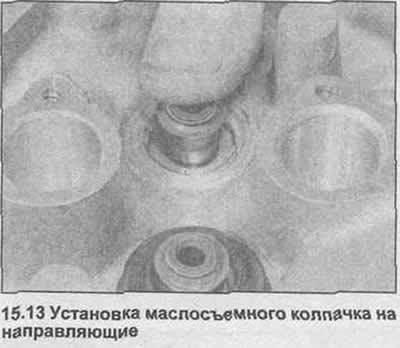
13. Install the oil seals on the guides (photo).
14. To install the valves, lubricate the valve stem with engine oil, insert it into the guide. Install the spring seat on the inlet valve.
15. Install the spring and spring retainer, then using a valve spring compressor, compress the spring until the valve locks are seated in the slots in the valve stem. Release the compressor and check that the valve locks are seated correctly.
16. After installing all valves, tap the tops of the springs lightly to ensure proper valve lock bearing surface.
Visitor comments