


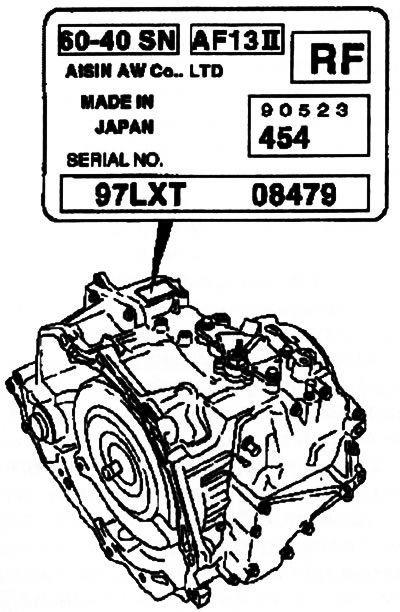
1.1. Identification number AT F13-II
2. AT consists of a torque converter (rotation converter), planetary assembly, hydraulically controlled clutches (friction clutches), brake bands and pump assembly. The AT planetary mechanism provides the ability to select four forward and one reverse gear. The gear ratio of the planetary gear is determined by which of its elements are locked and which rotate freely. Locking and releasing of the elements of the planetary assemblies in AT is carried out using clutches and brake bands.
3. The hydraulic pump placed inside the transmission housing creates the pressure of the working fluid necessary to activate the clutch and brake bands. The fluid passes through a system of channels through the valve assembly. Depending on which channels are currently open, one or another AT mode is activated. Switching between the main modes is carried out by the selector lever through the drive rod. Other signals about the current driving mode come from electrical sensors. AT can function in one of three modes: normal, winter and sport. The order of activation and the purpose of the modes are described in more detail in Chapter "Controls and operating techniques".
4. Torque converter (rotation converter) provides the transmission of torque from the engine to the gearbox. Due to the fact that the transmission of rotation is carried out hydraulically (via transmission fluid - ATF), the car starts moving and gear shifting is very smooth. In addition, the torque converter provides dynamic adjustments to the torque value during acceleration.
5. The driver controls the AT using a selector lever mounted on the floor of the vehicle. Control techniques are described in detail in the Chapter "Controls and Operating Techniques".
6. Due to the complexity of the AT design, the lack of commercially available replacement internal components, and the need to use special equipment, the authors of this Manual do not recommend that vehicle owners perform major transmission repairs on their own. This Chapter only covers procedures for diagnosing common transmission failures, routine maintenance, individual adjustments, removal, and installation.
7. In case of serious breakdown, it is wiser and easier to replace the transmission than to spend time and money on restoring the failed assembly. However, performing the operations of its removal and installation independently will help to significantly reduce costs (first make sure that the transmission really needs a rebuild).
Visitor comments