


Contents: Examination ⬇ Adjustment ⬇
Basic ignition timing adjustment is only necessary if the distributor has been removed or the timing belt has been replaced. A tachometer and stroboscope are required for checking.
Examination
1. Warm up the engine to the operating temperature of the coolant and drive the car for another 5 km to reach an engine oil temperature of at least 80 degrees.
2. If equipped, turn off the A/C.
3. Turn off the ignition.
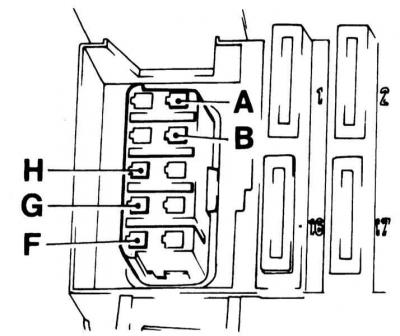
4. In the MULTEC diagnostic connector, short-circuit terminals A and B.
Diagnostic connector terminals
5. Install the tachometer and stroboscope according to their operating instructions. The tachometer is usually connected to terminals 1 and 15 of the ignition coil. The connector must remain connected.
Strobe connection diagram
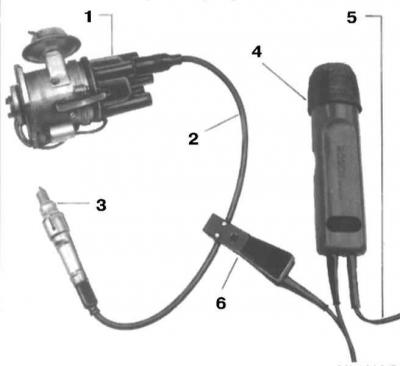
1 — Ignition distributor cap
2 — High voltage wire of cylinder 1
3 — Spark plug cylinder 1
4 - Stroboscope
5 - To the battery
6 - Stroboscope capacitive terminal
6. Start the engine and let it idle.
7. Illuminate the crankshaft pulley with a strobe light.
Stay away from moving parts of the power unit to avoid injury.
The ignition timing is set correctly if the mark on the pulley appears to be stationary in relation to the mark on the lower toothed belt cover. The ignition timing corresponds to 10 degrees. before TDC The crankshaft speed during testing should be 700÷1000 rpm.
Marks for checking ignition timing
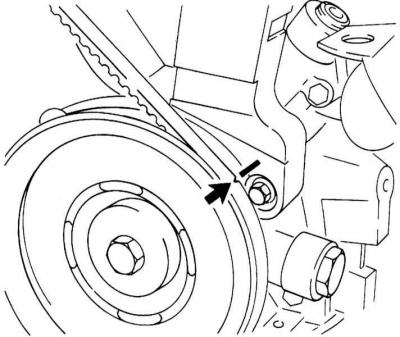
If the ignition timing marks do not match, it is necessary to adjust it.
Adjustment
1. Loosen the clamping bar fastener and turn the ignition distributor slightly with the engine running until the specified value is reached. The Corsa model does not have a vacuum box.
Turning the ignition distributor
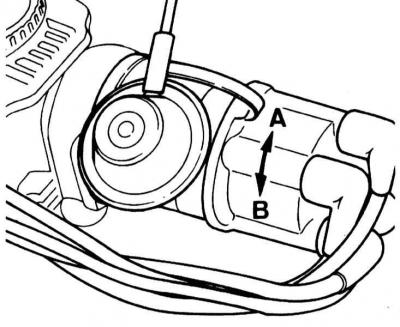
A - Early ignition
B - Late ignition
2. Tighten the clamp bar fastener.
3. Temporarily increase the crankshaft speed to 2000 rpm, repeat the adjustment if necessary.
4. Turn off the engine.
5. Remove the jumper from the diagnostic connector.
Visitor comments