


Contents: Fuel injector ⬇ Fuel pressure regulator ⬇ Stepper motor for idle speed control…⬇ Position sensor (potentiometer)…⬇ Coolant Temperature (ECT) Sensor ⬇ Manifold Absolute Pressure (MAP)…⬇ Crankshaft Position Sensor (CKP) ⬇ Knock Sensor (KS) ⬇ Electronic Engine Control Module…⬇ Injection system relay ⬇ Air conditioning system switch sensor ⬇
See warning at beginning of section Relieving pressure in the fuel system of gasoline engines.
Fuel injector
Before you decide for sure that the injector is out of order, try adding some of the additives approved by the car engine manufacturers to the fuel. Also make sure that the fuel tank is not contaminated.
1. Relieve the pressure in the fuel system (see Relieving pressure in the fuel system of gasoline engines), then disconnect the negative cable from the battery.
2. Loosen the clamp and disconnect the intake air duct from the throttle body cover. Disconnect the vacuum hoses and crankcase ventilation hoses from the cover as well. Remove the mounting screws and remove the cover with the sealing ring from the throttle body.
3. Release the lock and disconnect the electrical wiring from the injector.
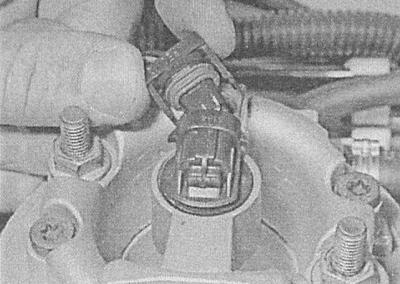
4. Remove the mounting screw.
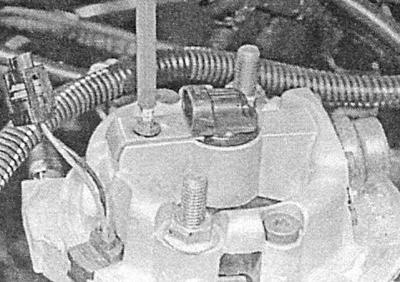
5. Remove the injector mounting plate.
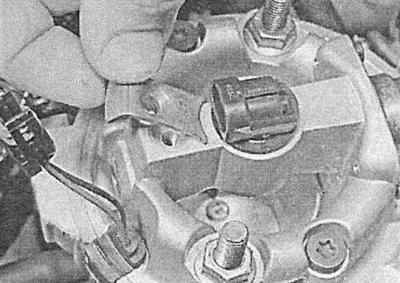
6. Remove the injector assembly with the sealing ring from the seat in the throttle body. Discard the sealing rings - they must be replaced during installation.
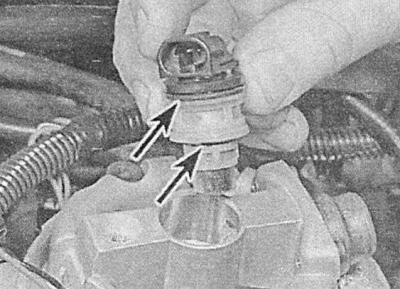
7. Installation is carried out in the reverse order - do not forget to replace the sealing ring. Make sure that the injector mounting bolt is tightened with the required force.
Fuel pressure regulator
At the time of writing this Manual, the pressure regulator components were not supplied separately to the aftermarket. In case of failure, replace the throttle body assembly. Despite the fundamental possibility of disassembling and cleaning the regulator, disassemble it only in the most extreme cases.
1. Relieve the pressure in the fuel system (see Relieving pressure in the fuel system of gasoline engines), then disconnect the negative cable from the battery.
2. Loosen the clamp and disconnect the intake air duct from the throttle body cover. Also disconnect the vacuum hoses and crankcase ventilation hoses from the cover. Remove the mounting screws and remove the cover from the throttle body together with the sealing ring.
3. Use a marker to mark the position of the regulator cover relative to the throttle body. Remove the screws securing the regulator cover.
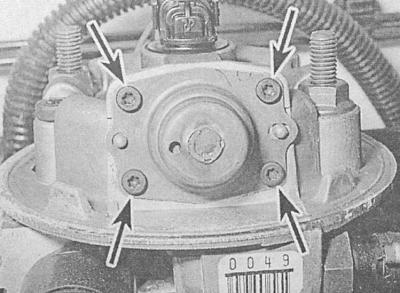
4. Remove the cover, remove the spring seat and spring, remove the diaphragm, try to remember the installation position of the components. Remove all traces of dirt, check the condition of the diaphragm - if signs of wear or damage are found, replace the throttle body.
[Material taken from an internet portal www.OpelBook.ru]
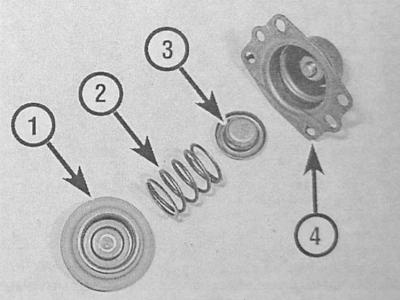
1 - Diaphragm
2 - Spring
3 — Spring seat
4 — Lid
5. Installation is carried out in the reverse order. Make sure that all fasteners are tightened to the required force.
Stepper motor for idle speed control system
1. Disconnect the negative cable from the battery.
2. To ensure adequate access, loosen the clamp and disconnect the air intake duct from the throttle body cover. Disconnect the air and vacuum hoses from the cover, remove the mounting screws and remove the cover from the body along with the O-ring.
3. Release the lock and disconnect the wiring from the stepper motor mounted in the front of the throttle body.
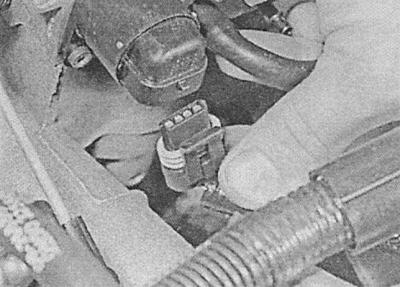
4. Unscrew the fastening screws and carefully remove the electric motor from the housing - try not to damage the plunger. Remove the sealing ring from the electric motor - it must be replaced during assembly.
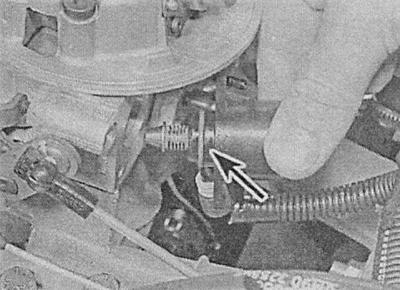
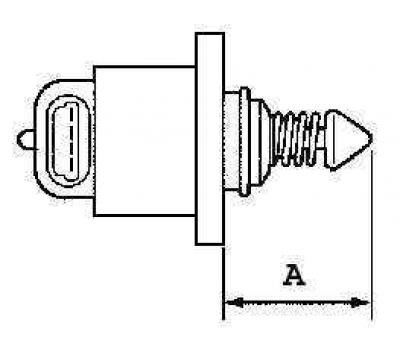
5. Installation is carried out in the reverse order. To check the proper functioning of the idle speed stabilization system, measure the amount of plunger protrusion (A) from the electric motor - the measurement result should be no more than 28 mm.
Position sensor (potentiometer) throttle Position Sensor (TPS)
1. Disconnect the negative battery cable. Also disconnect the wiring from the TPS sensor.
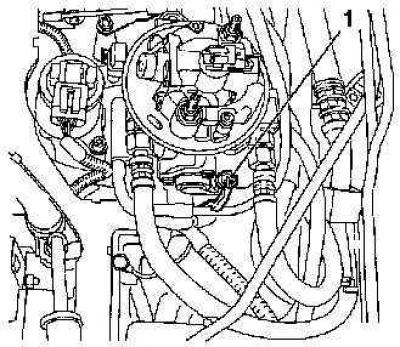
2. Remove the mounting bolts and TPS sensor from the throttle body.
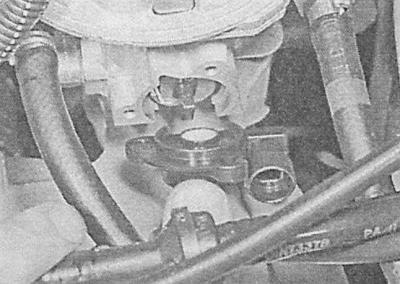
3. Installation is performed in the reverse order. Make sure that the potentiometer is correctly engaged with the throttle shaft. Before screwing in the mounting bolts, lubricate their threaded part with anaerobic sealant. After tightening the bolts with the required force, connect the electrical wiring to the sensor.
Coolant Temperature (ECT) Sensor
The coolant temperature sensor is screwed into the rear of the intake manifold. For a description of the procedures for removing and installing the sensor, see. Checking the proper functioning, removal and installation of electrical components of the engine cooling system control circuit.
Manifold Absolute Pressure (MAP) Sensor
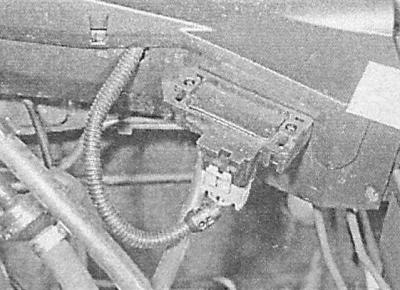
The MAP sensor is mounted on the engine compartment bulkhead, to the left of the throttle body.
1. Turn off the ignition, disconnect the electrical wiring and vacuum hose from the sensor. The sensor can now be removed from the bracket.
2. Installation is carried out in reverse order.
Crankshaft Position Sensor (CKP)
1. The sensor is installed on the rear wall of the cylinder block and can be accessed from under the car. Apply the parking brake, jack up the front of the car and place it on supports.
2. Go through the wiring from the sensor, releasing the harness from the intermediate clamps and remembering the route of its installation. Disconnect the contact connector - the sensor is removed together with part of the harness.
3. Unscrew the mounting bolt and remove the sensor.
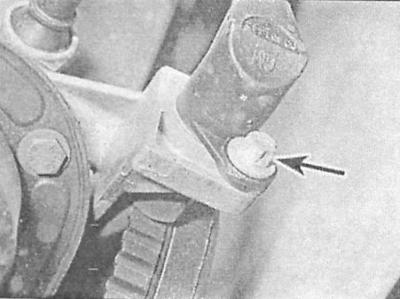
4. Installation is carried out in the reverse order. Make sure that the fasteners are tightened with the required force. Make sure that the harness is routed correctly.
5. Finally, measure the distance between the sensor and the toothed rotor on the crankshaft pulley - if the result exceeds 1.0±0.7 mm, replace the sensor mounting support bracket.
Knock Sensor (KS)
The knock sensor is installed on the rear wall of the cylinder block and can be accessed from under the vehicle.
1. Set the parking brake, jack up the front of the vehicle and place it on supports.
2. Go through the wiring from the sensor, releasing the harness from the intermediate clamps and remembering the route of its installation. Disconnect the contact connector - the sensor is removed together with part of the harness.
3. Unscrew the mounting bolt and remove the sensor.
4. Installation is carried out in the reverse order. Before installation, make sure that the mating surfaces are absolutely clean and dry. Tighten the fasteners with the required force. Ensure that the electrical wiring is laid correctly.
Electronic Engine Control Module (ECM)
The ECM is located behind the battery on the left side of the engine compartment.
1. Disconnect the negative battery cable and remove both windshield wipers (see Chapter On-board electrical equipment).
2. Remove the protective cover from the module.
3. Pull up to release the module from the support bracket and disconnect the electrical wiring from it.
Before installing the module, you can clear the processor memory in order to remove recorded diagnostic codes from it in a car service workshop.
4. Installation is carried out in reverse order.
Injection system relay
1. The injection system relay is located in the mounting block located in the engine compartment.
2. Remove the cover from the mounting block. The system relay is colored purple. Make sure the ignition is off, then release the relay from the socket.
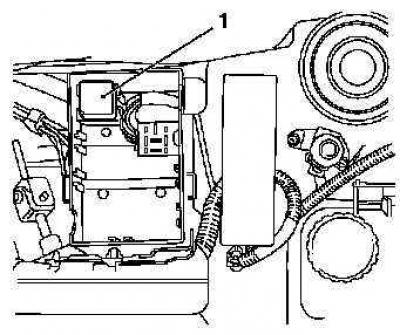
3. Installation is carried out in reverse order.
Air conditioning system switch sensor
The air conditioning system switch sensor is screwed into one of the refrigeration lines and cannot be removed without first discharging the system (see Chapter Cooling and heating systems). In view of the above, the sensor-switch should be replaced in a car service workshop.
Visitor comments