
OpelBook.ru
Cars AvtoVAZ Cars Mitsubishi Cars BMW Cars Mercedes Cars Nissan Cars Toyota Cars Chevrolet
English Русский
Български
Беларускі
Український
Српски
Hrvatski
Română
Polski
Slovenský
Magyar
 |  Sitemap  |  Contacts  |    


Main Astra Corsa Insignia Kadett Omega Vectra Zafira Others Articles
Astra F (1991-1998, petrol) Astra G (1998-2004, petrol) Astra G (1998-2004) Astra H (2004-2009) Astra J (2009-2015, petrol)
  • Main
  • Astra
  • Astra G
  • Power unit
  • Supply system
  • Relieving pressure in the fuel system of gasoline engines

Relieving pressure in the fuel system of gasoline engines (Opel Astra G)

            0

Contents: SOHC engines ⬇ DOHC engines ⬇ All engines ⬇
Remember that gasoline is a highly flammable liquid! When working with fuel system components, observe all accepted fire safety measures. Do not smoke! Do not approach the work site with an open flame or an unprotected portable lamp! Do not service the system in rooms equipped with heating devices operating on natural gas and equipped with a pilot torch (such as water heaters and clothes dryers). Do not forget that gasoline is considered a carcinogenic substance, i.e. a substance that promotes the development of cancer!


Avoid contact of fuel with exposed areas of the body - use rubber protective gloves, in case of accidental unexpected contact with fuel, wash your hands thoroughly with warm water and soap. Collect spilled fuel immediately and do not store fuel-soaked rags near open flames. Remember that the fuel system of models equipped with fuel injection is constantly under pressure. Before disconnecting the fuel lines, release residual pressure in the system. Wear safety glasses when servicing fuel system components. Always keep a class B fire extinguisher at hand!


As mentioned above (see Power supply system), the fuel system includes an electric fuel pump placed inside the tank, a submersible fuel filter, injection injectors, a pressure regulator and fuel lines connecting the listed components. The fuel inside the fuel system tract is under pressure when the engine is running and the ignition is on. Residual excess pressure continues to be retained in the system for some time after the ignition is turned off and must be released before disconnecting the components / unplugging the nipple connectors.


The fuel system must be depressurized before servicing any of its components to minimize the risk of fuel ignition and personal injury to the operator.

SOHC engines


1. With the ignition off, remove the cover from the engine bay mounting block - the block is located behind the upper left suspension strut support. Remove the purple colored fuel pump relay (1) from its mounting socket.
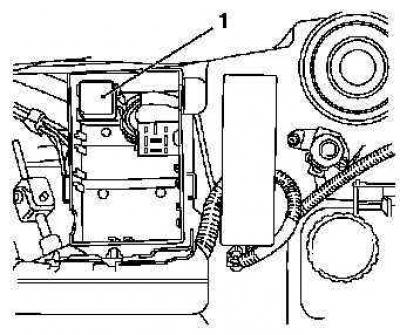
1. With the ignition off, remove the cover from the engine bay mounting block - the block is…


2. Start the engine, wait until it stops on its own, then turn off the ignition.

DOHC engines


1. On these engines, in addition to what is described (see above SOHC engines) there is an alternative way to relieve pressure in the fuel system (see below).

2. Locate the valve block (1) installed on the fuel line of the intake manifold. On 1.4 and 1.6 L engines, the valve is located at the right end of the line, on 1.8 and 2.0 L engines - at its upper part.
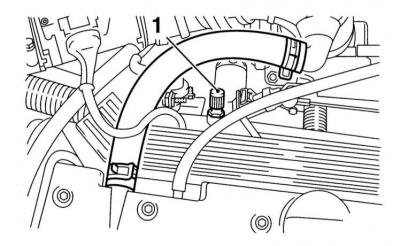
2. Locate the valve block (1) installed on the fuel line of the intake manifold. On 1.4 and 1.6 L…


3. Unscrew the valve cap and place a suitable drain container under the valve assembly. Cover the valve with a rag and release the pressure by pressing the valve core with a suitable screwdriver - get ready for the fuel to be ejected, the traces of which should be immediately collected with a rag. Keep the core pressed until the fuel ejection has completely stopped.


4. Finally, reinstall the valve cover.

All engines


1. To ensure that the system is completely discharged, crank the engine a few more times with the starter. Disconnect the negative cable from the battery.

Text copied from an online resource [Opelbook.ru]


This article is available at russian, bulgarian, belarusian, ukrainian, serbian, croatian, romanian, polish, slovak, hungarian
Checking the article: Pavlovsky Nikolay

Share information:

Previous articles
Opel Astra G: Supply system
Next articles

General information and precautions
Power and exhaust system specifications
Checking the condition and replacing fuel lines and their fittings
Removal air from the fuel system of a diesel engine
Removal contaminants from the fuel system of a diesel engine
Removal and installation air intake tract components
Removal, installation and adjusting the throttle cable — petrol models
Removal and installation the accelerator pedal


See similar ones from other Opel car manuals:
▶ Relieving pressure in the fuel system of gasoline engines Opel Corsa B (1993-2000)
▶ Relieving pressure in the fuel system of gasoline engines Opel Vectra C (2002-2008)
▶ Checking the pressure in the fuel system of gasoline engines Opel Insignia A (2008-2017)
▶ Fuel system of carburetor engines Opel Kadett E (1984-1995)
▶ Releasing pressure from the fuel injection system Opel Omega B (1993-1999)
Link to this page in different formats

Visitor comments


No comments yet


How much will 34 + 19 =


Astra J (2009-2015, petrol) 
  • General information
  • Vehicle device
  • User manual
  • Faults en route
  • Maintenance
  • Power unit
  • Engine repair
  • Cooling and lubrication system
  • Engine power system
  • Exhaust system
  • Transmission
  • Clutch
  • Car gearbox
  • Drive shafts
  • Chassis
  • Front suspension
  • Rear suspension
  • Steering
  • Brake system
  • Wheels and tires
  • Body
  • Exterior
  • Interior
  • Doors and windows
  • Body Care
  • Heating and air conditioning
  • Security systems
  • Electrical equipment
  • Equipment and devices
  • Lighting and signaling
  • Power devices
  • Electrical circuits
Astra H (2004-2009) 
  • General information
  • Introduction to the guide
  • Troubleshooting
  • User manual
  • Maintenance
  • Power unit
  • Engine repair
  • Cooling and heating
  • Power and exhaust system
  • Ignition system
  • Launch and charge system
  • Transmission
  • Mechanical gearbox
  • Automatic gearbox
  • Drive shafts
  • Chassis
  • Brake system
  • Car suspension
  • Steering
  • Body
  • Interior
  • Exterior
  • Electrical equipment
  • Equipment and devices
  • Electrical circuits
Astra G (1998-2004) 
  • General information
  • Introduction to manual
  • User manual
  • Maintenance
  • Power unit
  • SOHC gasoline engines
  • DOHC gasoline engines
  • Diesel engines 1.7 and 2.0
  • Engine repair
  • Cooling system
  • Supply system
  • Injection system (gasoline)
  • Injection system (diesel)
  • Exhaust system
  • Charge and launch system
  • Ignition system (gasoline)
  • Preheat system (diesel)
  • Transmission
  • Manual gearbox
  • Automatic gearbox
  • Clutch
  • Drive shafts
  • Chassis
  • Brake system
  • Wheel suspension
  • Steering
  • Body
  • Exterior
  • Interior
  • Doors and windows
  • Ventilation and heating
  • Electrical equipment
  • Equipment and devices
  • Electrical circuits
Astra G (1998-2004, petrol) 
  • General information
  • User manual
  • Car care
  • Maintenance
  • Power unit
  • Single shaft engines
  • Twin shaft engines
  • Engine repair
  • Cooling and heating
  • Fuel and exhaust systems
  • Starting and charging system
  • Ignition system
  • Transmission
  • Clutch
  • Mechanical gearbox
  • Automatic gearbox
  • Drive shafts
  • Chassis
  • Brake system
  • Car suspension
  • Steering
  • Body
  • Interior
  • Exterior
  • Electrical equipment
  • Equipment and devices
  • Wiring diagrams Opel Astra
  • Wiring diagrams Opel Zafira
Astra F (1991-1998, petrol) 
  • General information
  • Maintenance
  • Power unit
  • Engine in car
  • Engine removed
  • Cooling system
  • Heating and ventilation
  • Fuel supply (carburetor)
  • Fuel supply (injector)
  • Emission control
  • Ignition system
  • Transmission
  • Clutch
  • Mechanical gearbox
  • Automatic gearbox
  • Drive shafts
  • Chassis
  • Brake system
  • Car suspension
  • Steering
  • Body
  • Exterior
  • Interior
  • Electrical equipment
  • Equipment and devices
  • Electrical circuits
OpelBook.ru © 2017–2026 · Mobile version · · Sitemap: EN BG BY UA RS HR RO PL SK HU · Feedback · Site search
Astra F, petrol · Astra G, petrol · Astra G · Astra H · Astra J, petrol · Corsa B · Corsa C, petrol · Corsa C · Insignia A · Kadett D · Kadett E · Omega A · Omega B · Omega B2 · Vectra A, petrol · Vectra A · Vectra B, petrol · Vectra B · Vectra C · Zafira A, petrol · Frontera A, petrol · Frontera B · Ascona C · Vivaro A ·
We want your visit to be comfortable 🤝! We use cookies 🍪 to make that happen.