
OpelBook.ru
Cars AvtoVAZ Cars Mitsubishi Cars BMW Cars Mercedes Cars Nissan Cars Toyota Cars Chevrolet
English Русский
Български
Беларускі
Український
Српски
Hrvatski
Română
Polski
Slovenský
Magyar
 |  Sitemap  |  Contacts  |    


Main Astra Corsa Insignia Kadett Omega Vectra Zafira Others Articles
Astra F (1991-1998, petrol) Astra G (1998-2004, petrol) Astra G (1998-2004) Astra H (2004-2009) Astra J (2009-2015, petrol)
  • Main
  • Astra
  • Astra G
  • Power unit
  • Injection system (gasoline)
  • Checking the proper functioning of the fuel injection system

Checking the proper functioning of the fuel injection system (Opel Astra G)

            0

See warnings at the beginning of the section Relieving pressure in the fuel system of gasoline engines.


1. Check the reliability of the electrical connections of the injection system circuit, paying special attention to the condition of the ground terminals. Carefully inspect all electrical connectors related to the operation of the system. Poor electrical contacts cause many problems and are the cause of more than half of engine failures.

2. Check the battery charge level. The accuracy of air-fuel mixture control largely depends on the proper functioning of the ECM and information sensors, which is determined, among other things, by the level of their supply voltage.

3. Check the condition of the air cleaner filter element (see Chapter Routine maintenance), - even partial obstruction of the air filter has a significant impact on fuel economy and engine performance.

4. If the injection system fuse is blown, replace it - if the new fuse also blows immediately, refer to the electrical connection diagrams (see Chapter On-board electrical equipment) and check the corresponding electrical circuit for signs of a short to ground.

5. Check the air hose connecting the air cleaner and the intake manifold for signs of developing leaks that could lead to a malfunction of the air-fuel mixture. Also check the condition of the vacuum hoses connected to the intake manifold.

6. 6 Disconnect the air hose coming from the throttle body and check the latter for traces of carbon formation and other deposits (especially in areas near the throttle valve). If signs of throttle contamination are detected, see. Exhaust and emission control systems and perform a fault diagnosis of the crankcase ventilation (PCV) and exhaust gas recirculation (EGR) systems. Treat the throttle with one of the types of special cleaning aerosols suitable for use on vehicles equipped with catalytic converters and lambda probes, and wipe the treated surfaces with a clean cloth.


7. With the engine running, listen to each of the injection injectors one by one using a stethoscope - a uniform clicking sound indicates that the injector is functioning properly. If you don't have a stethoscope at hand, use a long screwdriver, simply pressing the tip of its tip to the injector body and focusing on the vibrations transmitted through the handle.
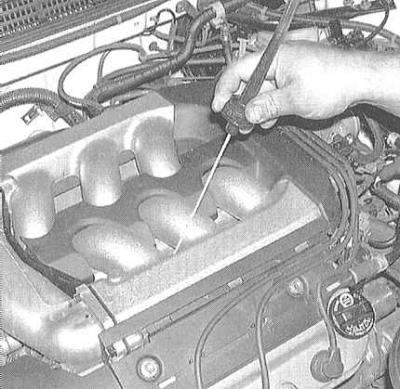
7. With the engine running, listen to each of the injection injectors one by one using a…


8. If signs of malfunction of the injector are detected, use a special test lamp (ask in car accessories stores). The lamp is connected to the electrical connector of the suspected injector. Start the engine and test all injectors with the lamp. Uniform flashing of the lamp confirms the correct functioning of the component. Otherwise, the car should be driven to a service station for more detailed diagnostics.
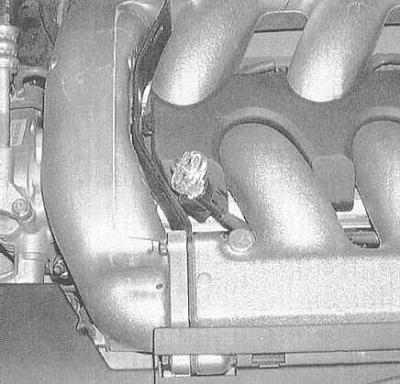
8. If signs of malfunction of the injector are detected, use a special test lamp (ask in car…


9. Turn off the engine, disconnect the electrical connectors of the injectors and measure the electrical resistance of each of them. Compare the measurement results with the regulatory requirements - the required value is 12-16 Ohm. Defective injectors must be replaced.
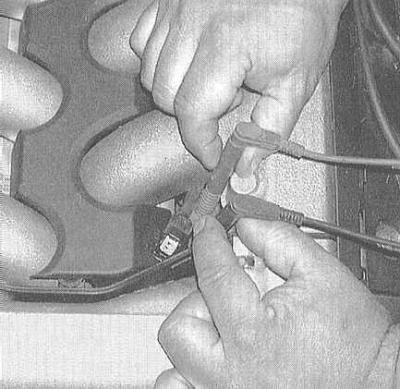


9. Turn off the engine, disconnect the electrical connectors of the injectors and measure the…


Original article on the web portal: OpelBook.ru

10. Check the self-diagnostic system for fault codes stored in its memory (see Chapter Engine electrical equipment).

Carrying out a more detailed diagnosis of the system's condition should be entrusted to car service specialists who have everything necessary for this (quite expensive) equipment.

Experienced car enthusiasts with certain knowledge and appropriate equipment (including a tachometer and a calibrated gas analyzer) can check the content of carbon monoxide (CO) in the exhaust gases and the number of idle revolutions. However, if the parameters being checked require adjustments, their implementation will have to be entrusted to car service specialists who have expensive special diagnostic and adjustment equipment.


This article is available at russian, bulgarian, belarusian, ukrainian, serbian, croatian, romanian, polish, slovak, hungarian
Checking the article: Pavlovsky Nikolay

Share information:

Previous articles
Opel Astra G: Injection system (gasoline)
Next articles

The operating principle of fuel injection systems
General information and precautions
Removal and installation of components of the Multec central fuel injection system
Removal and installation of components of distributed fuel injection systems Multec-S and Simtec-70
Intake air temperature control system (models with central injection) — operating principle and serviceability check
Removal and installation the intake manifold
Removal and installation the exhaust manifold


See similar ones from other Opel car manuals:
▶ Checking the proper functioning of the fuel injection system Opel Corsa B (1993-2000)
▶ Checking and adjusting the GM «Multec SPI» fuel injection… Opel Kadett E (1984-1995)
▶ Fuel injection system throttle switch — checking and… Opel Omega A (1986-1993)
▶ Checking the fuel injection system Opel Vectra B (1995-2002)
▶ Checking the pressure in the fuel system of gasoline engines Opel Insignia A (2008-2017)
Link to this page in different formats

Visitor comments


No comments yet


How much will 39 + 15 =


Astra J (2009-2015, petrol) 
  • General information
  • Vehicle device
  • User manual
  • Faults en route
  • Maintenance
  • Power unit
  • Engine repair
  • Cooling and lubrication system
  • Engine power system
  • Exhaust system
  • Transmission
  • Clutch
  • Car gearbox
  • Drive shafts
  • Chassis
  • Front suspension
  • Rear suspension
  • Steering
  • Brake system
  • Wheels and tires
  • Body
  • Exterior
  • Interior
  • Doors and windows
  • Body Care
  • Heating and air conditioning
  • Security systems
  • Electrical equipment
  • Equipment and devices
  • Lighting and signaling
  • Power devices
  • Electrical circuits
Astra H (2004-2009) 
  • General information
  • Introduction to the guide
  • Troubleshooting
  • User manual
  • Maintenance
  • Power unit
  • Engine repair
  • Cooling and heating
  • Power and exhaust system
  • Ignition system
  • Launch and charge system
  • Transmission
  • Mechanical gearbox
  • Automatic gearbox
  • Drive shafts
  • Chassis
  • Brake system
  • Car suspension
  • Steering
  • Body
  • Interior
  • Exterior
  • Electrical equipment
  • Equipment and devices
  • Electrical circuits
Astra G (1998-2004) 
  • General information
  • Introduction to manual
  • User manual
  • Maintenance
  • Power unit
  • SOHC gasoline engines
  • DOHC gasoline engines
  • Diesel engines 1.7 and 2.0
  • Engine repair
  • Cooling system
  • Supply system
  • Injection system (gasoline)
  • Injection system (diesel)
  • Exhaust system
  • Charge and launch system
  • Ignition system (gasoline)
  • Preheat system (diesel)
  • Transmission
  • Manual gearbox
  • Automatic gearbox
  • Clutch
  • Drive shafts
  • Chassis
  • Brake system
  • Wheel suspension
  • Steering
  • Body
  • Exterior
  • Interior
  • Doors and windows
  • Ventilation and heating
  • Electrical equipment
  • Equipment and devices
  • Electrical circuits
Astra G (1998-2004, petrol) 
  • General information
  • User manual
  • Car care
  • Maintenance
  • Power unit
  • Single shaft engines
  • Twin shaft engines
  • Engine repair
  • Cooling and heating
  • Fuel and exhaust systems
  • Starting and charging system
  • Ignition system
  • Transmission
  • Clutch
  • Mechanical gearbox
  • Automatic gearbox
  • Drive shafts
  • Chassis
  • Brake system
  • Car suspension
  • Steering
  • Body
  • Interior
  • Exterior
  • Electrical equipment
  • Equipment and devices
  • Wiring diagrams Opel Astra
  • Wiring diagrams Opel Zafira
Astra F (1991-1998, petrol) 
  • General information
  • Maintenance
  • Power unit
  • Engine in car
  • Engine removed
  • Cooling system
  • Heating and ventilation
  • Fuel supply (carburetor)
  • Fuel supply (injector)
  • Emission control
  • Ignition system
  • Transmission
  • Clutch
  • Mechanical gearbox
  • Automatic gearbox
  • Drive shafts
  • Chassis
  • Brake system
  • Car suspension
  • Steering
  • Body
  • Exterior
  • Interior
  • Electrical equipment
  • Equipment and devices
  • Electrical circuits
OpelBook.ru © 2017–2026 · Mobile version · · Sitemap: EN BG BY UA RS HR RO PL SK HU · Feedback · Site search
Astra F, petrol · Astra G, petrol · Astra G · Astra H · Astra J, petrol · Corsa B · Corsa C, petrol · Corsa C · Insignia A · Kadett D · Kadett E · Omega A · Omega B · Omega B2 · Vectra A, petrol · Vectra A · Vectra B, petrol · Vectra B · Vectra C · Zafira A, petrol · Frontera A, petrol · Frontera B · Ascona C · Vivaro A ·
We want your visit to be comfortable 🤝! We use cookies 🍪 to make that happen.