
OpelBook.ru
Cars AvtoVAZ Cars Mitsubishi Cars BMW Cars Mercedes Cars Nissan Cars Toyota Cars Chevrolet
English Русский
Български
Беларускі
Український
Српски
Hrvatski
Română
Polski
Slovenský
Magyar
 |  Sitemap  |  Contacts  |    


Main Astra Corsa Insignia Kadett Omega Vectra Zafira Others Articles
Astra F (1991-1998, petrol) Astra G (1998-2004, petrol) Astra G (1998-2004) Astra H (2004-2009) Astra J (2009-2015, petrol)
  • Main
  • Astra
  • Astra G
  • Power unit
  • DOHC gasoline engines
  • Removal and installation the timing belt cover

Removal and installation the timing belt cover (Opel Astra G)

            0

Contents: Removal ⬇ Installation ⬇

Removal


Upper section


Engines 1.4, 1.6 and 1.8 l


1. Remove the air cleaner assembly (see Chapter Power and exhaust systems).

2. Release the camshaft position (CMP) sensor wiring harness from the upper cover retainers. Remove the three mounting screws, release the upper cover section from the lower cover retainer clips, and remove the cover from the engine.
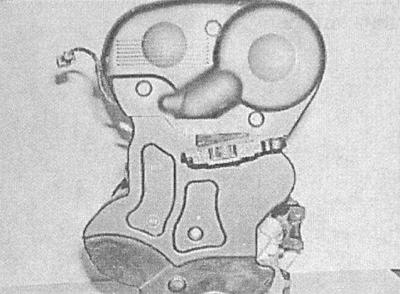
2. Release the camshaft position (CMP) sensor wiring harness from the upper cover retainers. Remove…


2.0L Engines


1. Remove the air cleaner assembly (see Chapter Power and exhaust systems).

2. Remove the two mounting bolts and remove the top section of the cover by pulling it upwards.

Bottom section


Engines 1.4, 1.6 and 1.8 l


1. Remove the top section (see above).

2. Overcoming the resistance of the spring, turn the tensioner and remove the loosened accessory drive belt from the pulley (see Chapter Routine maintenance).

Before removing, mark the original direction of the belt to ensure its further use (if the situation allows).


3. Set the parking brake, then jack up the front of the car and place it on supports. Remove the right front wheel and its wheel arch protection liner (see Chapter Body).


4. Loosen the mounting bolt and remove the accessory drive belt tensioner.
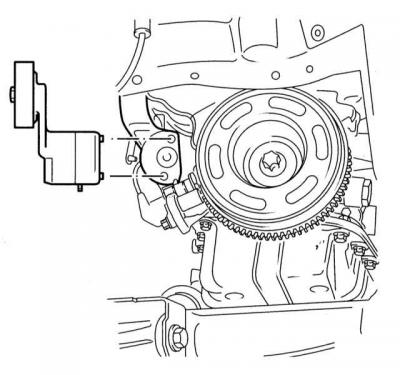
4. Loosen the mounting bolt and remove the accessory drive belt tensioner.


5. Remove the crankshaft pulley (see Removal and installation the crankshaft pulley).

6. Remove the mounting bolt, release the lower section of the cover from the mating clips on the rear and remove it from the engine.
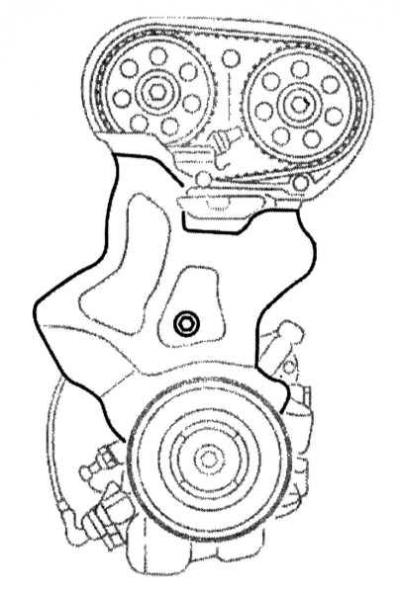
6. Remove the mounting bolt, release the lower section of the cover from the mating clips on the…


2.0L Engines


1. Remove the top section of the lid (see above).

2. Overcoming the resistance of the spring, turn the tensioner and remove the loosened accessory drive belt from the pulley (see Chapter Routine maintenance).

Before removing, mark the original direction of the belt to ensure its further use (if the situation allows).


3. On models equipped with air conditioning, set the parking brake, then jack up the front of the vehicle and support it on stands. Remove the right front wheel arch liner and its protection liner (see Chapter Body).


4. Remove the mounting bolt and remove the accessory drive belt tensioner from the support bracket.

5. Remove the crankshaft pulley (see Removal and installation the crankshaft pulley).

6. Remove the two mounting bolts, release the two fasteners and the engine cover complete with sealing gasket.
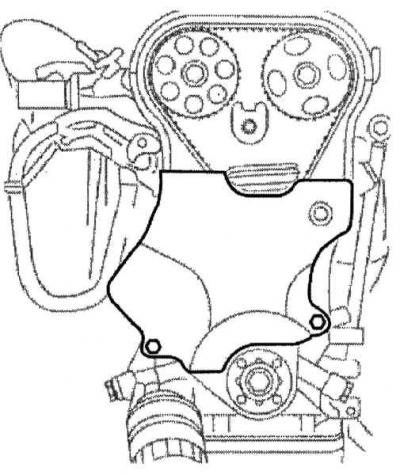
6. Remove the two mounting bolts, release the two fasteners and the engine cover complete with…


Back cover


Engines 1.4, 1.6 and 1.8


1. Remove the timing belt (see Removal and installation the timing belt).

2. Remove the timing cover (see Removal and installation the timing cover).

3. Remove the camshaft and crankshaft gears, timing belt tensioner, and front and rear idler rollers (see Removal and installation of crankshaft/camshaft gears and intermediate rollers).

4. Unscrew the three mounting bolts and remove the powertrain suspension support mounting bracket from the cylinder block.
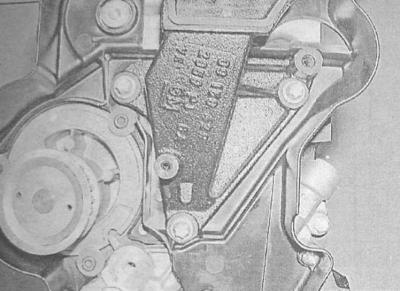
4. Unscrew the three mounting bolts and remove the powertrain suspension support mounting bracket…


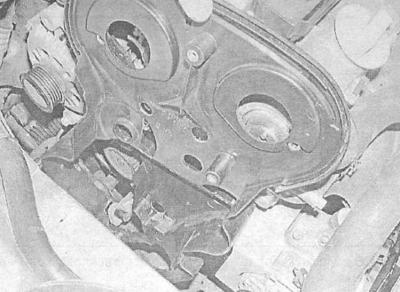
5. Remove the four mounting screws and pull the rear cover upwards to remove it from the engine.


5. Remove the four mounting screws and pull the rear cover upwards to remove it from the engine.

2.0L Engines


1. Remove the timing belt (see Removal and installation the timing belt).

2. Remove the timing cover (see Removal and installation the timing cover).

3. Remove the camshaft and crankshaft gears, timing belt tensioner, and front and rear idler rollers (see Removal and installation of crankshaft/camshaft gears and intermediate rollers).

4. Remove the mounting bolts and camshaft position (CMP) sensor from the cylinder head.

5. Unscrew the mounting bolts and remove the power unit suspension bracket from the cylinder block.

6. Remove the four mounting bolts and remove the rear cover from the engine.

Installation


1. Installation is carried out in the reverse order of dismantling the components - ensure that the required tightening forces are observed for the fasteners (see Specifications), as well as the reliability of the snap-in fasteners and the correct wiring.

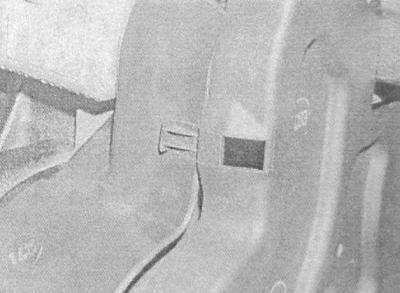
A — Timing belt drive cover lower section fastening clamp (engines 1.4, 1.6 and 1.8 l)

B - When installing the upper section of the timing cover, ensure that the CMP sensor wiring is routed correctly (engines 1.4, 1.6 and 1.8 l)
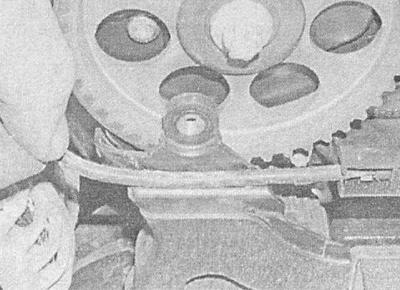

B - When installing the upper section of the timing cover, ensure that the CMP sensor wiring is…


B - When installing the upper section of the timing cover, ensure that the CMP sensor wiring is…


This article is available at russian, bulgarian, belarusian, ukrainian, serbian, croatian, romanian, polish, slovak, hungarian
Checking the article: Pavlovsky Nikolay

Share information:

Previous articles
Opel Astra G: DOHC gasoline engines
Next articles

Removal and installation the crankshaft pulley
Removal and installation the timing cover
Bringing the piston of the first cylinder to the position of the top dead center of the compression stroke (TDC)
Removal and installation the timing belt
Removal and installation of crankshaft/camshaft gears and intermediate rollers
Replacing camshaft seals
Removal and installation of camshafts and valve lifters, checking the condition of components
Removal and installation the cylinder head
Removal and installation the oil pan


See similar ones from other Opel car manuals:
▶ Removal and installation the timing belt cover Opel Corsa B (1993-2000)
▶ Timing Belt Cover Opening, 1.4L and 1.6L Models — General… Opel Vectra A (1988-1995, petrol)
▶ Front timing belt cover Opel Frontera B (1998-2004)
▶ Checking the timing belt of the gas distribution mechanism Opel Insignia A (2008-2017)
▶ Removal and installation the timing belt Opel Kadett D (1979-1984)
Link to this page in different formats

Visitor comments


No comments yet


How much will 18 + 31 =


Astra J (2009-2015, petrol) 
  • General information
  • Vehicle device
  • User manual
  • Faults en route
  • Maintenance
  • Power unit
  • Engine repair
  • Cooling and lubrication system
  • Engine power system
  • Exhaust system
  • Transmission
  • Clutch
  • Car gearbox
  • Drive shafts
  • Chassis
  • Front suspension
  • Rear suspension
  • Steering
  • Brake system
  • Wheels and tires
  • Body
  • Exterior
  • Interior
  • Doors and windows
  • Body Care
  • Heating and air conditioning
  • Security systems
  • Electrical equipment
  • Equipment and devices
  • Lighting and signaling
  • Power devices
  • Electrical circuits
Astra H (2004-2009) 
  • General information
  • Introduction to the guide
  • Troubleshooting
  • User manual
  • Maintenance
  • Power unit
  • Engine repair
  • Cooling and heating
  • Power and exhaust system
  • Ignition system
  • Launch and charge system
  • Transmission
  • Mechanical gearbox
  • Automatic gearbox
  • Drive shafts
  • Chassis
  • Brake system
  • Car suspension
  • Steering
  • Body
  • Interior
  • Exterior
  • Electrical equipment
  • Equipment and devices
  • Electrical circuits
Astra G (1998-2004) 
  • General information
  • Introduction to manual
  • User manual
  • Maintenance
  • Power unit
  • SOHC gasoline engines
  • DOHC gasoline engines
  • Diesel engines 1.7 and 2.0
  • Engine repair
  • Cooling system
  • Supply system
  • Injection system (gasoline)
  • Injection system (diesel)
  • Exhaust system
  • Charge and launch system
  • Ignition system (gasoline)
  • Preheat system (diesel)
  • Transmission
  • Manual gearbox
  • Automatic gearbox
  • Clutch
  • Drive shafts
  • Chassis
  • Brake system
  • Wheel suspension
  • Steering
  • Body
  • Exterior
  • Interior
  • Doors and windows
  • Ventilation and heating
  • Electrical equipment
  • Equipment and devices
  • Electrical circuits
Astra G (1998-2004, petrol) 
  • General information
  • User manual
  • Car care
  • Maintenance
  • Power unit
  • Single shaft engines
  • Twin shaft engines
  • Engine repair
  • Cooling and heating
  • Fuel and exhaust systems
  • Starting and charging system
  • Ignition system
  • Transmission
  • Clutch
  • Mechanical gearbox
  • Automatic gearbox
  • Drive shafts
  • Chassis
  • Brake system
  • Car suspension
  • Steering
  • Body
  • Interior
  • Exterior
  • Electrical equipment
  • Equipment and devices
  • Wiring diagrams Opel Astra
  • Wiring diagrams Opel Zafira
Astra F (1991-1998, petrol) 
  • General information
  • Maintenance
  • Power unit
  • Engine in car
  • Engine removed
  • Cooling system
  • Heating and ventilation
  • Fuel supply (carburetor)
  • Fuel supply (injector)
  • Emission control
  • Ignition system
  • Transmission
  • Clutch
  • Mechanical gearbox
  • Automatic gearbox
  • Drive shafts
  • Chassis
  • Brake system
  • Car suspension
  • Steering
  • Body
  • Exterior
  • Interior
  • Electrical equipment
  • Equipment and devices
  • Electrical circuits
OpelBook.ru © 2017–2026 · Mobile version · · Sitemap: EN BG BY UA RS HR RO PL SK HU · Feedback · Site search
Astra F, petrol · Astra G, petrol · Astra G · Astra H · Astra J, petrol · Corsa B · Corsa C, petrol · Corsa C · Insignia A · Kadett D · Kadett E · Omega A · Omega B · Omega B2 · Vectra A, petrol · Vectra A · Vectra B, petrol · Vectra B · Vectra C · Zafira A, petrol · Frontera A, petrol · Frontera B · Ascona C · Vivaro A ·
We want your visit to be comfortable 🤝! We use cookies 🍪 to make that happen.